







What defines Mandheling coffee from Lintong, Sumatra?
Mandheling is a coffee name tied to the Lintong area of Sumatra in Indonesia, the world's fourth-largest coffee producer. The article walks through the growing conditions and variety traits of Sulawesi, Bali, Java and Sumatra, then focuses on Ateng, the variety used in Lintong Mandheling, along with brewing parameters and flavor notes from an entry-level Lintong Mandheling selection.
Indonesia's position across the equator gives it a mild, humid tropical rainforest climate, with average temperatures between 25°C and 27°C and a distinct dry and wet season. That range of islands and microclimates is why coffee cultivation there produces such distinct regional profiles, and it gives beginners a practical starting point for tasting a coffee like arabica from Sumatra.
Indonesia is known as the "Nation of Ten Thousand Islands" and is the world's fourth-largest coffee producer. Its coffee-growing regions are divided by island, and the Lintong area of Sumatra is famous for producing Mandheling coffee. Starting from Indonesia's geography and climate, this article introduces the growing conditions and variety characteristics of the four major producing regions—Sulawesi, Bali, Java, and Sumatra—one by one, with a focus on analyzing the origin and characteristics of Ateng, the variety used in Lintong Mandheling, and sharing the brewing parameters and flavor performance of Front Street Coffee's entry-level selection Lintong Mandheling, providing coffee enthusiasts with a practical introductory reference to the producing regions.
Indonesia Indonesia
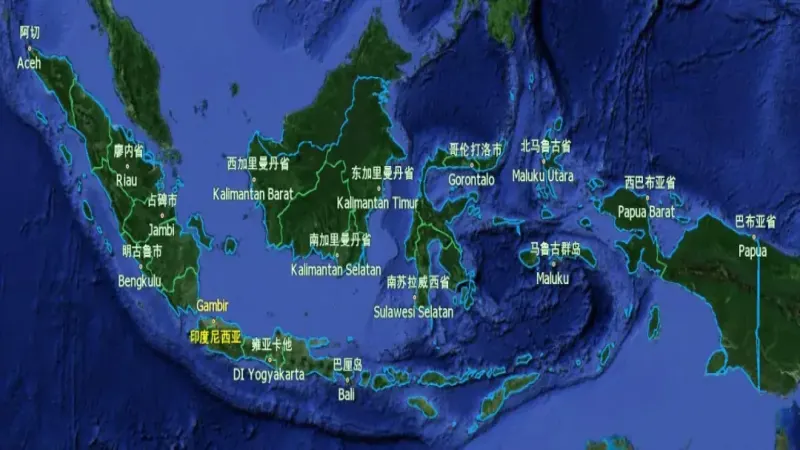
Indonesia (Republic of Indonesia, referred to as Indonesia) is located in Southeast Asia. Known as the "Nation of Ten Thousand Islands," it is the world's largest archipelagic country, made up of 17,508 islands, among which Kalimantan, Sumatra, Sulawesi, and Java rank largest by area. Indonesia's land neighbors include Papua New Guinea, East Timor, and Malaysia. Its territory spans both Asia and Oceania, with a total land area of 1,913,578.68 square kilometers. The country is not only vast in territory but also ranks fourth in the world in population, with hundreds of ethnic groups living within its borders.
The national name "Indonesia" comes from the Greek words "Indus" (India) and "nèsos" (island). Indonesia's national flag consists of two horizontal bands, red on top and white on the bottom, and is also called "Sang Saka Merah-Putih" (the Glorious Red and White). Red symbolizes bravery and justice, and also represents prosperity after independence; white symbolizes freedom, fairness, and purity, while also embodying the Indonesian people's aspiration to resist aggression and love peace.
Indonesia is the largest economy in ASEAN, with agriculture, industry, and services forming its main economic pillars. As a major agricultural country and the world's fourth-largest coffee producer, its main cash crops include palm oil, rubber, cocoa, and coffee. The vigorous development of Indonesian agriculture is closely related to its location across the equator and its tropical rainforest climate—mild and humid year-round, with average temperatures between 25°C and 27°C, and distinct dry and wet seasons influenced by monsoons. The country is rich in natural resources, with numerous rivers, a forest coverage rate of 67.8%, and frequent volcanic and seismic activity. Volcanic ash happens to replenish the soil with abundant minerals, which is very favorable for the growth of crops such as coffee.
Coffee-Producing Regions
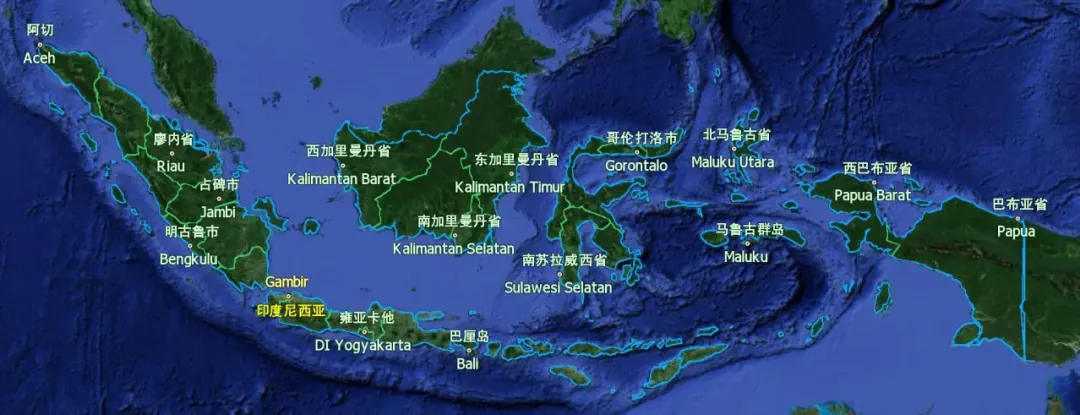
At present, coffee is grown on many islands in Indonesia, and producing regions are usually divided by island, such as Sulawesi, Bali, Java, and Sumatra.
Sulawesi: Coffee was introduced to the island in 1750. At present, the island has seven large estates, contributing 5% of the island's coffee output, while most of the rest is still produced by smallholder farmers. The island's Arabica is mostly grown at higher elevations in Tana Toraja and in the southern town of Kalosi, at elevations ranging from 1,100 to 1,800 meters. The main varieties include S795, Typica, Ateng, and Robusta, with a harvest period from May to November.
Bali: The 1963 eruption of Mount Agung (Gunung Agung) dealt a severe blow to Bali's coffee industry. In the 1970s and 1980s, the government began promoting coffee cultivation, but the Arabica seedlings distributed at the time were not successful. After that, 80% of the island switched to Robusta, and tourism gradually became the island's most important source of income. Bali's cultivation elevation is between 1,250 and 1,700 meters, mainly growing Robusta and Typica, with the harvest period concentrated from May to October.
Java: Coffee first took root on Java. At present, the island has four of the largest estates, with a total area of about 4,000 hectares, and most coffee is grown in eastern Java near the Ijen volcano. The elevation is between 900 and 1,800 meters, and the main varieties are Typica, Ateng, and USDA, with a harvest period from July to September.
Sumatra: Coffee was not planted on Sumatra until 1888. Today the island has three main producing regions: Aceh Province, Lintong around Lake Toba, and Mangkuraja in the south. The elevation of Aceh Province and Mangkuraja is 1,100 to 1,300 meters, while the area around Lake Toba is 1,100 to 1,600 meters. The Lintong region is located in the Lintong Huta area southwest of Lake Toba. In the past, coffee was often sold under the name "Sumatra Mandheling," but Mandheling is not a place name; it is an ethnic group on the island. Sumatra mainly grows Typica, Tim Tim, and Ateng, with a harvest period from September to December.
Coffee Variety Ateng
The coffee variety Ateng is often mistaken for a new variety, but in fact it is Catimor. "Ateng" is merely a local Indonesian colloquial name, just as what Indonesians call TimTim refers to Timor Hybrid. Catimor is a cross between Timor and Caturra and belongs to the first-generation F1 hybrid variety group.
In terms of botanical characteristics, the young leaf tips at the top of the Catimor tree are green-tipped or bronze-tipped, with dense branching and short internodes. The fruit is mainly red, and the green beans are relatively long, thick, and plump. The overall tree shape is relatively short and suitable for dense planting. It is resistant to coffee leaf rust but susceptible to nematodes and coffee berry disease. It is suitable for cultivation at low to medium elevations and has high yield.
Front Street Coffee (FrontStreet Coffee) Indonesia Entry-Level Selection Lintong Mandheling Coffee Beans Region: Sumatra producing region Altitude: 1,100-1,600 meters Variety: Ateng Processing Method: Wet Hulling Flavor: Dark Chocolate, Herbal, Caramel, Sweet Finish
This entry-level selection Lintong Mandheling from Front Street Coffee (FrontStreet Coffee) uses the wet hulling processing method and is dark roasted. Front Street uses a KONO dripper, brews at a ratio of 1:15 , and uses a water temperature of 92°C . On the palate, it has herbal and dark chocolate flavors, a caramel-like rich body, and a high sweet finish.
The above content is compiled by CoffeeHunters, a coffee news website.


