







What Defines Authentic Blue Mountain Coffee?
Jamaica Blue Mountain coffee comes only from Typica plants grown in the parishes of St. Andrew, St. Thomas, Portland and St. Mary, at elevations between 915 and 1,700 meters. The growing region is legally protected, so beans outside those boundaries and elevation bands cannot carry the Jamaica Blue Mountain name.
Jamaica is a Caribbean island nation of 10,991 square kilometers, divided into 3 counties and 14 parishes, with a tropical rainforest climate and rainy seasons from April to June and September to November. Its coastal plains, eastern mountains and limestone plateaus create the terroir behind the coffee, a product of the country's coffee industry and its protected designation.
Blue Mountain coffee is Jamaica's most iconic product and a name familiar to coffee lovers around the world. This island nation in the northwest Caribbean has, thanks to its unique geography and climate, delineated a legally protected Blue Mountain coffee growing region. Only Typica plants grown in the four parishes of St. Andrew, St. Thomas, Portland, and St. Mary, at elevations between 915 and 1,700 meters, are eligible to bear the name "Jamaica Blue Mountain Coffee." This article will outline Jamaica's national overview and coffee industry regulatory system, introduce the terroir characteristics of the Blue Mountain region and the botanical features of the Typica variety, and share the brewing parameters and flavor profile of Front Street Coffee's Clifton Estate Blue Mountain No. 1, offering coffee enthusiasts a complete introductory reference to Blue Mountain coffee.
Jamaica
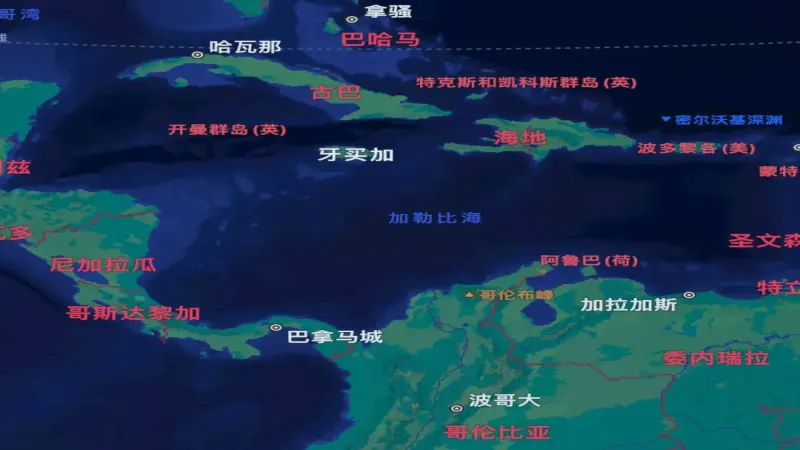
When it comes to coffee, the name Blue Mountain is almost universally known. It comes from Jamaica, an island nation in the Caribbean region of North America. The country covers an area of 10,991 square kilometers, ranking third among Caribbean islands, and is administratively divided into 3 counties, which are further divided into 14 parishes.
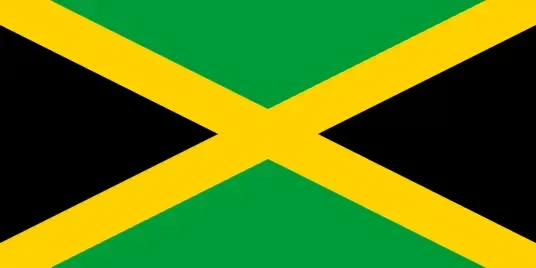
The Jamaican flag is rectangular, with two diagonal yellow bands crossing the surface, dividing it into four triangles—green at the top and bottom, black at the left and right. Yellow symbolizes the nation's natural resources and sunshine, black represents the hardships already overcome and those yet to be faced, and green signifies hope and the country's abundant agricultural resources.
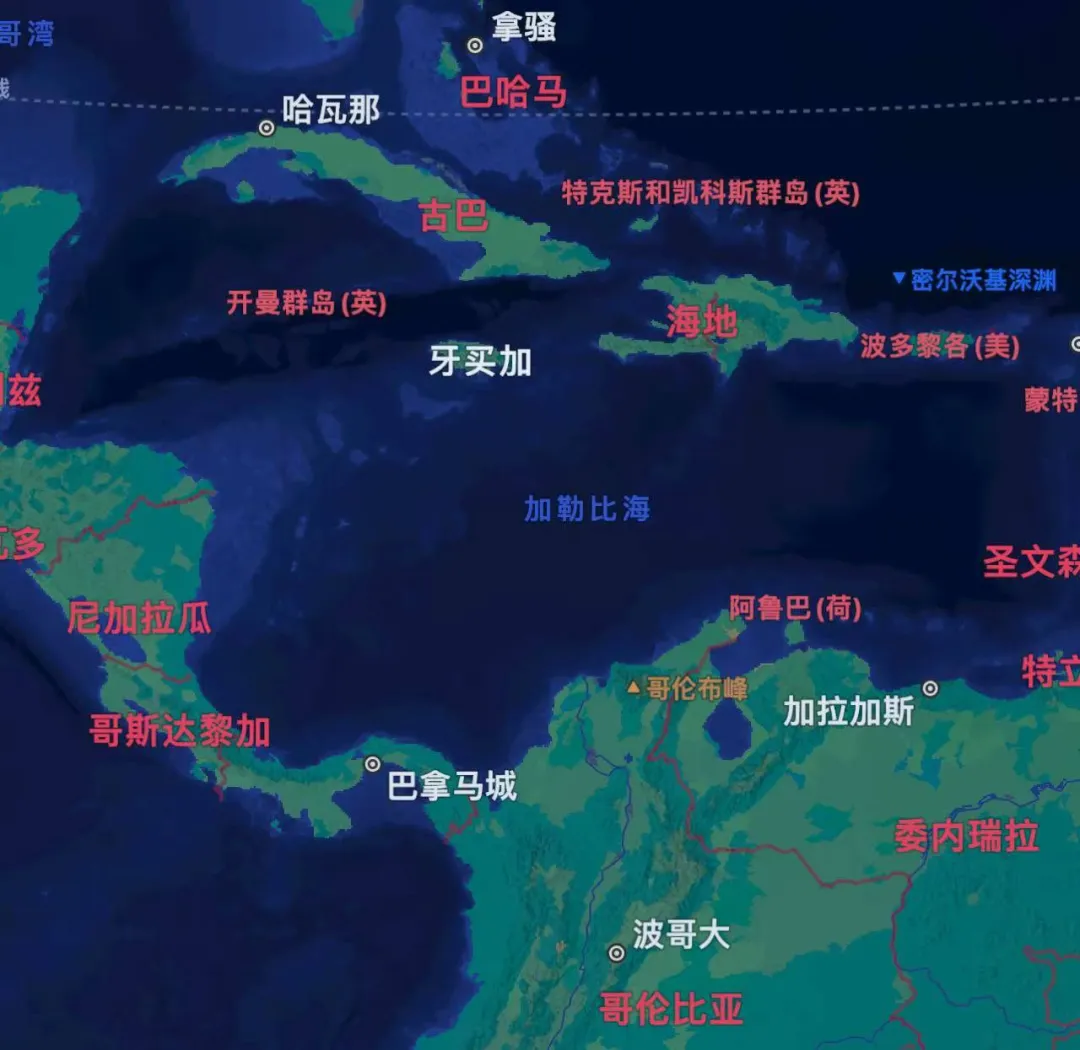
Jamaica is located in the northwest Caribbean and is an island nation, facing Haiti across the Jamaica Channel to the east and lying about 145 kilometers north of Cuba. The coastal areas are alluvial plains, the east is dominated by mountains, while the central and western regions consist of hills and limestone plateaus. Karst landforms are well developed, surface rivers are scarce, and caves are numerous.
The country has a tropical rainforest climate. The rainy seasons are from April to June and September to November, with January and May seeing the most frequent showers. December to March is the dry season, with relatively cool weather. The six months from June to the end of November are the peak period for hurricanes and tropical storms, and the country is often hit by hurricanes. The central and northern regions receive abundant rainfall, with temperatures typically ranging between 22 and 32°C.
Coffee Producing Regions
Jamaica places considerable importance on managing its coffee industry. In 1944, the country established the Central Coffee Clearing House, through which all coffee must be reviewed before export. In 1950, the Jamaica Coffee Industry Board (CIB) was founded. This organization was later merged with other Jamaican commodity agencies in 2018 to form the Jamaica Agricultural Commodities Regulatory Authority (JACRA). Today, every barrel of Blue Mountain coffee beans must pass JACRA's quality supervision. At its founding, the Board also promulgated the Coffee Industry Regulation Act, which delineated the world-famous "Blue Mountain Coffee Growing Region."
According to the provisions of the Coffee Industry Regulation Act, Blue Mountain coffee growing areas are distributed across four parishes: St. Andrew, St. Thomas, Portland, and St. Mary. Only Typica coffee grown within this range at elevations between 915 and 1,700 meters can be named Jamaica Blue Mountain coffee.
The Blue Mountain range is located in eastern Jamaica, with elevations between 1,000 and 1,700 meters. Surrounded by the Caribbean Sea, on clear days when sunlight strikes the sea surface directly, the peaks reflect a sea-like blue glow, which is how Blue Mountain got its name. Situated in the coffee-growing belt, the area has fertile volcanic soil, fresh and pollution-free air, and a humid climate with year-round fog and rain. Average precipitation is about 1,980 millimeters, and temperatures hover around 27°C. It is precisely these natural conditions that have created the world-renowned Jamaica Blue Mountain coffee.
Typica
Typica and Bourbon are among the oldest coffee varieties still in existence, originating in southwestern Ethiopia. The Typica coffee tree has ridged, pointed leaves that are greenish or bronze in color, with longer internodes between fruit clusters. The fruit is mainly red, the beans are elongated, and the plant as a whole is relatively tall. This variety is suited to high-altitude cultivation, where quality is better, but yields are low, and it is highly susceptible to leaf rust, nematodes, and berry disease. Today, Typica is grown in countries including Peru, Papua New Guinea, and Jamaica. It is worth noting that the Typica grown in Jamaica's Blue Mountain region, after more than 200 years of evolution, has developed better disease resistance than typical Typica.
Front Street Coffee Jamaica Clifton Estate Blue Mountain No. 1 Coffee Beans Region: Blue Mountain region Estate: Clifton Estate Altitude: 1,310 meters Variety: Blue Mountain Typica Processing: Washed Flavor: Slight citrus acidity, nutty and chocolate notes, silky mouthfeel, overall balance
Front Street Coffee's Blue Mountain No. 1 coffee beans are washed processed and roasted to a medium-dark level, which gives Blue Mountain No. 1 a full-bodied richness while retaining a gentle fruit acidity. Front Street recommends using a KONO dripper with a 1:15 coffee-to-water ratio and a water temperature of 89°C for brewing. After brewing, a faint floral aroma can be detected; on the palate, there is a slight citrus acidity accompanied by nutty and cocoa notes, with a silky mouthfeel and overall balance.
The above content is compiled by CoffeeHunters, a coffee news website.


