







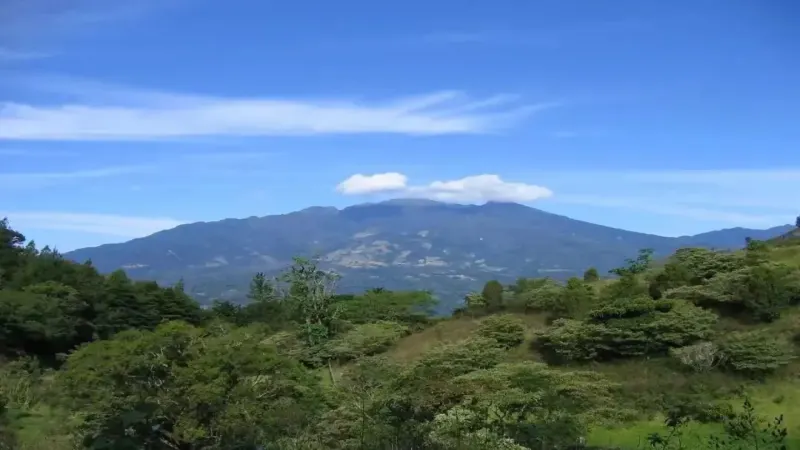
What Growing Conditions Do Coffee Trees Need at Elida Estate?
Panama grows more than Geisha, and Elida Estate in Boquete is one example. The farm cultivates the Catuai variety, whose sun-dried lots show layers of white peach, raisin, orange, and caramel. Panama's location in southern Central America, its rugged terrain, volcanic soils, and humid days with cool nights give coffee trees the conditions they need to produce distinctive cups.
Panama has a tropical maritime climate, with average annual temperatures of 23°C to 27°C and rainfall of 1,500 to 2,500 mm split into dry and rainy seasons. Its east-west mountain ranges channel cold air that converges above 1,900 meters, creating microclimates around Boquete and Volcán Candela. Volcanic ash keeps the soil nutrient-rich, making the area the country's main coffee-producing zone.
Panamanian coffee enjoys a stellar reputation in the international market, especially after the Geisha variety shot to fame in the 2005 Best of Panama competition. Because of this, many people mistakenly assume Panama only grows Geisha. In reality, this Central American country also cultivates other high-quality varieties. This article will guide you through Panama's overall geographic and climatic advantages, take you deep into the Boquete region, and highlight Elida Estate and the Catuai variety it grows. From estate terroir to flavors in the cup, Front Street Coffee's sun-dried Catuai presents layers of white peach, raisin, orange, and caramel, letting you appreciate the diverse charm of Panamanian coffee.
Panamanian coffee enjoys a global reputation, especially the Geisha variety. In the 2005 Best of Panama competition and auction, Geisha stood out with its outstanding flavor and impressive results, becoming instantly famous. For this reason, many people assume Panama only grows Geisha, but in fact the country also cultivates other coffee varieties.
Panama
Panama is located in southern Central America, with an S-shaped landmass connecting Costa Rica and Colombia, bordering the Caribbean Sea to the east and the Pacific Ocean to the west. Because the country bridges North and South America, and the Panama Canal within its territory connects the Atlantic and Pacific Oceans, it is called the "Bridge of the World." Panama's terrain is rugged, with crisscrossing valleys. Apart from coastal plains, most of the country is mountainous, and it is rich in forests, rivers, and several volcanoes, providing an ideal growing environment for coffee trees.
Panama lies close to the equator and has a tropical maritime climate, humid during the day and cool at night, with an average annual temperature between 23°C and 27°C and annual rainfall of 1,500 to 2,500 mm, mainly divided into dry and rainy seasons. Influenced by its geographical environment, Panama has developed complex and varied microclimates. The east-west orientation of the terrain allows cold air to flow through the central mountain range and converge above 1,900 meters, creating a unique microclimate around Boquete and Volcán Candela. The surrounding land is nutrient-rich due to volcanic ash, and these fertile soils provide excellent conditions for coffee growing, making this area Panama's main coffee-producing region.
Boquete
The coffee-producing regions are mainly divided into Boquete, Volcan-Candela, and Renacimiento. These regions are all distributed around the country's three volcanoes: Volcán Baru, El Valle, and Le Yeguada.
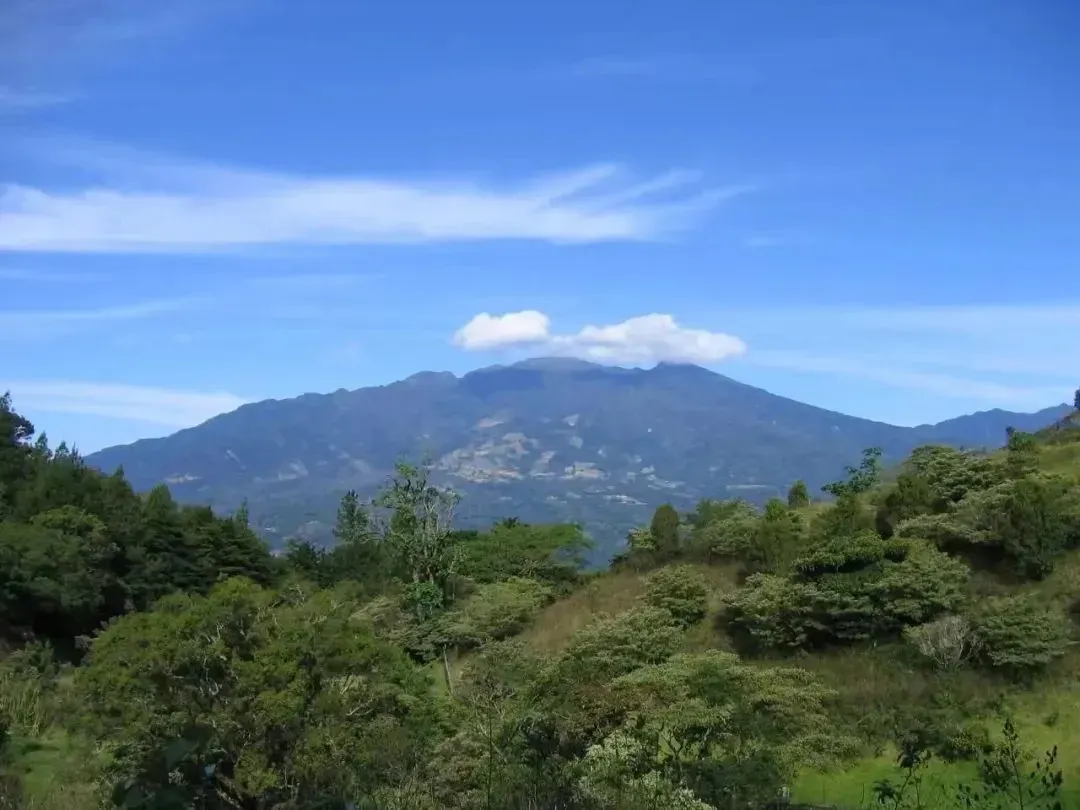
Boquete is arguably Panama's most renowned coffee-producing region, home to many famous estates such as Hacienda La Esmeralda, Duncan Estate, and Elida Estate. The Boquete region has excellent growing conditions, with coffee trees growing at altitudes of 1,200 to 2,000 meters and temperatures between 11°C and 27°C—neither too cold nor too hot. The large temperature difference also helps coffee cherries grow slowly and accumulate flavor. In addition, moderate rainfall, fertile soil from volcanic ash, abundant sunshine, and the area's special microclimate together create the high-quality coffee of this region.
Elida
Elida Estate covers a total area of 65 hectares, more than half of which lies within Baru Volcano National Park. Only 30 hectares of the estate are used to grow coffee trees, while the rest remains virgin forest. Coffee is grown at altitudes between 1,670 and 1,850 meters, making it one of the two highest coffee estates in Panama. In this high-altitude environment, low temperatures delay the ripening period of coffee cherries, fertile volcanic soil provides ample nutrients, and the region's unique microclimate has helped Elida Estate achieve outstanding results in the BOP many times.
Elida Estate hand-picks the ripest cherries, which have high ripeness and a higher sugar content in the mucilage. The estate's processing plant is located halfway up the mountain, so after picking, the coffee can be sent to the factory for processing immediately, ensuring cherry quality. Currently, Elida Estate mainly grows Catuai, Typica, and Geisha varieties.
Catuai
Catuai was developed by the Instituto Agronomico de Campinas (IAC) in São Paulo, Brazil, and is a cross between Mundo Novo and Caturra. Catuai coffee trees have shorter branches, similar to Caturra, with green and slightly curled leaves and tightly packed cherries that are mainly red. The beans are uniform in size and oval-shaped, though slightly smaller than Caturra, and the overall tree is relatively short, making it suitable for dense planting. This variety has high yield and is suited to high-altitude cultivation, but it is susceptible to leaf rust, nematodes, and berry disease. It is currently mainly grown in Brazil, Honduras, Guatemala, and other countries.
Front Street Coffee Panama Elida Catuai Coffee Beans Region: Boquete Estate/Processing Plant: Elida Estate Altitude: 1,850 meters Variety: Catuai Processing Method: Sun-Dried
Flavor: White Peach, Raisin, Orange, Caramel, Green Tea
Front Street Coffee's Panama Elida Estate Catuai coffee beans are sun-dried. Front Street uses a V60 with a 1:15 ratio for brewing. You will smell a slight vinous aroma from the sun-dried processing, and the cup presents flavors of white peach, raisin, and orange, accompanied by caramel-like sweetness and a green tea-like mouthfeel, with high cleanliness.
The above content is compiled by CoffeeHunters, a coffee news website.


