







How Could Indonesia's Volcano Eruptions Cut Robusta Coffee Production?
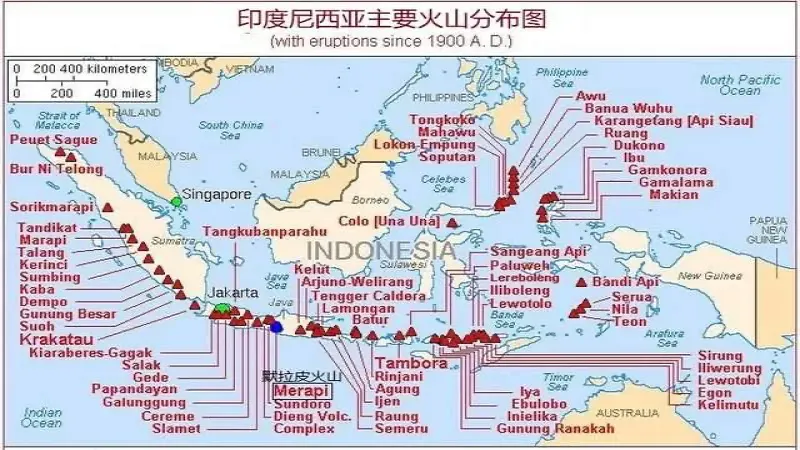
Several Indonesian volcanoes erupted in quick succession in April, prompting authorities to raise the alert level to the highest. Mount Semeru on Java, Halmahera Barat, Sorikmarapi on Sumatra and Ruang near North Sulawesi all saw activity. The timing overlaps the Robusta harvest, and some producers expect island output to fall 20 percent, with national coffee production possibly dropping by half.
Indonesia sits where the Eurasian, Indian, Australian, Pacific and Philippine Sea plates meet, and holds 127 active volcanoes, the most of any country. Volcanic ash and disruption to harvest and transport add to pressure from tight global inventories after drought in Vietnam. Robusta, the species behind most instant and espresso blends, is what is robusta priced on those supplies, so tighter Indonesian volumes could push prices higher.
Indonesia is located at the intersection of multiple geological plates and is the country with the most active volcanoes in the world, with 127 active volcanoes within its territory. Recently, multiple volcanoes in the country have erupted intensively, and authorities have raised the alert level to the highest. Volcanic activity not only threatens the safety of local residents but also brings serious hidden dangers to agriculture such as coffee. The current period coincides with the Robusta coffee harvest season. Some producers expect that production on some islands will decrease by 20%, and the national total output may drop by 50%. Combined with tight global inventories caused by drought in Vietnam, Robusta coffee prices may be pushed further higher. This article will review the specific situation of this volcanic eruption and its potential impact on the coffee industry.
Indonesia is located at the junction of Earth's plates, spanning Southeast Asia and Oceania, in the convergence zone of the Eurasian, Indian, Australian, Pacific, and Philippine Sea plates, and the country is composed of a large number of islands.
The country is also the country with the most volcanoes in the world, with as many as 127 active volcanoes within its territory. In addition, its geological structure is extremely unstable, so it is highly vulnerable to volcanic activity and seismic activity.
Recently, the Indonesian Center for Volcanology and Geological Hazard Mitigation (PVMBG) pointed out that volcanic activity in the country has increased significantly during this period, and multiple volcanoes have erupted one after another, causing relatively serious impacts.
On April 8 local time, Mount Semeru (Gunung Semeru) on Java island erupted repeatedly, with ash columns between 500 meters and 700 meters high. By the early morning of the 9th, the volcano erupted again. This time the ash column reached 1,000 meters, and the eruption process lasted 110 seconds.
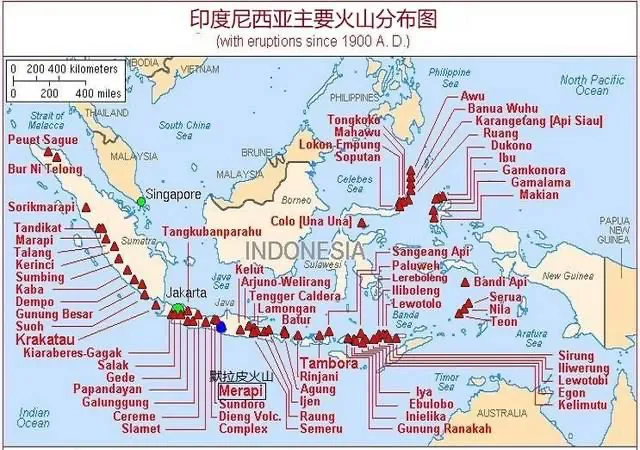
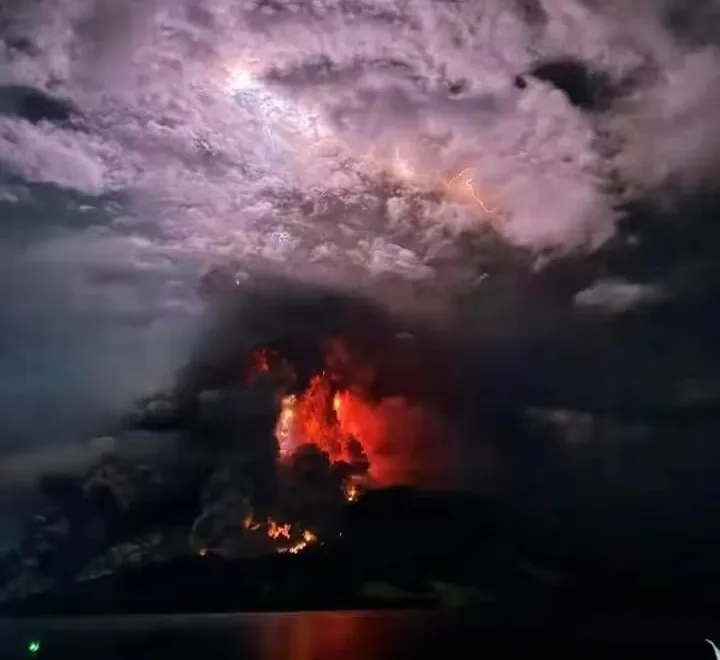
Then on the night of April 10, Halmahera Barat volcano on Pulau Halmahera erupted, with an ash column as high as 800 meters, and the eruption lasted 78 seconds. Shortly after, in the early hours of April 11, Mount Sorikmarapi on Sumatra island also erupted continuously. After several quiet days, on the 16th an earthquake occurred on an island near North Sulawesi Province, causing Ruang volcano to erupt more than three times in succession. At noon on the 17th, Halmahera Barat volcano, which had already erupted before, erupted again, with an ash column as high as 2,500 meters.
At present, local agencies have resettled residents near the volcanic areas. Many residents can only rely on relatives and friends, or temporarily live in government-designated shelters. Airports near the volcanoes have announced temporary closure, and many airlines have canceled flights to and from Indonesia. In addition, because more eruptions are expected to follow, the agency has required that all human activity be prohibited within a radius of 6 kilometers from the crater, and has reminded people to be alert to partial collapse of the mountain into the sea, because this may trigger the ejection of hot rocks, pyroclastic clouds, and tsunamis. The authorities' alert level has been raised to the highest level.
In response, people in coffee and other agricultural sectors expressed great concern, saying that such frequent volcanic eruptions will have a serious impact on the agricultural industry. This is because volcanic ash and volcanic materials will directly pollute air, water sources, and soil, block sunlight, and thereby hinder photosynthesis.
In addition, harmful gases such as sulfur dioxide released by volcanic eruptions will directly affect crop growth and may also form acid rain, causing further damage to crops. At the same time, after large amounts of volcanic ash and aerosols enter the atmosphere, they can change the distribution and reflectivity of clouds, thereby affecting global and regional climate and triggering extreme weather such as drought or heavy rain.
According to local coffee producers, the current period is the Robusta coffee harvest season, but due to the dual impact of weather and volcanic disasters, coffee production on some islands is expected to decrease by 20%, and the national total output will drop by 50%. At the same time, because Vietnam has suffered drought, global Robusta coffee inventories have become short, and Robusta coffee prices have recently continued to climb. Against the backdrop of poor Indonesian Robusta production, prices may be pushed further higher. Front Street Coffee reminds that paying attention to developments in producing regions and price trends can help enthusiasts make more rational coffee purchases.
The above content is compiled by CoffeeHunters, a coffee news website.


