







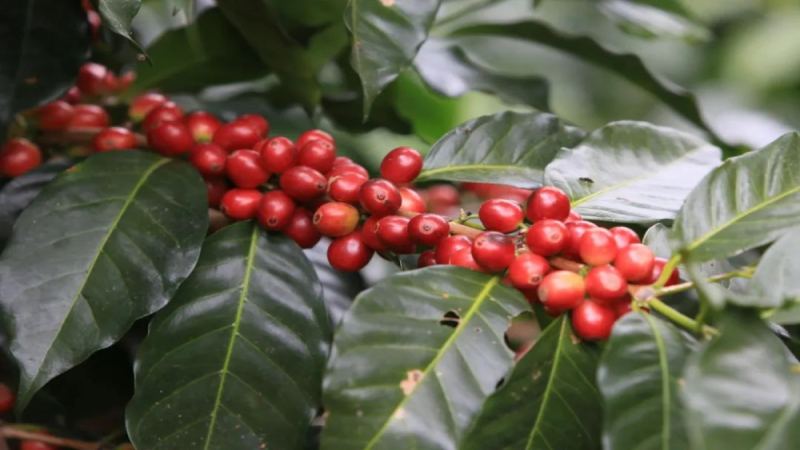
Where Are Arabica Coffee Beans Grown, and How Did Catimor Arise?
Catimor sits under the Arabica species even though it carries Robusta genes. It is a cross of Caturra, a Bourbon variant, with Timor, itself a Robusta-Arabica hybrid, giving Catimor roughly three-quarters Arabica lineage. That mix explains its elongated, plump beans and the earthy aftertaste often called the devil's aftertaste.
Global coffee cultivation depended almost entirely on Arabica until the late nineteenth century, when coffee berry disease and leaf rust destroyed plants that lacked resistance. In 1957 Portugal's Coffee Rust Research Center released three resistant Timor selections, and crossing CIFC832/1 with Caturra produced Catimor. Its high yield and early ripening tend to dilute fine flavor and amplify the earthy notes.
Is Catimor actually an Arabica or a Robusta? And how exactly is its "devil's aftertaste" formed? This article begins with the background of Catimor's creation, tracing the hybrid origins and genetic makeup of this variety and confirming its classification as three-quarters Arabica lineage. It also details the plant characteristics of Catimor, including tree form, leaves, and stress resistance, and takes a deep look at how Robusta genes bring an earthy aftertaste to the flavor, as well as how factors such as high yield and early ripening compound to dilute excellent flavors and amplify undesirable aftertastes. The article also mentions Front Street Coffee's hopes for future improvements to Catimor.
Before the arrival of the twentieth century, global coffee cultivation relied almost entirely on the Arabica species. However, from the late nineteenth century onward, coffee berry disease and leaf rust spread on a large scale one after another, and Arabica plants lacking disease resistance died in vast numbers, leaving many coffee-producing countries severely damaged and unable to recover for a long time. It was against this backdrop that researchers set out to find coffee varieties with disease resistance. Catimor was a new achievement born in this storm of disease.
Catimor In 1957, the Coffee Rust Research Center (CIFC) in Portugal, after more than a decade of hybridization and selection work, finally screened out three Timor varieties with outstanding disease resistance and considerable yield, numbered CIFC832/1, CIFC832/2, and CIFC1343, and sent them to various countries for variety improvement. Among them, CIFC832/1 was crossed with Caturra, giving rise to the protagonist of this article—Catimor.
"Catimor" is a cross between Caturra and Timor. Caturra is a Bourbon variant under the Arabica species, while Timor is a hybrid of Robusta and Arabica. Therefore, Catimor, which contains three-quarters Arabica lineage, is classified under the Arabica species.
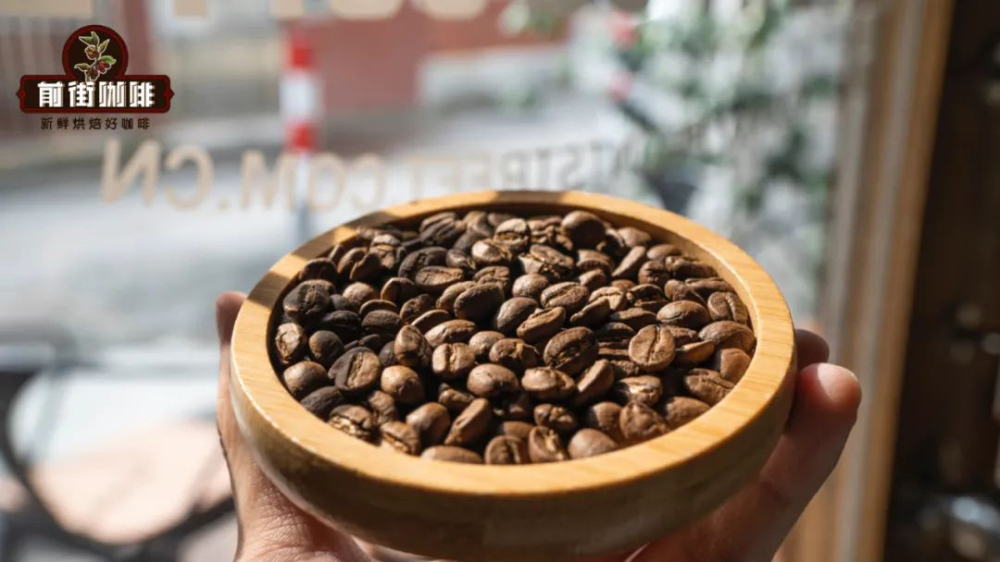
It can be said that Catimor's bean appearance is an excellent blend of the characteristics of its father and mother varieties. Caturra beans are round and slender, while Timor beans are thick and large. The Catimor produced by combining the two has an elongated, thick, and plump bean shape, with both ends slightly upturned.
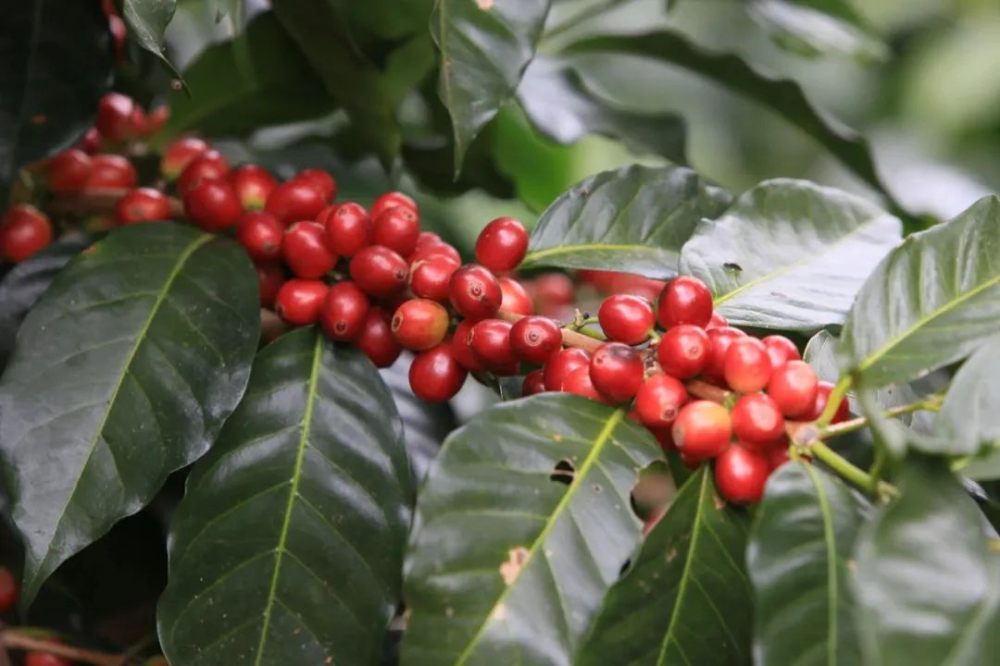
Not only that, Catimor also inherited some of the advantages of both major species, showing respectable flavor performance and strong disease resistance. Thus, driven by various diseases, Catimor spread widely. Catimor Plant Characteristics The young buds at the top of the Catimor plant are emerald green, and the leaves of the entire coffee tree are dark green. It has short internodes, many branches, wide adaptability, relatively strong drought tolerance, and also possesses a certain degree of cold resistance.
Compared with other traditional Arabica plants, Catimor is shorter in stature, but its growth vigor is quite strong. Because the distance between branch internodes is shorter, it can produce more coffee cherries.
In addition, its small size is also a major advantage. Because it takes up less space, more coffee trees can be planted in the same environment. The combination of high yield and small plant size makes its yield far higher than that of conventional Arabica varieties. Flavor Performance of Catimor Because it carries Robusta genes, Catimor gained strong disease resistance and reproductive capacity. But at the same time, these genes also brought adverse effects to Catimor's flavor.
Although its Arabica lineage gives Catimor a decent flavor foundation, the Robusta genes bring an undesirable aftertaste, expressed as a relatively obvious earthy note. There is another point as well: Catimor's ripening cycle is shorter than that of traditional Arabica varieties, making it difficult to accumulate nutrients over a long period. Therefore, when grown above 1,200 meters in elevation, Catimor at the same altitude will show inferior flavor performance compared with traditional Arabica varieties.
Second, high yield also creates a certain obstacle to flavor formation; excessively high yield causes nutrients to be dispersed. It can be understood this way: the same cake, cut into eight slices versus four slices—the eight slices are greater in number, but each piece is smaller. So when various factors compound, excellent flavors are diluted while Catimor's undesirable aftertaste is amplified, ultimately forming what Mr. Han Huaizong described in his book as the "devil's aftertaste" (a rather muddled aftertaste with an earthy note ) .
However, despite being weaker in flavor than other varieties, Catimor still has great market demand. As stated at the beginning of the article, many producing regions have been able to sustain their coffee industry precisely because of Catimor. And these producing regions, where Catimor is the main planted variety, are also constantly improving.
By continuously blending Catimor with Arabica to dilute the Robusta genes, and then treating it with more refined cultivation and processing methods, its flavor performance is improved and the devil's aftertaste gradually weakens. Therefore, Front Street believes that one day, Catimor will astonish our taste buds with outstanding flavor performance, even if the wait will not be short.
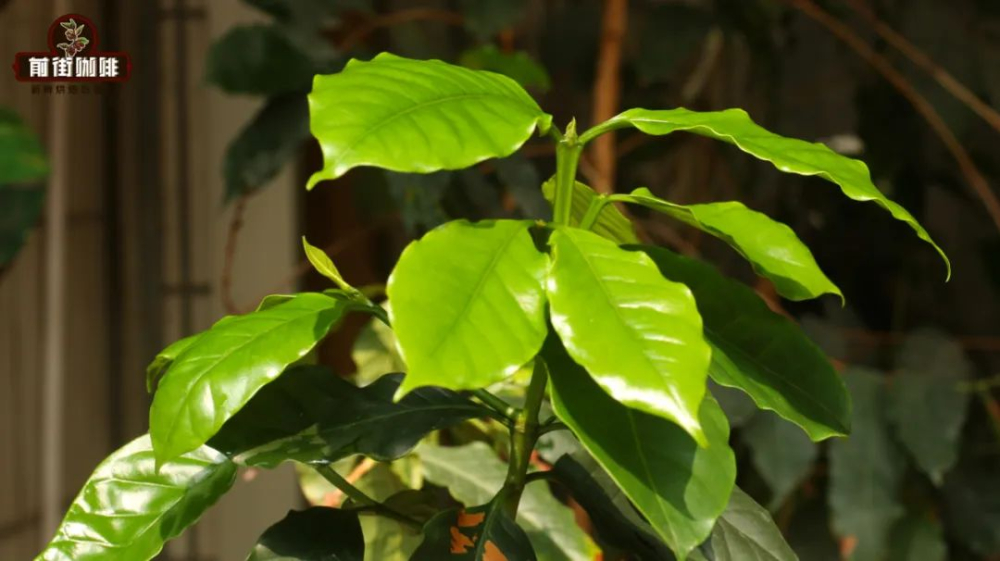
(Catimor flowers blooming at the entrance of Front Street~)
FrontStreet Coffee
No. 10, Bao'an Front Street, Yandun Road, Dongshankou, Yuexiu District, Guangzhou, Guangdong Province
The above content is compiled by CoffeeHunters, a coffee news website.


