







Where Do Coffee Bean Trees Grow in Guatemala?
Guatemala grows coffee in 20 of its 22 departments, and eight regions stand out, including Huehuetenango, Cobán, Nuevo Oriente, Atitlán and Antigua. They split into volcanic and non-volcanic areas, and the high altitude, volcanic soil, steady rainfall and varied microclimates give the beans lively acidity and a clean, layered cup.
Coffee bean trees here are grown on mountainous highland terrain that covers about two-thirds of the country, with forests on roughly 38% of the land. A straightforward entry point is a washed Guatemalan Huehuetenango lot, which shows the bright acidity and clarity the region is known for.
Guatemala is an important coffee-producing country in Central America. Of its 22 departments, 20 grow coffee, with eight major regions—including Huehuetenango, Cobán, Nuevo Oriente, Atitlán, and Antigua—being the most renowned. These regions fall into two main categories: volcanic and non-volcanic. Thanks to high altitudes, volcanic soil, abundant rainfall, and diverse microclimates, Guatemalan coffee is characterized by elegant and lively acidity, a clean mouthfeel, and layered flavors. This article will start with the geographical environment and climatic features, introduce the growing conditions and coffee characteristics of each major region one by one, and recommend an entry-level selection from Front Street Coffee: Guatemalan Huehuetenango washed coffee beans.
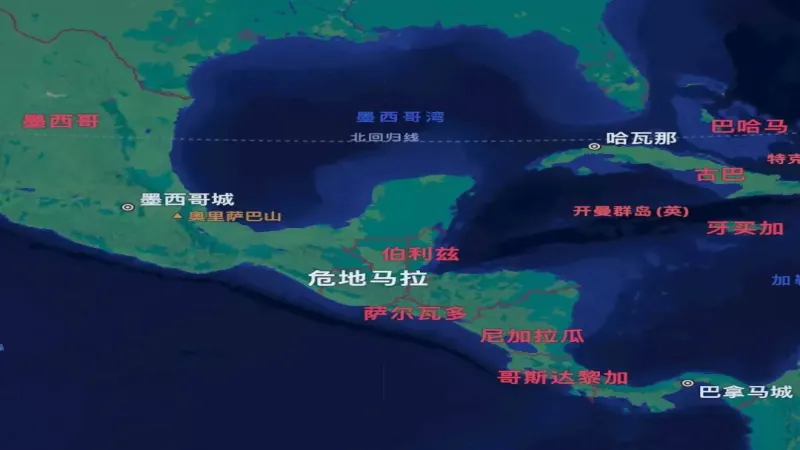
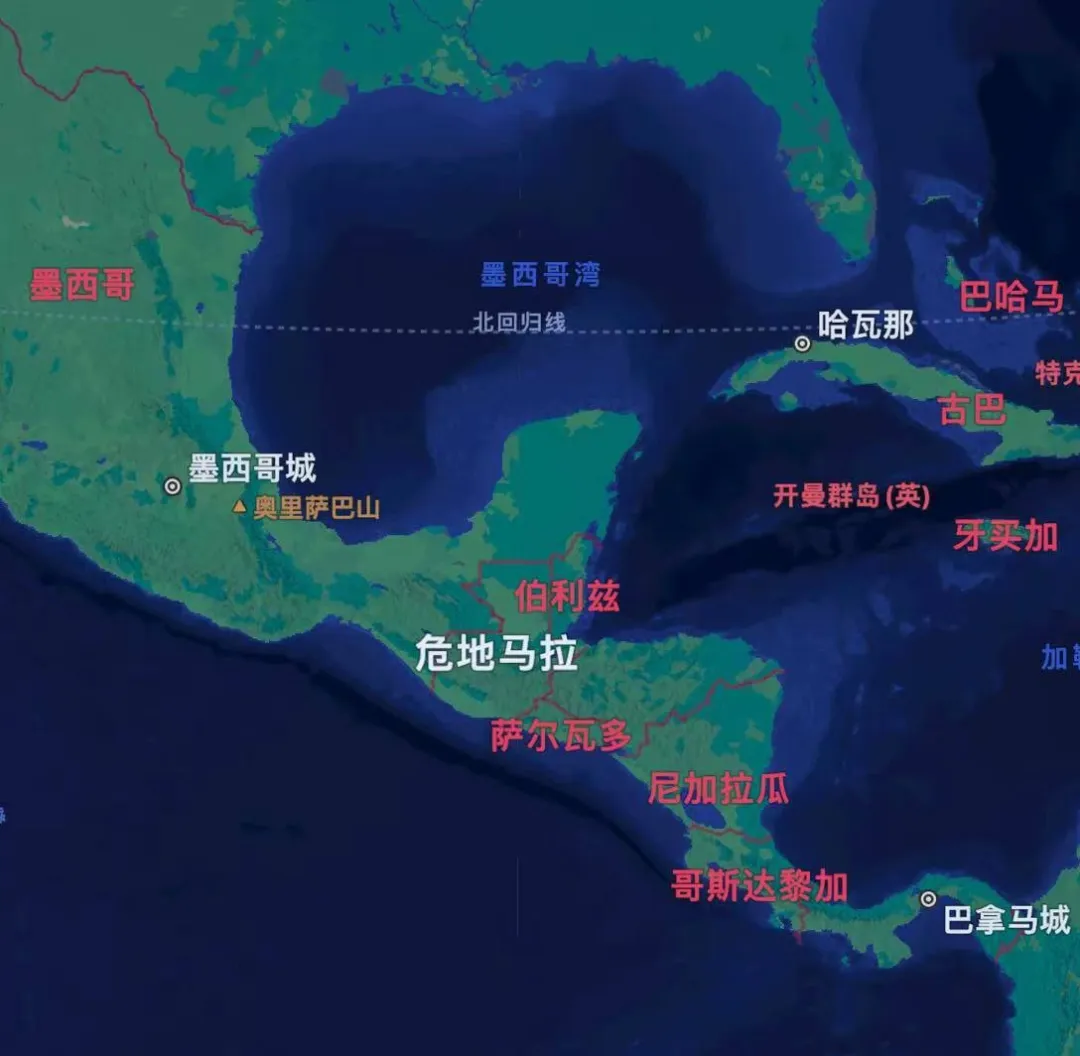
The Republic of Guatemala (La República de Guatemala) is located in the Americas and is one of the core areas of the ancient Mayan civilization. The country has a total area of 108,900 square kilometers and is divided into 22 departments.
Guatemala is situated in the southern part of the North American continent, sharing both maritime and land borders. To the west and north, it borders Mexico; to the northeast, it adjoins Belize; to the southeast, it borders Honduras and El Salvador; to the east, it faces the Gulf of Honduras in the Caribbean Sea; and to the south lies the Pacific Ocean, with a coastline of about 500 kilometers. In addition, forests cover approximately 38% of the country's land area.
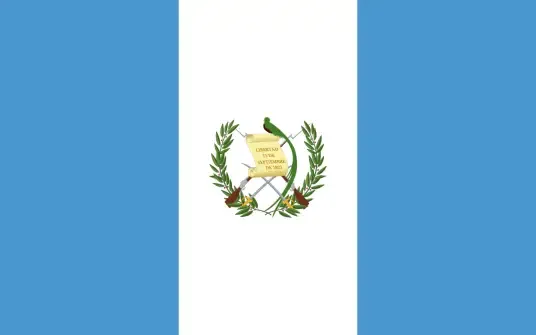
The national flag of Guatemala consists of three parallel vertical rectangles of equal width, with white in the center, representing the aspiration for peace, and blue on both sides, symbolizing the Pacific Ocean and the Caribbean Sea. In the center of the white rectangle is the national emblem, circular in overall shape, with an unfurled scroll in the middle bearing the Spanish inscription "15 September 1821, Freedom," commemorating the country's independence from Spanish colonial rule. Above the scroll perches Guatemala's national bird—the green quetzal—also known as the "bird of freedom," symbolizing liberty, patriotism, and friendship. Crossed behind the scroll are rifles and swords, symbolizing the people's readiness to defend the nation's freedom at any time.
Guatemala's terrain is mainly mountainous and highland, accounting for about two-thirds of the country. In the west runs the Cuchumatanes mountain range, and in the south lie the Sierra Madre mountains, both situated within the volcanic belt. There are 37 volcanoes nationwide, among which Tajumulco Volcano, at 4,211 meters above sea level, is the highest peak in Central America. The north is primarily the Petén lowlands, a tropical rainforest region, while the major cities are distributed in the intermountain basins of the south.
Guatemala has a tropical climate, with a tropical rainforest climate in the north and along the eastern coast, and a subtropical climate in the southern highlands. The wet season runs from May to October each year, and the dry season from November to April of the following year. Coffee is usually grown in highland areas, where the region between 1,300 and 1,800 meters above sea level enjoys mild weather year-round, with a perceived temperature between 18°C and 28°C, and relatively cooler conditions in January and February. Rainfall is concentrated mainly in the northeast, where annual precipitation can reach 2,000 to 3,000 millimeters. High altitude, volcanic soil, significant day-night temperature differences, abundant rainfall, and diverse microclimates together endow Guatemalan coffee with elegant and lively acidity, a clean mouthfeel, and richly layered flavor expression.
Coffee-Producing Regions
Of Guatemala's 22 departments, 20 produce coffee. Eight regions are particularly famous, and can be divided into five volcanic regions and three non-volcanic regions, with coffee generally grown at altitudes above 1,500 meters. The non-volcanic regions include Huehuetenango, Cobán, and Nuevo Oriente. The volcanic regions cover Atitlán, Antigua, Acatenango, Fraijanes, and San Marcos.
Huehuetenango: This region is a non-volcanic coffee-producing area in Guatemala and also one of the highest-altitude regions, with coffee grown between 1,800 and 2,100 meters. Its name comes from Nahuatl, meaning "place of the ancients (or ancestors)." Huehuetenango is located in the west of the country, at the foot of the Cuchumatanes mountain range, the highest non-volcanic mountain range in Central America. Large amounts of hot air blowing from the tropical plains of Tehuantepec in Mexico toward this range protect the coffee in the region from frost threats and also allow coffee to be planted at higher elevations. In addition, the area is densely crisscrossed by rivers, making it an ideal growing zone capable of cultivating high-quality coffee.
Cobán: Cobán is located in central Guatemala and is an important coffee-growing center in the country. This region is a rainforest area with a tropical rainforest climate, often cloudy and foggy year-round, with abundant rain and a cool climate. The local soil is rich in limestone and clay, and most coffee is grown on hilly terrain at altitudes of 1,300 to 1,500 meters. Due to weather conditions, there are fewer naturally processed beans here, and washed processing predominates.
Nuevo Oriente: The Nuevo Oriente region is located in eastern Guatemala, adjacent to Honduras, and is the youngest coffee-producing region, having begun growing coffee only in the 1950s. The area receives abundant rainfall year-round and has a relatively high altitude, about 1,500 to 2,050 meters, so it is always shrouded in fine mist, with shorter sunshine hours and an overall more humid environment than other regions. Nuevo Oriente was once one of the poorest and most isolated areas in Guatemala. In ancient times, the region was volcanic, making its soil rich in minerals. Combined with abundant rainfall and high altitude, the coffee beans produced here have quite complex and varied flavors. Front Street has a honey-processed Geisha coffee bean from the Nuevo Oriente region; it smells of white flowers, offers sweet orange and bergamot flavors on the palate, carries a toffee-like sweetness, and has a honey-like smooth mouthfeel.
Atitlán: Atitlán is located in central Guatemala around Guatemala City. The region takes its name from Lake Atitlán, the country's largest volcanic lake. The lake is surrounded by three volcanoes, and the volcanic soil provides abundant minerals. Most coffee trees are grown on volcanic slopes at altitudes of 1,500 to 1,700 meters.
Antigua: The Antigua region is encircled by three volcanoes: Agua, Fuego, and Acatenango. Most coffee is grown in the heart of the valley at altitudes between 1,500 and 1,700 meters. Because Fuego Volcano is active, humidity can remain at 65% year-round. Local growers mainly use shade-growing methods to protect coffee trees from frost in cold weather. Dense shade and a very shallow groundwater layer create a unique microclimate, and together with fertile volcanic soil and suitable humidity, this gives coffee from the Antigua region bright acidity and fruity aromas.
Front Street Coffee—Entry-Level Selection Guatemalan Huehuetenango Washed Coffee Beans Region: Huehuetenango Altitude: 1,500-2,000 meters Varieties: Bourbon, Caturra, Catuai Processing Method: Washed Flavor: Citrus, Lemon, Berries, Nuts, Tea-like
Front Street Coffee's Guatemalan Huehuetenango coffee beans are washed and medium-roasted. Front Street uses V60 , 1:15 , 91 °C water temperature for brewing. On the palate, it has a slight fruity acidity, and as the temperature drops slightly, citrus, berry, and nut flavors are gradually released in the mouth. The mouthfeel is soft, with a tea-like finish.
The above content is compiled by CoffeeHunters, a coffee news website.


