







How drought and power shortages affect the coffee industry in Guatemala
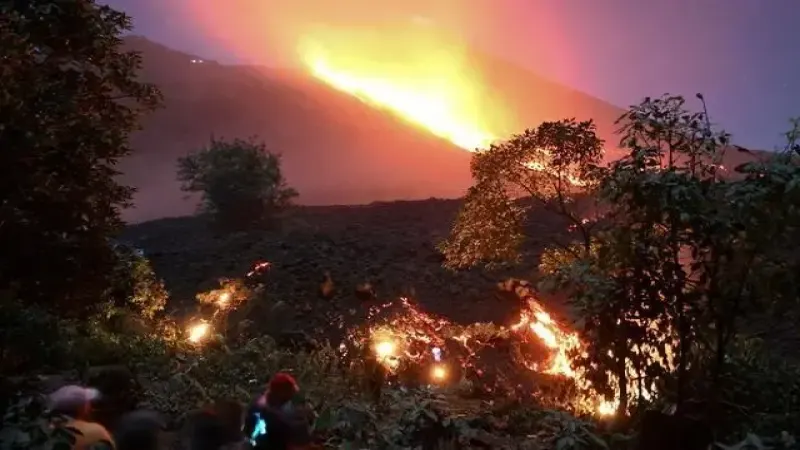
Since Guatemala entered its dry season in November 2023, El Niño has deepened drought, driving 855 fires, 609 of them forest fires. Blazes around the Agua Volcano damaged more than 40 hectares of vegetation in the Antigua coffee and Acatenango growing areas. The National Interconnected Power System has been in emergency since March 18, with hydroelectric generation down 17 percent from the historical average.
Coffee, bananas, sugar and cardamom are pillars of Guatemala's foreign exchange earnings, so damage to farms and rising processing costs carry weight beyond the crop. Drought in the Panama Canal has lengthened fuel transport cycles, adding pressure along the supply chain. Guatemala is seeking relief through investment and economic action plan meetings while the emergency measures continue.
Since entering the dry season in November 2023, the El Niño phenomenon has continued to intensify drought conditions in Guatemala, triggering large-scale forest fires and severe shortages of hydroelectric power. Wildfires in the Agua Volcano region of southern Guatemala have affected the two major coffee-producing areas of Antigua and Acatenango, damaging more than 40 hectares of vegetation; meanwhile, the National Interconnected Power System has been in a state of emergency since March 18, with hydroelectric generation down 17% compared to the historical average, driving up operating costs for coffee processing plants. Drought in the Panama Canal has further lengthened fuel transportation cycles, putting pressure on the coffee industry chain. Guatemala is seeking relief by attracting investment and convening economic action plan meetings. This article will review the disaster data, the causes of the electricity crisis, and their cascading effects on coffee cultivation and processing.
According to messages posted on the official social media account of Guatemala's National Coordinator for Disaster Reduction, since the country entered the dry season in early November 2023, the El Niño weather pattern has further worsened drought conditions, leading to fires in multiple locations across the country. Statistics show that Guatemala has recorded a cumulative total of 855 fires, 609 of which were forest fires. This situation has dealt a significant blow to the country's agriculture and farming sector, and exports of cash crops such as coffee, bananas, sugar, and cardamom are the main pillars of Guatemala's foreign exchange earnings.
Among the affected areas, the wildfires around the Agua Volcano in southern Guatemala are particularly severe, and this region happens to be home to the coffee-producing areas of Antigua and Acatenango. It is reported that the wildfires have spread across more than 40 hectares of forest and vegetation. Local residents have been safely evacuated under government organization, with no casualties reported, but local farming is expected to be affected to varying degrees.
On the other hand, insufficient rainfall, drought, and rising electricity demand brought on by the El Niño phenomenon prompted Guatemala's Ministry of Energy and Mines (MEM) to recently declare a state of emergency for the National Interconnected Power System (SNI). The state of emergency took effect on March 18 and will last until May 31; if the El Niño phenomenon persists, the state of emergency may be further extended. The head of MEM pointed out that the core reason for declaring the state of emergency is the decline in hydroelectric generation caused by below-average rainfall.
Power management authorities explained that the El Niño phenomenon has reduced rainfall, which in turn has reduced electricity supply. In February, the power output of hydroelectric plants fell 17% compared to the historical average. The Chixoy Reservoir is at 75% of its capacity, with a water level of 796.7 meters, down 1.08 meters from seven days earlier, forcing reliance on other means of generation to fill the gap left by reduced hydroelectric power.
However, although Guatemala's traditional power plants have already taken on base-load generation tasks in the national power system, they lack additional reserves to cope with growing generation demand and to make up for the reduction in hydroelectric power. In addition, affected by El Niño, drought in the Panama Canal has reduced vessel passage capacity, and fuel transportation times for Guatemala are expected to be extended by about 4 weeks. Coffee industry insiders say this situation has already affected coffee cultivation and the operation of coffee processing plants; at the same time, the power shortage is driving up electricity bills, and production costs are rising accordingly.
Nevertheless, Guatemala is actively seeking solutions. The Guatemalan Chamber of Industry (CIG) issued a statement reiterating the country's need for investment in the electricity sector and expressing willingness to cooperate with authorities to jointly solve the problem. Meanwhile, Guatemala's Ministry of Economy recently held a "Guatemala Economic Action Plan" meeting, at which it was stated that the country is expected to attract nearly US$1.4 billion in foreign direct investment in 2024, of which 48 projects in agricultural sectors such as food, beverages, and coffee could attract US$381 million, while the electrical, electronics, and manufacturing industries will also draw capital inflows, thereby improving the national economy.
The above content is compiled by CoffeeHunters, a coffee news website.


