







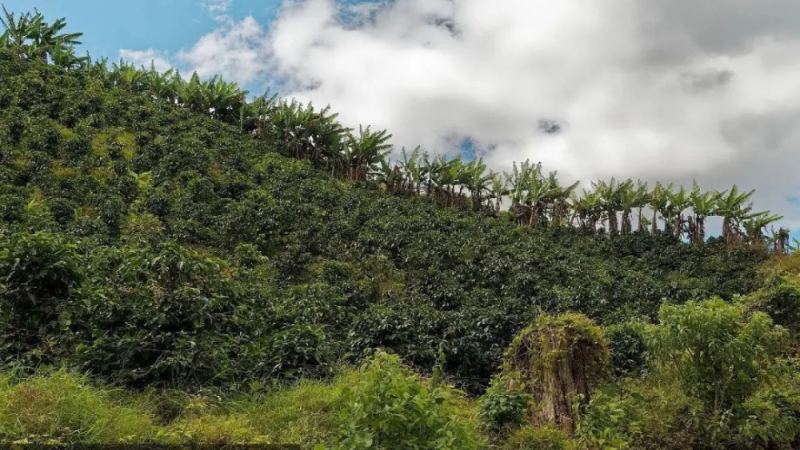
Where Do You Grow Coffee Beans in Costa Rica's Volcanic Zones?
Costa Rica was the first Central American country to cultivate coffee, and the crop grows mainly in volcanic areas with fertile, low-acidity soil. More than 80 percent of producing regions sit between 800 and 1,700 meters above sea level, with temperatures from 17 to 28 degrees Celsius and 2,000 to 3,000 millimeters of annual rainfall. Tarrazú is the largest region and the first to earn designation of origin.
The Mirazu Estate in Tarrazú is run by formally trained Esteban Sanches and is known for careful processing and unusual variety combinations. Its Strawberry Candy beans blend Geisha, ET47, SL28, and MAICO with raisin honey processing, yielding rose aroma and strawberry sweetness. Costa Rica ranks fourteenth in global production, and since 1989 its laws have prohibited cultivating Robusta, a detail tied to where did the coffee bean originate as an Arabica-focused origin.
As the first country in Central America to cultivate coffee, Costa Rica has given rise to numerous specialty coffees thanks to its volcanic soil and microclimates. Among them, the Tarrazú region is the country's largest and first region to receive designation of origin certification. Located here, Mirazu Estate is independently run by formally trained Esteban Sanches and is known for its meticulous processing and innovative variety combinations. This article will take an in-depth look at Mirazu Estate's Strawberry Candy coffee beans, analyzing its blend of Geisha, ET47, SL28, and MAICO, as well as the unique flavors brought by raisin honey processing. At the same time, Front Street Coffee's brewing recommendations will also be presented, taking you to experience this coffee's rose aroma and strawberry sweetness.
Central America lies within the coffee-growing belt, and many countries there are rich in coffee production, such as Guatemala, Honduras, Nicaragua, Panama, and Costa Rica, all well-known origins. Costa Rica ranks fourteenth in global coffee production and is also the first country in Central America to begin cultivating coffee. Since 1989, the country's laws have explicitly prohibited the cultivation of Robusta varieties.
Costa Rica
Costa Rica is located on the Central American isthmus, bordering Nicaragua and Panama, with the Caribbean Sea to the east and the Pacific Ocean to the west, and a total coastline of 1,290 kilometers. The coastal areas are mainly plains, while the central part is cut off by rugged mountains, and more than 200 volcanoes are distributed across the country.
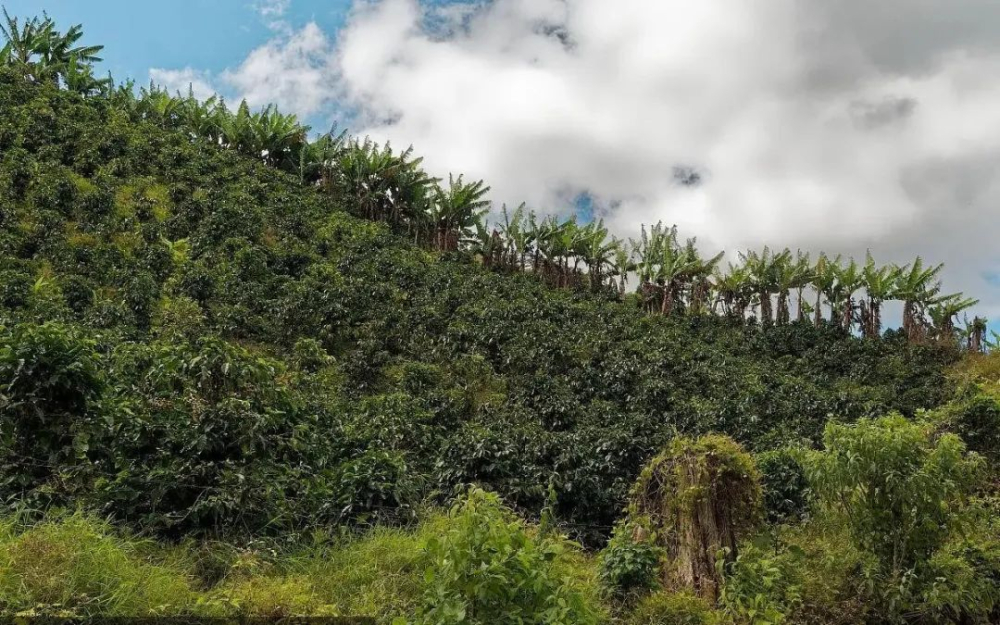
The country has a tropical and subtropical climate, with a year divided into rainy and dry seasons. Coffee is mainly grown in volcanic areas and low-acidity fertile soil. More than 80% of the producing regions are located between 800 and 1,700 meters above sea level, with temperatures ranging from 17℃ to 28℃ and annual rainfall reaching 2,000 to 3,000 millimeters, making it very suitable for coffee cultivation. The Costa Rican government places great importance on the coffee industry and quality, and in 1933 established the Coffee Institute ICAFE, dedicated to variety research, improvements in cultivation techniques, and promoting the country's coffee globally.
Tarrazú Region
Costa Rica has eight coffee-producing regions in total—West Valley, Central Valley, Tarrazú, Tres Ríos, Orosi, Brunca, Turrialba, and others—basically all distributed along the central mountain range.
The Tarrazú region is the largest and most famous producing region in the country, and also the first to obtain designation of origin certification. It is located in central Costa Rica, within San José Province. Influenced by warm, moist Pacific air currents, annual rainfall is about 2,400 millimeters, and coffee is grown on fertile volcanic soil at altitudes of 1,500 to 2,100 meters. Because the region is so renowned, Costa Rica registered the designation of origin name "Café de Tarrazú" with the European Union and the World Intellectual Property Organization (WIPO) in 2019 to protect local coffee. Front Street Coffee has a washed Costa Rica Tarrazú coffee bean, which serves as a representative entry-level selection, with mild fruit acidity, flavors of sweet orange, nuts, and honey, and a smooth finish.
Mirazu Estate
Mirazu Estate is a relatively small coffee estate in the Tarrazú region, managed by Esteban Sanches and his family. Esteban was originally a family member of the neighboring Little Torch Estate. Out of his love for and dedication to coffee, he independently founded the estate and named it "Mirazu," meaning "overlooking Tarrazú."
The estate owner Esteban graduated from the coffee department of the University of Costa Rica, making him formally trained, and he applies the knowledge he learned to managing the estate. In addition to trial-planting the Ethiopian heirloom variety ET47, the estate's small wet-processing equipment was entirely designed and assembled by him alone.
Coffee Varieties
This coffee bean is rather special, composed of 50% Geisha mixed with ET47, SL28, and MAICO. The Geisha variety was originally collected from the coffee forests of Ethiopia, then sent to the Lyamungu Research Station in Tanzania, and in 1953 was introduced to Costa Rica's Tropical Agricultural Research and Higher Education Center (CATIE), where it was registered as T2722. After confirming its resistance to coffee leaf rust, it was distributed through CATIE to various parts of Panama in the 1960s, and finally rose to fame in Panama.
ET47 is a heirloom variety from Ethiopia. In the 1990s, the Costa Rica Coffee Institute gave many varieties to farmers in the Tarrazú region as research trees for leaf rust resistance, and they were named with numerical codes for easier identification.
SL28, meanwhile, came about in the late 1930s when the Kenyan government commissioned the former Scott Agricultural Laboratories (now the National Agricultural Laboratories) to select 42 varieties and conduct research on yield, quality, drought resistance, and disease resistance. SL is the abbreviation of Scott Laboratories, and SL28 is one of them. Genetic testing shows that SL28 originates from the Bourbon variety. Although its yield is relatively low, it has excellent sweetness, complex and varied flavors, and a distinct dark plum character.
Front Street Coffee Costa Rica Mirazu Estate Strawberry Candy Coffee Beans Region: Tarrazú Region Estate/Processing Plant: Mirazu Estate Altitude: 1,700 meters Varieties: Geisha, ET47, MAICO, SL28 Processing Method: Raisin Honey Process Flavor: Raisin, Strawberry, Candy, Rose, Cream
This Costa Rica Mirazu Estate Strawberry Candy coffee bean from Front Street Coffee uses raisin honey processing and is medium roasted. Front Street uses a V60 with a 1:15 ratio and brews at 92℃ water temperature. You will smell a fresh rose aroma, and on the palate there are flavors of strawberry, raisin, and almond, with abundant sweetness and a silky mouthfeel.
The above content is compiled by CoffeeHunters, a coffee news website.


