







How Does Wet Hulling Shape Mandheling Coffee Flavor?
Wet hulling is Indonesia's semi-washed process that removes the parchment layer, or endocarp, from green coffee beans before they are fully dried. This deviates from standard practice, where parchment comes off only at the end. The method developed because Indonesia's humid climate, with 70 to 90 percent year-round air humidity and short sunshine hours, makes full sun drying unreliable.
Long sun drying risks mold on the fruit, and washed processing is equally difficult when weather is unpredictable. By hulling early, producers dry the beans faster and avoid spoilage. The article traces each step, from flotation and fermentation through drying and final hulling, and asks whether the peaberry-like beans this process yields are truly responsible for Mandheling's deep, low-toned cup.
The deep, mellow, low-toned flavor of Mandheling comes not only from its Robusta heritage but also from a unique post-processing technique native to Indonesia—wet hulling. This process, jokingly called "semi-washed," removes the parchment layer before the green beans are fully dried. Why did Indonesian producing regions invent this method to suit local conditions? What details are hidden in each step, from flotation and fermentation to drying, hulling, and final drying? Are the "goat hoof beans" produced by wet hulling truly the creator of Mandheling's flavor? In this article, Front Street will walk you through the operational logic of wet hulling, clarify common misconceptions, and restore the true face of this processing method.
Of course, behind this captivating flavor, besides the genetic contribution of the Robusta bean, there is also a unique local Indonesian post-processing method—wet hulling. This is exactly what Front Street wants to discuss in detail in this article.
What Is Wet Hulling?
Among the various post-processing methods for green coffee beans, most are drying techniques gradually developed based on the environmental conditions of the producing region, and wet hulling is no exception. The meaning of wet hulling is hard to grasp from the words alone, so Front Street will not beat around the bush: wet hulling refers to removing something in advance before the green coffee beans have reached a dry state, and what is removed is the parchment layer, also known as the endocarp.
In the usual processing flow, the parchment layer is generally removed only at the final stage, but wet hulling does the opposite, removing it while the beans are still mid-process. Because of this, wet hulling is also called wet hulling (Wet Hulling).
Why Does Indonesia Use Wet Hulling?
As Front Street mentioned earlier, everything is adapted to local conditions. Indonesia's climate is famously humid, with short annual sunshine hours and air humidity hovering between 70% and 90% year-round. Therefore, unlike other coffee-producing regions, locals cannot rely on long sun-drying to thoroughly dry the coffee fruit all at once, and brief sunlight instead tends to cause the fruit to become infected with mold, that is, to go moldy.
At the same time, local weather is unpredictable, and washed processing is equally unworkable. This is because it is difficult to guarantee that after the coffee beans complete fermentation in water, they will get enough sunlight to dry. It is under these conditions that wet hulling came into being.
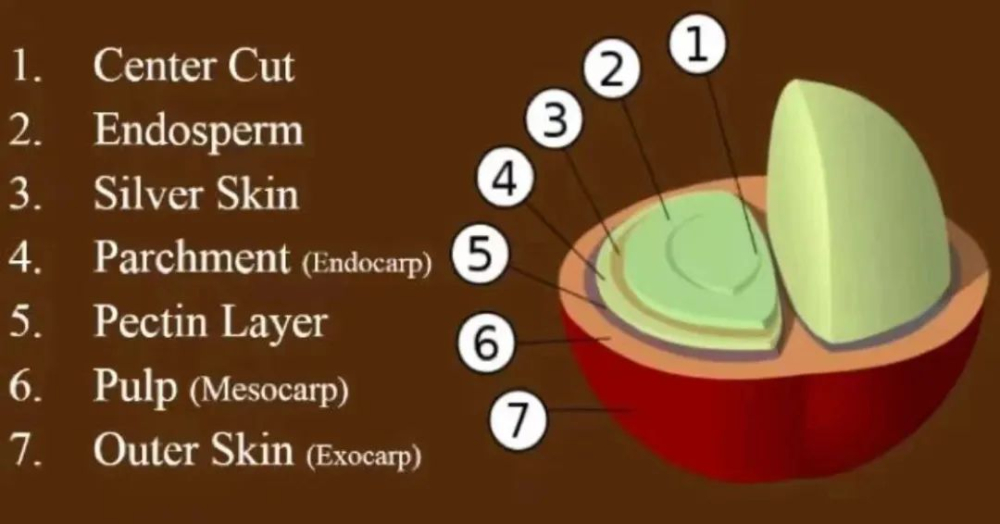
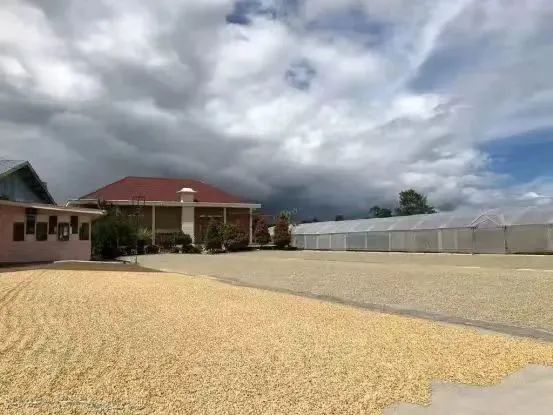
Wet hulling is often jokingly called "semi-washed processing" because its operation is quite similar to washed processing, but not entirely the same. How should this be understood? Wet hulling follows the first half of washed processing at the initial stage, allowing the green coffee beans to ferment first. Then the coffee beans still wrapped in parchment are placed in the sun to dry, and after drying to a certain degree, the parchment layer is removed, followed by continued drying until dry. This operation allows the coffee beans to complete drying in as short a time as possible, thereby reducing the risk of mold growth. Next, Front Street will show you the specific processing steps of wet hulling.
The Processing Flow of Wet Hulling
The first half of wet hulling is the same as washed processing. After the fresh fruit is picked, it is first floated in clean water to remove defective fruit floating on the surface; then the outer skin and pulp of the coffee fruit are removed by machine, yielding green coffee beans still attached to mucilage and parchment; after the green beans are taken out, they are put into a pool for fermentation, allowing the mucilage layer on the bean surface to gradually break down, with the specific duration depending on the situation, roughly falling within the range of 12 to 36 hours; after the soaking fermentation is complete, the washing stage comes to an end, and the second half of wet hulling begins.
Coffee farmers spread the fermented green coffee beans, still with parchment layer, in the sun to dry. If there is continuous fine weather, the moisture content of the beans can quickly drop to between 30% and 50%; at this point drying is stopped, and a huller is used to remove the parchment layer from the coffee beans; after that, drying continues until the moisture content drops to 12%, and the work is done.
The Product of Wet Hulling—Goat Hoof Beans
Because the huller that removes the parchment layer operates quite roughly, it is very easy to crush or bruise the green coffee beans during the process of stripping off the parchment layer. Especially at the head and tail ends of the beans, friends who have seen Mandheling green beans should know that some beans leave crack marks resembling goat hooves, so people vividly call them "goat hoof beans."
(The one on the right in the picture is a goat hoof bean)
Thus a saying spread among the public that the existence of goat hoof beans is what creates Mandheling's unique flavor. But this is not the case. Goat hoof beans are merely damaged by mechanical squeezing and have no substantial effect on flavor. So everyone, do not be misled by this claim.
Front Street Coffee
No. 10, Baoqian Street, Yandun Road, Dongshankou, Yuexiu District, Guangzhou, Guangdong Province
The above content is compiled by CoffeeHunters, a coffee news website.


