








How Is Monsooned Coffee of India Actually Made?
India's Malabar monsooned coffee is made by exposing green coffee to monsoon winds and moisture, a method that traces back to seventeenth-century sailing ships. Beans piled at the bottom of the hold absorbed sea air and salt during long voyages to Europe, swelling, turning yellowish-brown, and losing acidity. Today the same effect is recreated on the Malabar Coast.
In modern monsooning, green bean coffee is stored in open monsoon warehouses on the coast, turned regularly, and bagged under controlled humidity until it swells and shifts color. Smoke-driven pest control and grading follow before sale. The result is a soft cup with grain and spice aromas, little acidity, and a faint genmaicha character rather than the profile of India's bulk robusta.
India is famous worldwide for its curry, but monsoon coffee is equally a presence that cannot be overlooked. This coffee, with its unique grain and spice flavors, originated as an accidental gift from the sailing ship era of the seventeenth century, nearly disappeared in the nineteenth century after steamships replaced sailing ships, and was finally replicated through the monsoon baptism of the Malabar Coast. This article will guide you through the background of monsoon coffee's birth, the specific operational process of the monsooning method, and every detail from storage in monsoon warehouses, regular turning, bagging control, to smoke-driven pest control and graded sale.
When it comes to Indian cuisine, the first thing that comes to most people's minds is inevitably curry; and when it comes to Indian coffee, the most frequently mentioned is none other than "monsoon coffee." Compared with the robusta that India produces in large quantities, the processing method of monsoon coffee is clearly more intriguing. Today, follow Front Street Coffee and take a look at how this "monsoon coffee" from India is actually made!
The history of monsoon coffee can be traced back to the seventeenth century, when India had already become one of the important coffee sources for European countries, second only to Yemen's Mocha. It was also during this period that the prototype of monsoon coffee quietly began to take shape. India and Indonesia, which produces aged Mandheling, both belong to Asia, so it can be inferred that in the seventeenth century, shipping coffee beans out of India was likewise an extremely time-consuming affair.

The transport tool used by India at the time was the sailing ship. Coffee beans were piled at the very bottom of the hold, which was precisely the place closest to the seawater. As a result, during the long voyage the beans continuously absorbed the moisture evaporated from seawater and its unique salty taste, and by the time they arrived in Europe, their essence had quietly changed. The originally plump, moist, greenish coffee beans swelled under the long-term onslaught of sea breeze and moisture, and their surface turned a yellowish-brown similar to rice grains. The brewed coffee had almost no acidity, with grain and spice aromas standing out prominently, yet it was not harsh; the mouthfeel was quite soft and even carried a hint of genmaicha character. For Europeans at the time, this unique flavor was truly rare, so Indian coffee was highly sought after then.
Entering the nineteenth century, maritime transport advanced greatly. The appearance of steamships, together with the opening of the Suez Canal, cut India's original six-month coffee transport time by about half. Logically, fewer uncontrollable factors affecting the coffee beans should have been a good thing, but unexpectedly Europeans no longer bought it. Without the erosion of seawater, the coffee beans retained their original appearance, yet it was precisely this that triggered dissatisfaction among European customers. The beans shipped from India not only lost their former charming yellowish-brown color, but even their flavor became mediocre (if this is hard to understand, imagine a cup of Panama Geisha losing its white floral aroma). As a result, orders from Europe dwindled day by day. Left with no choice, Indian green bean exporters began trying to replicate that unique deliciousness.
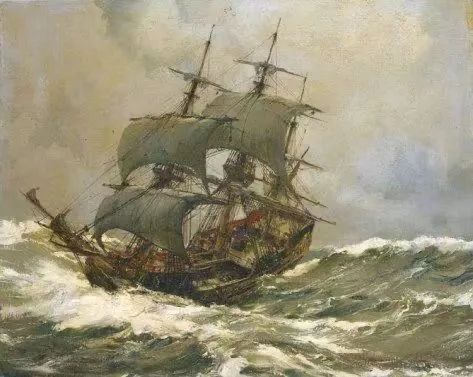
Making shipping time return to six months was obviously unrealistic, since the manpower and financial cost involved would be too great. To reproduce it stably and at low cost, they could only find another way. In the end, the exporters really did find a solution: from late May to September each year, the Malabar Coast in southwestern India welcomes sea breezes, and the environment becomes humid because of them. The exporters therefore speculated: could this monsoon be used to let the coffee regain its former flavor? After repeated experiments, this idea proved feasible. After several months of monsoon baptism, the coffee reproduced the deliciousness brought by long sea transport, and exporters were able to sell the classic flavor once again. Thus, this coffee bean that requires the Malabar monsoon baptism was called "monsoon coffee," and this unique processing method was named the "monsooning method."
Monsooning Method The monsooning method also uses coffee beans that have undergone pretreatment; the green beans must first complete sun-drying before entering the monsooning stage. But as mentioned earlier, the core driving force of the monsooning method, the "monsoon," is not available at all times, so coffee beans already harvested and processed before the monsoon arrives need to be stored while waiting. The coffee beans are stored in specially designed monsoon warehouses to wait for the monsoon. When the monsoon season arrives, workers spread the beans flat on the ground in piles about 12 to 20 centimeters high. In this way, when the monsoon comes, it can directly "strike" the coffee beans (face the monsoon!).
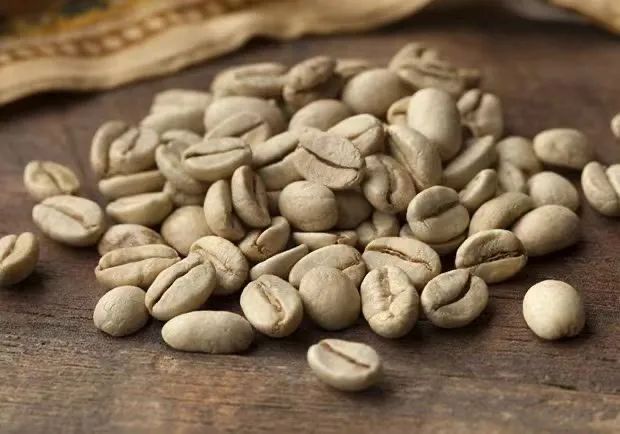
Afterward, workers use rakes to turn the coffee beans at regular intervals so that the monsoon can "reach every bean equally." After about five days, once the beans have been monsoon-treated to a certain degree, they are bagged. When bagging, the workers deliberately reduce the amount filled and do not fill the bags completely, because only in this way can the gravity caused by stacking be reduced, leaving larger gaps between the beans and making it easier for the monsoon to pass through.
The bags are basically replaced regularly, in order to reduce the probability of mold growth. This period of wind baptism is called the "monsooning period." The monsooning period lasts 12 to 16 months, and exactly when it ends must be judged according to the condition of the beans. After that, the beans that have completed monsooning still need to be fumigated to drive away hidden weevils; after all, coffee beans are an agricultural product, and pest problems cannot be completely avoided. Finally, the treated beans are screened to remove those beans that were not fully affected by the monsoon and have not changed, and then graded according to flavor and size, after which they can be sold externally.

Front Street Coffee (FrontStreet Coffee)
No. 10, Bao'an Qian Street, Yandun Road, Dongshankou, Yuexiu District, Guangzhou City, Guangdong Province
The above content is compiled by CoffeeHunters, a coffee news website.


