








Does a finer grind make cold brew coffee weaker?
Grinding cold brew coffee finer can lower the measured concentration rather than raise it. In a Front Street test with Costa Rica Baja beans, a batch at Ek43 setting 9 measured 2.3 percent concentration, while a finer batch at setting 8 came out at only 2.1 percent. So the pour-over rule of finer equals more extraction does not carry over.
Both batches used 20 grams of coffee at a 1:10 ratio, or 200 milliliters of water, refrigerated for 8 hours before filtering. During this long brew, fine particles tend to clump and settle, and water moves through the bed less freely, so fewer compounds reach the liquid. Adjust the coffee grinding process for cold brew on its own terms instead of copying pour-over settings.
When making cold brew coffee, many people habitually apply the grind adjustment logic of pour-over—if they want to increase the extraction yield, they grind finer. However, through comparative experiments, Front Street Coffee found that after grinding cold brew coffee finer, the measured concentration was actually lower. The reason behind this is closely related to the extraction method of cold brew's long static immersion. This article will fully analyze this phenomenon and explain the key points to note when adjusting the grind for cold brew coffee.
Generally speaking, if you want to change the extraction efficiency of cold brew coffee, adjusting the grind size is indeed a direction worth trying. But it is important to note that the grind adjustment logic for pour-over coffee cannot be directly applied to cold brew coffee.
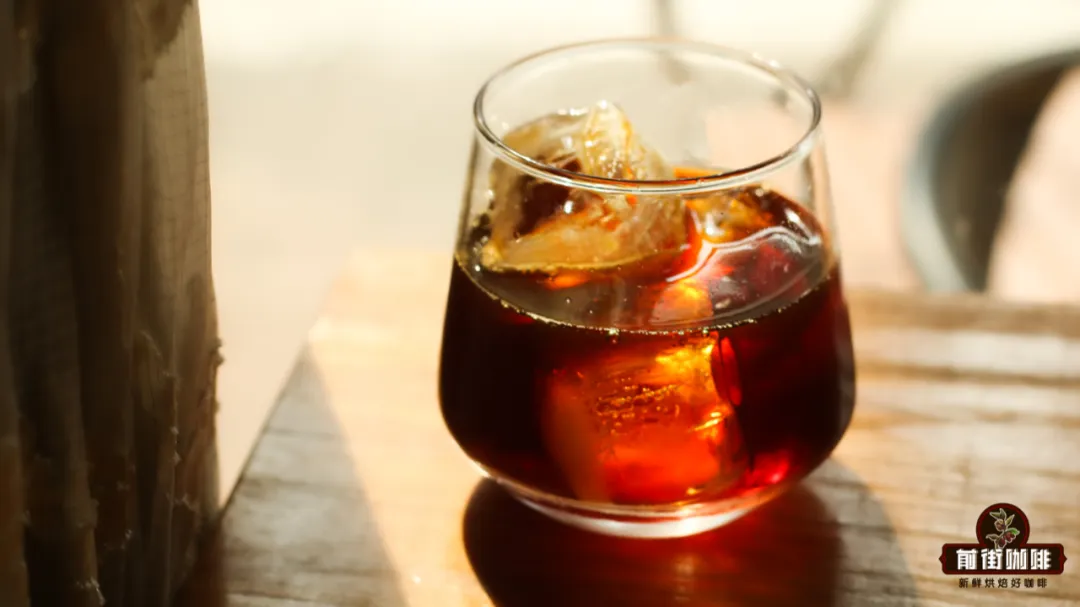
The conventional grind adjustment approach is: to reduce extraction efficiency, adjust the grind coarser; to improve extraction efficiency, adjust the grind finer. The principle lies in controlling the total surface area of the coffee grounds—the finer the grind, the larger the total surface area of the grounds, and the easier it is for hot water to penetrate, thereby extracting more abundant coffee flavor compounds.
So why doesn't this logic work for cold brew coffee? The reason is actually not complicated. Let's first look at a set of experiments conducted by Front Street Coffee.
Extraction Experiment
Front Street Coffee used two different coarseness levels of coffee grounds to make cold brew coffee and observed the differences between them.
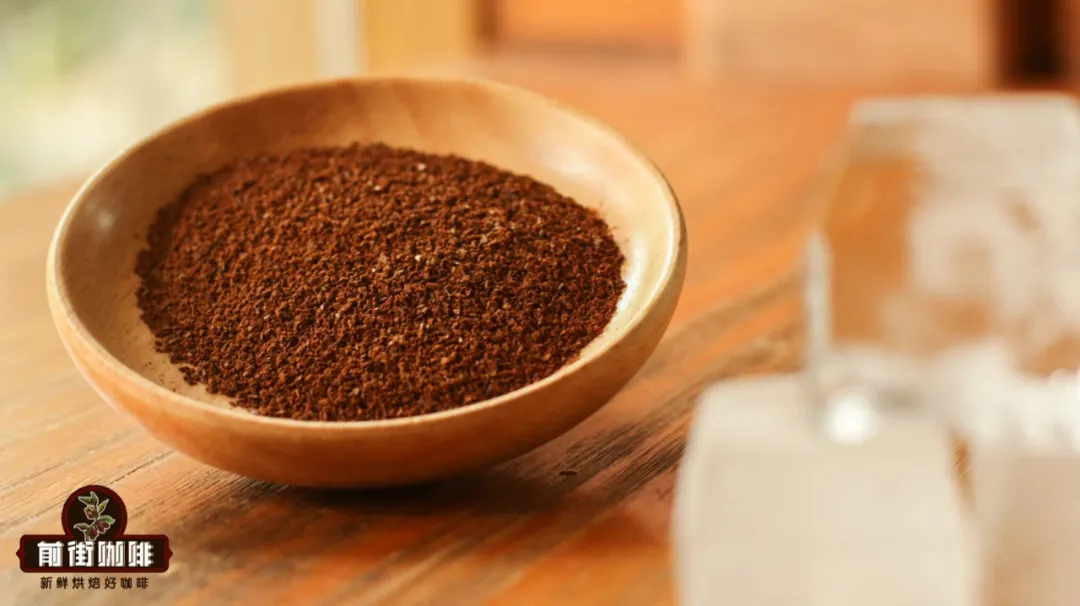
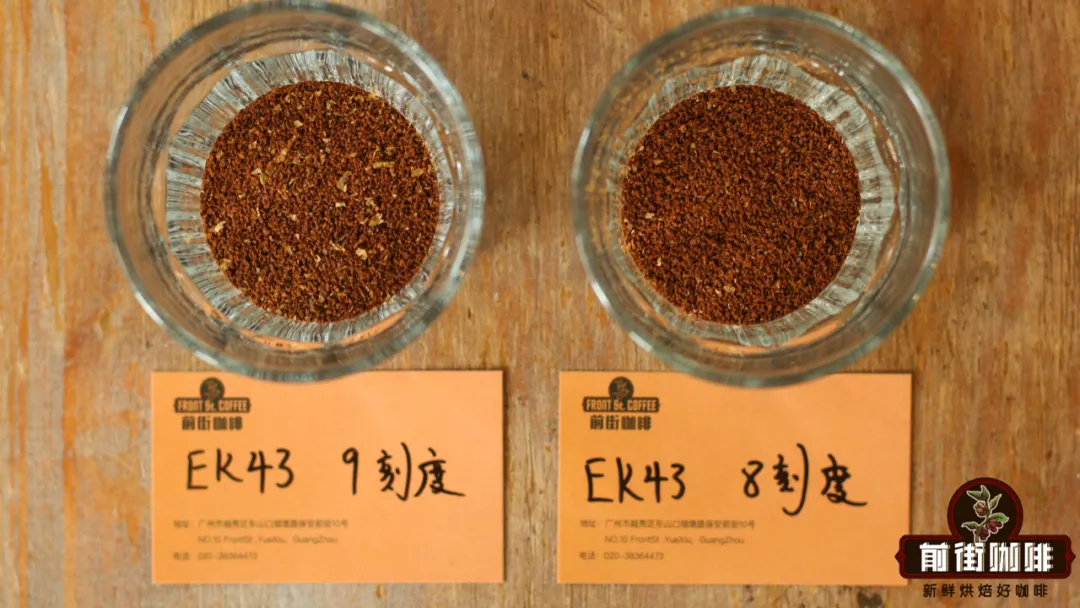
The coffee beans selected for this experiment were Costa Rica·Baja. The grind size used for pour-over was Ek43 setting 9.5, and for cold brew coffee it needed to be adjusted finer by 0.5, which is Ek43 setting 9. Then we prepared a batch of even finer coffee grounds for extraction comparison. The specific extraction parameters are as follows:
Coffee dose: 20g
Grind settings: Ek43 setting 9 & Ek43 setting 8
Coffee-to-water ratio: 1:10 (200ml)
Refrigeration time: 8h
After refrigeration, filter it out and measure the concentration separately. The results are as follows:
The concentration of the conventionally ground Baja cold brew was 2.3%, while the concentration of the finer-ground Baja cold brew was only 2.1%.
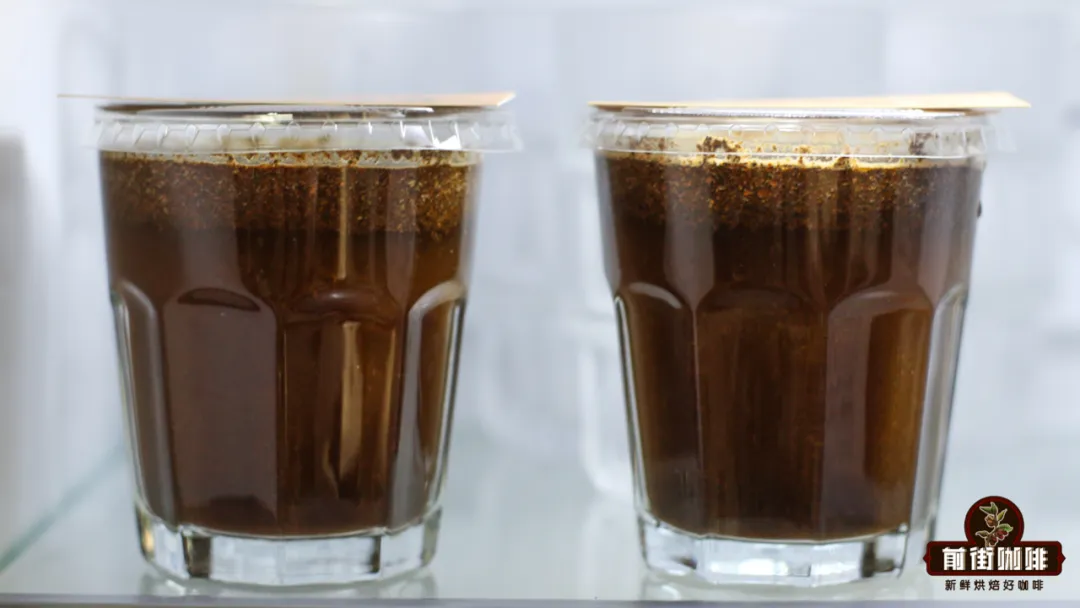
It is not hard to see that the coffee concentration after grinding finer was indeed somewhat lower. The reason for the lower concentration is actually easy to understand—during the cold brew process, the coffee remains in a long static soaking state. At the beginning of extraction, after the coffee grounds are impacted by water, most of them float on the surface of the liquid. As the soaking time continues to extend, these floating particles gradually absorb enough water, increase in weight, and then begin to sink.
Front Street Coffee (FrontStreet Coffee)
No. 10, Baoqian Street, Yandun Road, Dongshankou, Yuexiu District, Guangzhou City, Guangdong Province
The above content is compiled by CoffeeHunters, a coffee news website.


