







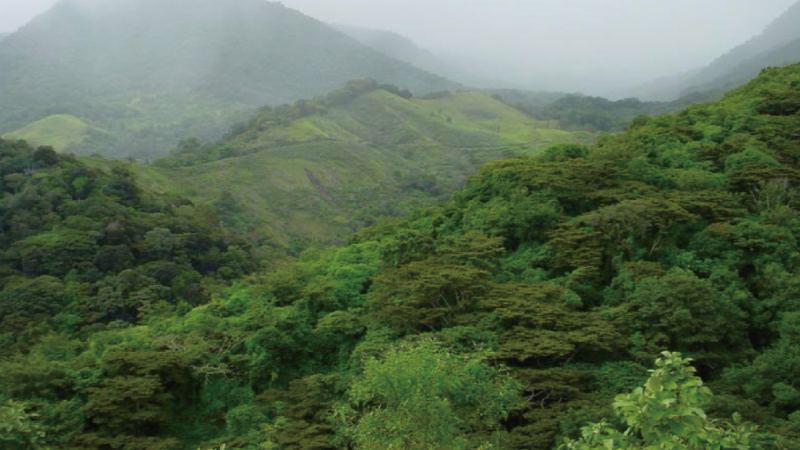
How Does Geisha Coffee from Panama Grow in Boquete?
Geisha coffee from Panama became a benchmark for the specialty sector after Hacienda La Esmeralda won a reliable of Panama competition in 2005 and set a record auction price. The variety that had been grown as a mixed planting was separated and traced to Boquete, where volcanic ash soil, high altitude, and microclimates shape its character.
Panama sits on the Central American isthmus with a tropical maritime climate, average temperatures around 23 to 27°C, and annual rainfall of roughly 1,500 to 2,500 millimeters, so coffee cultivation concentrates in the volcanic zone of Chiriquí Province. Front Street Coffee sells two Geisha blends, Strawberry Candy and Butterfly, and the article covers how Butterfly brews.
Panama coffee occupies a pivotal position in the international specialty coffee landscape, especially the Geisha variety, which completely rewrote the coffee world's perception after Hacienda La Esmeralda won the BOP competition in 2005 and fetched a record-breaking price at auction. Panama is located on the Central American isthmus, where unique geographical and climatic conditions provide an ideal environment for coffee cultivation, and the Boquete region, in particular, has become the cradle of top-tier coffee thanks to its volcanic ash soil, high altitude, and microclimates. This article will take you through an in-depth look at Panama's coffee terroir, Boquete's growing advantages, and the evolution of Geisha from a mixed variety to a separated one. It will also introduce two Geisha blends currently sold by Front Street Coffee — Strawberry Candy and Butterfly — and share the specific brewing performance of Butterfly.
Panama coffee enjoys an excellent reputation in the international market, with the Geisha variety being especially prominent. In 2005, the Geisha planted at Hacienda La Esmeralda took first place in the Best of Panama (BOP) competition and set a record auction price, making it famous in coffee circles ever since.
Panama Coffee
Panama is located in Central America, bordered by Colombia to the east, Costa Rica to the west, the Pacific Ocean to the south, and the Caribbean Sea to the north. Its territory forms an S shape connecting North and South America, earning it the reputation of the "Bridge of the World."
Panama's terrain is highly varied, with interwoven valleys. Apart from the plains along the northern and southern coasts, most of the country is mountainous. Because it is close to the equator, it has a tropical maritime climate, humid during the day and cool at night, with an average annual temperature between 23 and 27°C. There are distinct dry and rainy seasons throughout the year, with average annual rainfall of about 1,500 to 2,500 millimeters. In addition, Panama is rich in natural resources, with numerous rivers, and forest coverage reaches as high as 57% of the land area, thanks to the protection of natural ecosystems. Coffee is mainly grown in the volcanic zone of Chiriquí Province in the west. The fertile soil nourished by volcanic ash, high altitude, moderate rainfall, and unique microclimates together create an outstanding coffee-producing region. Agriculture and tourism are both important pillars of Panama's economy.
Boquete Producing Region
The coffee-producing areas are mainly divided into three major regions: Boquete, Volcan-Candela, and Renacimiento. These producing areas all surround the country's three volcanoes: Volcán Baru, El Valle, and Le Yeguada. Volcanic ash makes the soil more fertile and more suitable for coffee cultivation.
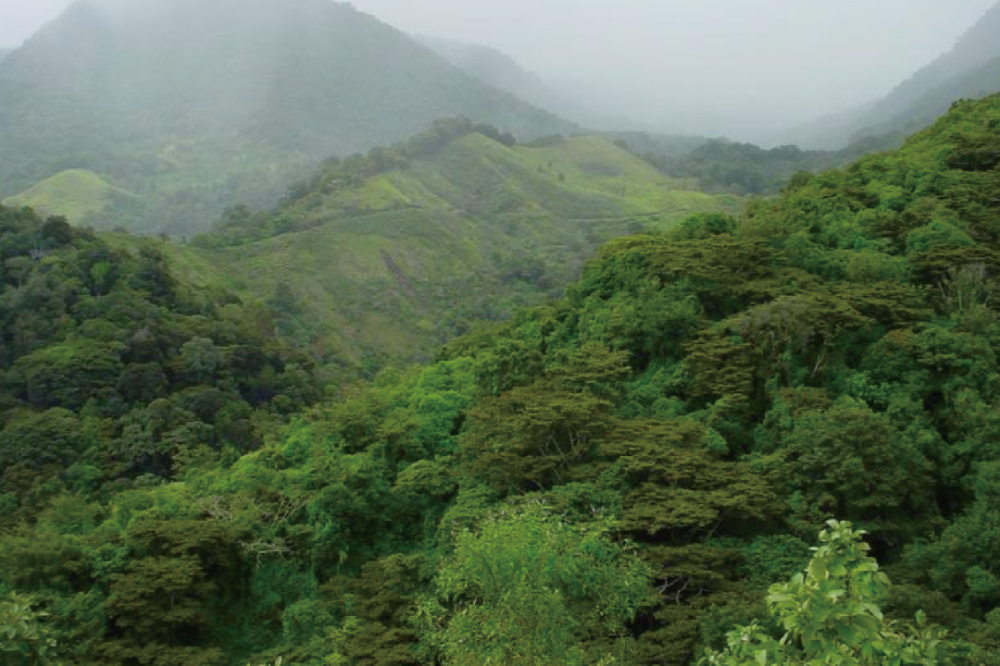
Boquete is Panama's most widely known coffee-producing region because it is home to many famous estates, such as Hacienda La Esmeralda, Elida Estate, and Duncan Estate, thanks to Boquete's excellent growing conditions. Coffee in this region is grown at altitudes between 1,200 and 2,000 meters, with temperatures ranging from 11 to 27°C — neither too cold nor too hot — while the large temperature difference between day and night helps the coffee cherries develop slowly and accumulate flavor. In addition, moderate rainfall, fertile soil brought by volcanic ash, abundant sunshine, and the area's unique microclimate together give Boquete the ability to produce high-quality coffee.
Geisha Blends
Currently, Front Street Coffee offers two Geisha blend coffee beans. One is Strawberry Candy from Mirazu Estate in Costa Rica, blended from Geisha, ET47, SL28, and Maico. The other is Butterfly coffee beans from Panama's Boquete producing region, composed of 70% Geisha along with Caturra and Catuai.
In Panama's early days, Caturra and Catuai were mainly planted. When Geisha was introduced to Panama in 1970, it was not widely cultivated because the plants were relatively fragile. It was not until Hacienda La Esmeralda accidentally discovered it and entered it into competition that Geisha became famous overnight, after which its cultivation gradually expanded. Earlier, in order to increase yields, people planted Geisha together with Caturra and Catuai. At harvest time, it was difficult to select Geisha separately, so they were picked together. Later, in order to highlight Geisha's unique flavor, fine harvesting by variety was begun, and finally the varieties were blended in proportion at the export stage.
Front Street Coffee Panama Boquete Butterfly Coffee Beans Region: Boquete Producing Region Altitude: 1,400-1,700 meters Varieties: Geisha, Caturra, Catuai Processing Method: Washed Flavor: White floral aroma, lemon, berries, hazelnut, honey
This Front Street Coffee Butterfly coffee from Panama's Boquete producing region is washed-processed and medium-light roasted. Front Street uses a V60 dripper, brewing with a 1:15 coffee-to-water ratio and a water temperature of 92°C. After brewing, white floral aromas can be smelled. On the palate, it presents lemon-like acidity, accompanied by berry and grape flavors, with a hazelnut note in the finish and a mouthfeel as smooth and clean as honey.
The above content is compiled by CoffeeHunters, a coffee news website.


