







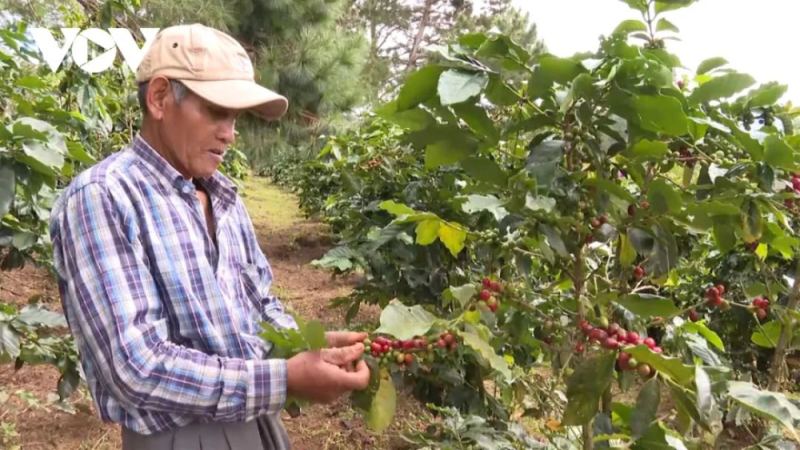
Why are Vietnam coffee prices climbing again this season?
Domestic coffee prices in Vietnam have risen again, with the Central Highlands, the largest growing region, adding 1,300 to 1,400 Vietnamese dong per kilogram. Bagged coffee beans now sell for 92,400 to 93,200 dong per kilogram. On international markets, May 2024 Robusta futures reached $3,450 per ton, while Arabica slipped to 182.95 cents per pound.
Prices stayed high because Robusta supply is tightening: major traders are buying aggressively, and farmers who held back earlier are still reluctant to sell, pushing traders to secure stock before contracts default. Meanwhile attacks in the Red Sea and Bab-el-Mandeb Strait continue, and Houthi threats to extend strikes to the Indian Ocean add new pressure on global shipping and export flows.
Domestic coffee prices in Vietnam have climbed once again, with the Central Highlands, the largest producing region, seeing purchase prices rise by 1,300 to 1,400 Vietnamese dong per kilogram across the board, and the price of bagged coffee beans has risen to a range of 92,400 to 93,200 Vietnamese dong per kilogram. On the international market, Robusta futures for May 2024 delivery rose to $3,450 per ton, while Arabica fell back to 182.95 cents per pound. Meanwhile, armed attacks in the Red Sea and the Bab-el-Mandeb Strait continue to escalate, with the Houthi armed group threatening to extend its strike range to the Indian Ocean, putting global shipping under a new round of pressure. Vietnamese coffee exporters, for their part, have high hopes for the Italian market, where Robusta holds a dominant position.
Recently, the Vietnam Coffee and Cocoa Association announced that domestic coffee purchase prices in the country have risen markedly. On the international futures market, Robusta coffee quoted for May 2024 delivery climbed to $3,450 per ton, while Arabica coffee fell to 182.95 cents per pound; despite this, domestic Vietnamese coffee prices have continued to rise further, reaching 93,200 Vietnamese dong per kilogram.
In the largest coffee-producing region in Vietnam's Central Highlands, prices have generally been raised by 1,300 to 1,400 Vietnamese dong per kilogram. At present, the selling price range for bagged coffee beans is 92,400 to 93,200 Vietnamese dong per kilogram.
By region, coffee prices in Lam Dong Province are the lowest in the area at 92,400 Vietnamese dong per kilogram, up 1,400 Vietnamese dong per kilogram from before; Dak Nong Province is currently quoted at 93,200 Vietnamese dong per kilogram, an increase of 1,300 Vietnamese dong per kilogram; while coffee prices in Gia Lai, Kon Tum and Dak Lak provinces are uniformly at 93,000 Vietnamese dong per kilogram, with increases ranging from 1,300 to 1,400 Vietnamese dong per kilogram.
The main reason prices remain so high is that Vietnam's Robusta coffee supply is tightening. Major traders are stepping up purchasing to ensure adequate stocks; at the same time, some coffee farmers who had earlier been reluctant to sell have been holding back, forcing traders to accelerate procurement in order to fulfill contracts and reduce the risk of default. However, Vietnam recently said that opportunities to export coffee to Italy are increasing.
According to data from Eurostat, in 2023 Italy imported a total of 6.2461 million tons of coffee from markets outside the EU, worth 1.94 billion euros (about $2.1 billion), but this was down 4.2% compared with 2022. Despite the decline in import volume, the capacity of Italy's coffee market continues to expand. Some forecasts indicate that between 2024 and 2029, Italy's coffee market will achieve an average annual volume growth rate of 3.35%. In addition, market survey results show that Robusta coffee holds a dominant position in the Italian market, with a market share of 56% in 2023, so Vietnamese coffee exporters are very optimistic about the prospects for this market.
However, the more serious problem at present lies on the Eurasia route. Since last November, the Houthi armed group has launched repeated attacks in the Red Sea and the Bab-el-Mandeb Strait, forcing shipping companies to detour around the Cape of Good Hope in southern Africa, greatly increasing transport costs and time. Recently, the leader of the Houthi armed group said in a speech that the group's operations against passing vessels will be further escalated, not only preventing ships from passing through the Arabian Sea, the Red Sea and the Gulf of Aden, but also blocking routes through the Indian Ocean to the Cape of Good Hope in South Africa. Although the group claims to target only ships linked to Israel and the United States, this move will undoubtedly intensify tensions in the Red Sea region and plunge global shipping into difficulty once again.
Image from a post by the leader of the Houthi armed group on X (formerly Twitter)
The above content is compiled by CoffeeHunters, a coffee news website.


