







How is El Niño affecting robusta coffee beans and global supply?
Sustained El Niño weather has brought heat and drought to Southeast Asian coffee regions, and robusta output in Indonesia and Vietnam has fallen sharply. Indonesia's total production this year is expected below 10 million bags of 60 kg, the smallest harvest in over a decade. Sumatra robusta exports in January dropped 79 percent year on year, to 3,192.28 metric tons.
Export quotes rose in response: Indonesian Sumatra robusta for April delivery now exceeds $800 per ton, up from $720, and May pre-sales reached $700. Vietnam expects a 10 percent production drop, with Central Highlands beans forecast at 83 to 85 million dong per ton. Arabica origins such as Honduras and Kenya, by contrast, show strong exports and stable prices.
The recent sustained El Niño phenomenon has brought high temperatures and drought to Southeast Asian coffee-producing regions. Robusta coffee output in Indonesia and Vietnam has declined significantly, and export prices have consequently risen sharply. Meanwhile, Arabica-producing countries such as Honduras in Central America and Kenya in Africa have shown strong export performance, with prices remaining stable. This article reviews the changes in production, exports, and prices across major producing regions to help coffee enthusiasts grasp the current global coffee market supply-demand landscape and future trends.
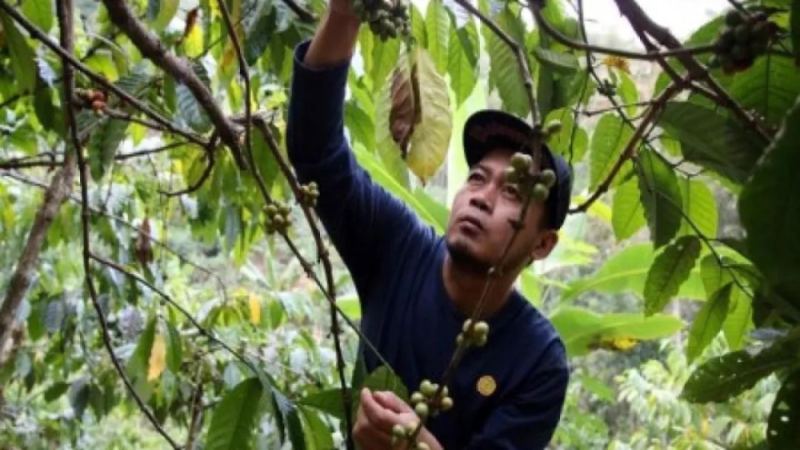
According to Reuters, Indonesia has recently experienced unfavorable weather, causing a precipitous drop in coffee production. At the same time, the El Niño phenomenon has not yet subsided and has triggered high temperatures in low-altitude coffee-growing areas. It is expected that Indonesia's total coffee production this year will be less than 10 million bags (60 kg per bag), the lowest harvest level in more than a decade.
Experts from Indonesia's Coffee and Cocoa Research Center pointed out that for low-altitude growing areas and forests, El Niño's high temperatures and drought may have catastrophic effects, and Robusta is precisely mostly distributed in low-altitude zones. Data from Indonesia's trade office show that in January this year, Sumatra Robusta coffee bean exports were 3,192.28 metric tons, plummeting 79% compared with 15,006.2 metric tons in the same period last year.
The sharp drop in export volume has also pushed up export quotations. A trader revealed that the price of Indonesian Sumatra Robusta coffee for April delivery has now exceeded US$800 per ton, higher than the previous US$720 per ton; the quotation for May pre-sale contracts rose to US$700 per ton, up from US$640 per ton a week earlier.
Vietnam has also been dragged down by drought, and its coffee production for this coffee year is expected to decrease by 10%. This has pushed up the price of Vietnamese Robusta coffee beans, with the expected price of coffee beans in the Central Highlands reaching 83 million to 85 million Vietnamese dong per ton. Local experts analyzed that with strong demand combined with tightening supply, coffee prices have continued to soar. Many enterprises have increased purchases to build up inventories and export reserves, further driving up the market.
Although Vietnam's coffee exports in February 2024 were only 160,000 tons, down 20% year-on-year, in the first two months of 2024 Vietnam's coffee export volume increased by 67.50% compared with the same period in 2023, with export value reaching US$1.25 billion.
On the Arabica-producing country side, Honduras in Central America has strong export momentum. In February 2024, Honduras sold 932,678 bags of Arabica coffee, an increase of 26% compared with the same period in 2023. In Africa, the Kenyan government had previously invested 6 billion to support coffee cultivation, and by 2023 the coffee planting area had increased to 111,709 hectares, up 2.1%. Kenya's National Bureau of Statistics stated that in the 2022/23 production season, Kenya exported 47,861 tons of coffee, with export value reaching US$251.86 million.
The above content is compiled by CoffeeHunters, a coffee news website.


