







Mixing New and Old Coffee Beans for Pour-Over: What to Expect
Many home brewers face a common dilemma: a fresh bag of coffee beans needs resting, while the last of an older bag sits unused. To reach a full brew dose, some mix beans with different roast dates. Does this affect flavor? Front Street Coffee tested the same Elida Estate Catuai in three groups: old-date beans, new-date beans, and a 1:1 mix, recording coffee bed state, degassing, aroma, and taste.
The experiment shows that mixing new and old beans changes extraction because fresh beans release more gas, which can make brewing uneven. Old beans, already degassed, extract faster and may taste flatter. Blending them can create a cup that is neither as vibrant as fresh nor as stable as fully rested. For reliable results, brew separately or let fresh beans rest until they reach peak flavor, usually one and a half to two months after roasting.
Many coffee lovers often run into this situation at home: the freshly bought coffee beans haven't finished resting yet, while the last bag of old beans is almost used up and you can't bear to throw them away. To make up enough grounds for a full brew, some people mix two batches of beans with very different roast dates together. Does this actually affect the coffee's flavor? Front Street Coffee ran a comparison experiment using the same Elida Estate Catuai, brewing three groups separately—old-date beans, new-date beans, and a 1:1 mix of new and old beans—recording everything from the state of the coffee bed and degassing behavior to aroma and taste. This article combines the experimental process to analyze how the coffee bean degassing period affects extraction, and offers practical advice on how to save beans without sacrificing flavor.
When buying food, everyone takes a quick glance at the production date first, then checks the shelf life—after all, you should avoid eating expired things, and everyone understands that.
For coffee beans, the production date is essentially the roast date, the day the green beans were roasted. But we pay attention to the roast date usually not out of fear of spoilage, but more to drink it within its optimal flavor window—what Front Street Coffee often calls the peak-flavor period, generally falling between one and a half to two months after roasting.
Friends with pour-over experience have mostly encountered this situation: the same coffee beans, but the bag that just arrived was roasted only a day or two ago and is very fresh; meanwhile the unfinished "old beans" from the previous bag still have about ten grams left, with a roast date over a month old—and in the spirit of not wasting, you still have to brew them.
But some people are used to parameters of 15 grams or 20 grams of grounds, and to make up a full brew, they simply mix new and old beans together. Then the question arises: if you extract two batches of beans with different roast times together, will the taste be affected?
Don't worry—Front Street Coffee first ran a comparison experiment, then answers these questions one by one.
Front Street Coffee selected two coffees whose roast dates were exactly one month apart: one bag was new beans just out of the roaster on February 29, and the other was old beans roasted on January 30 that had been opened for some time. Three different freshness levels of beans were brewed for comparison, keeping other parameters as consistent as possible, while recording the state of the coffee bed and flavor performance throughout.
Coffee beans: Elida Estate · Catuai Dose: 15 grams Ratio: 1:15 Water temperature: 93℃ Dripper: V60 Grind size: EK43s setting 10 Three groups of coffee: old-date beans, new-date beans, and a 1:1 mix of new and old beans
Old-date group coffee: There was a dome during blooming, but the curve wasn't large; the coffee bed began to show signs of drying out at around 25 seconds, and the flow rate during extraction was stable.
New-date group coffee: After pouring, the coffee bed quickly puffed up into a hamburger shape; the entire pouring process showed obvious and sustained degassing, with large, irregular bubbles floating on the surface. The coffee finished dripping through at 1 minute 52 seconds, and many small scattered bubbles remained on the dripper wall afterward.
Mixed new-old group coffee: From blooming and circular pouring to the state of the coffee bed, it was not much different from the old-date group, with the occasional large bubble. The flow rate was also very stable, and foam still clung to the spent grounds after brewing.
In terms of aroma, the old-date group performed best, drinking with mainly the sweet-tart notes of ripe peach and citrus, accompanied by raisin-like fermented aroma and a caramel finish, with obvious juicy character and medium body. By comparison, the new-date group entered with mostly lifted flavors like red berries and citric acidity, tasting somewhat thin, with aroma less rich than the old-date group and a finish that vanished in an instant. The mixed group fell between the two, drinking with citrus-like acidity and honey sweetness, and a finish with a slight tea-like note and caramel aroma, but very brief.
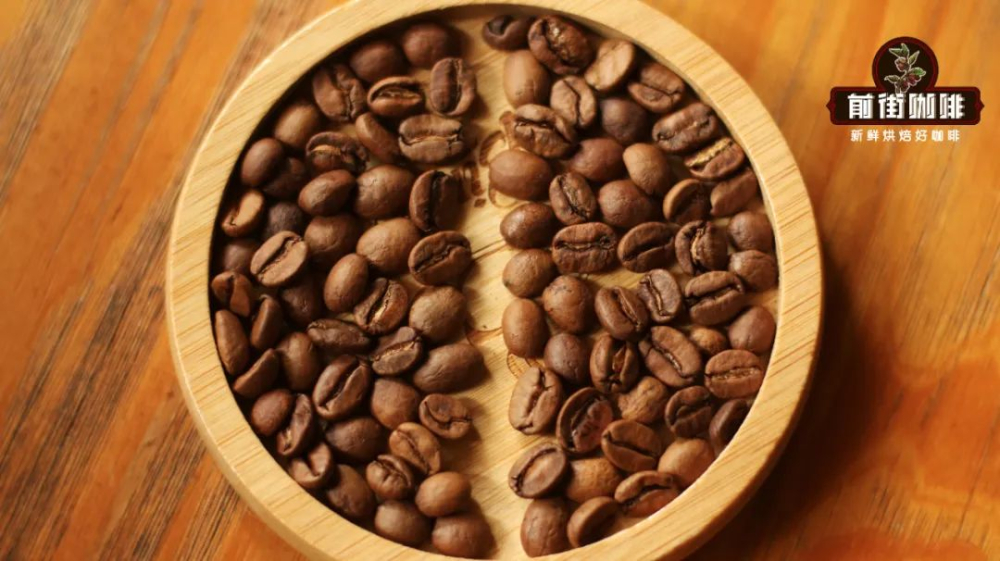
Beans that are too fresh in date are still in the degassing phase, and the carbon dioxide rushing out affects the dissolution of some aromatic compounds, so the flavor performance is naturally not as good as coffee beans that have been "rested." Resting beans have already entered a stable state, which is precisely when flavor performs at its best; as long as they are stored properly and within the peak-flavor period, they are almost unaffected by the roast date.
Front Street Coffee believes the above flavor differences arise not only from the effect of coffee grounds degassing, but also because the three brews were tasted side by side after being brewed one by one—there was an order of sequence and some temperature variation. Moreover, if the three brews weren't placed directly together for comparison, it would be almost impossible to taste the differences between them. As the temperature dropped, the gap between the three brews became even smaller.
So if the new beans you get really are quite close to the roast date, and you don't want to waste the remaining old beans, it's worth holding back your craving and leaving them untouched in a cool place for three or four days. After the carbon dioxide has partially released, mix the two batches of beans into a full brew dose. This "bean blending" approach means, first, you won't be affected by degassing, and second, you can use up the old beans while they're still within the peak-flavor period.
- END - Front Street Coffee (FrontStreet Coffee)
No. 10 Baoqian Street, Yandun Road, Dongshankou, Yuexiu District, Guangzhou, Guangdong Province
Read 197
The above content is compiled by CoffeeHunters, a coffee news website.


