







What does a coffee aroma kit actually train?
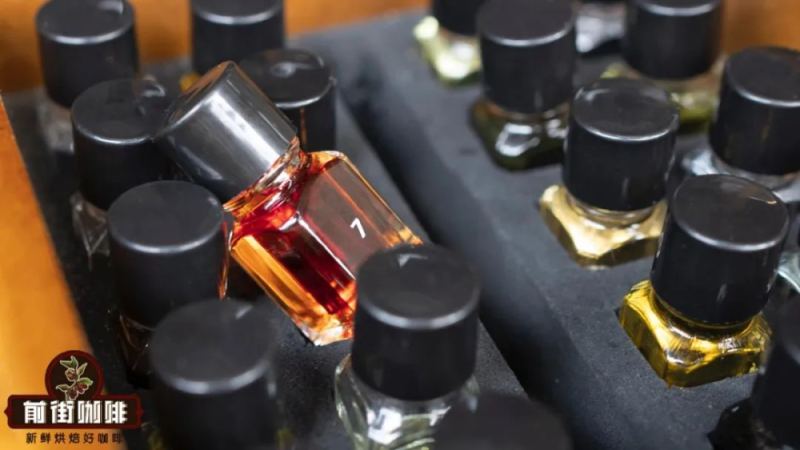
The 36-note Coffee Nose set, sold under France's Edition Jean Lenoir as Le Nez du Café, is a tool for calibrating smell and taste rather than a necessity. It groups coffee aroma into four families: enzymatic, sugar browning, dry distillation, and aromatic taint. A Korean alternative, Scentone's Coffee Flavor Map, lists 100 notes.
Early aroma vials held real plants and foods, but those oxidized and rotted, so chemical oils replaced them for long storage. The Coffee Nose set is used in SCA course training. Practice methods include memorizing by category, grouped blind testing, and mixed blind testing. Smelling and drinking widely still matters more than owning the kit, since not every aroma maps onto daily life.
For those who want to systematically train their coffee senses, aroma vials are often mentioned, but their price tag of thousands of yuan also makes people hesitate. This article centers on the 36-note "Coffee Nose," introducing the origin and evolution of aroma vials, their use in SCA courses, and outlining the specific flavors of the four major groups: enzymatic, sugar browning, dry distillation, and aromatic taint. It also shares methods of use, from memorizing by category and grouped blind testing to mixed blind testing, to help beginners calibrate their sense of smell and taste. At the end, Front Street offers rational advice: aroma vials are not a necessity—smelling more, drinking more, and feeling more is what really matters.
Just as the flavor wheel has its limitations, not every aroma can be easily matched to something in daily life. It is hard to memorize these smells by tasting and experiencing each corresponding item one by one. So people categorized coffee aromas, recreated them with chemical oils, and made them into distinct, vivid scent samples—these are "aroma vials."
However, the earliest aroma vials were not made from chemically formulated oils. The original approach was quite simple: put the plants or foods corresponding to the aromas into glass bottles and use the scents they gave off for sensory training. The method was direct and easy to do, but its shortcomings were obvious.
Untreated ingredients and plants cannot be preserved long-term like specimens. Once air gets in, they quickly oxidize, rot, and give off unpleasant putrid odors. So people switched to chemical substances to recreate these aromas, allowing long-term storage.
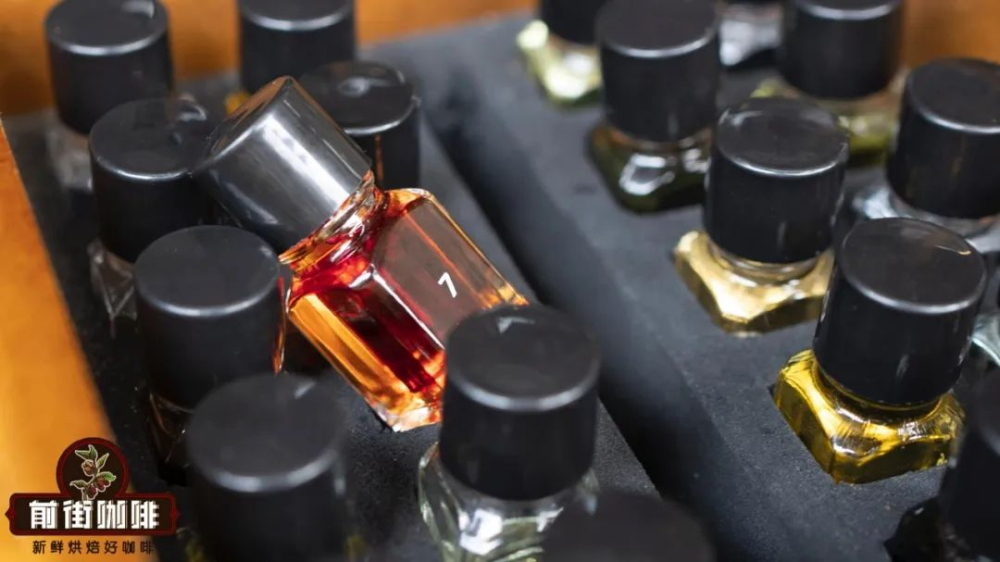
The purpose of aroma vials is not complicated: to help beginners systematically train their senses and calibrate taste and smell. In SCA-related coffee courses, aroma vials are also used for training.
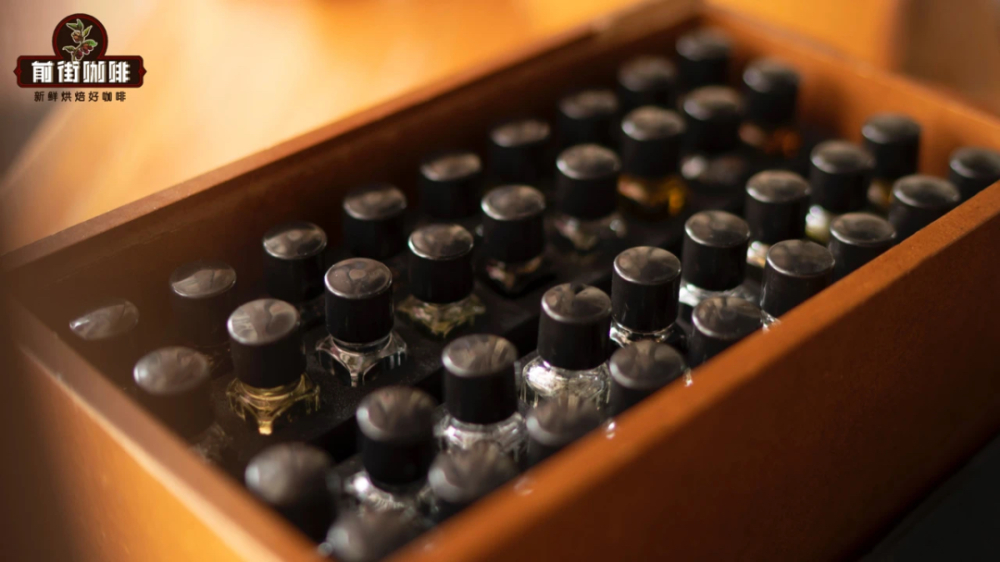
Currently, the two most common aroma vial sets on the market are: one from France's "Edition Jean Lenoir," called "Le Nez du Café" (The Coffee Nose), with 36 bottles, i.e., 36 notes; the other from Korea's "Scentone," called "Coffee Flavor Map," with 100 bottles, i.e., one hundred notes.
The set Front Street owns is the former—the Coffee Nose. It is categorized according to the flavors coffee presents at different roasting stages, with four major groups and 36 notes. The latter refines coffee flavors into one hundred notes; although it is not used in SCA courses, it has also received SCA certification.
Next, Front Street will briefly explain how the four groups of the Coffee Nose differ.
1. Enzymatic Group (Enzymatic)
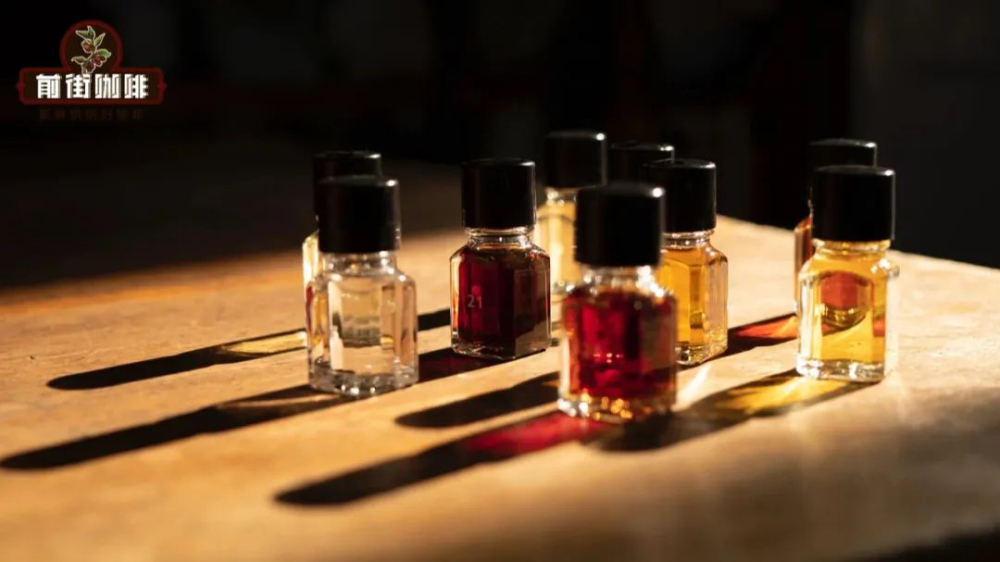
The enzymatic reaction refers to the first chemical reaction that occurs in green coffee beans during roasting. It brings coffee beans very rich floral and fruity aromas, as well as varied surface colors. "Maillard reaction" and "Melanoidin reaction" are other names for it. The Coffee Nose selects the nine most representative notes from this group: Apple, Lemon, Apricot, Cucumber, Garden peas, Potato, Coffee Blossom, Tea-Rose, Honeyed.
2. Sugar Browning Group (Sugar Browning)
Caramelization refers to the caramelization reaction that occurs during roasting when the temperature reaches the melting point of sugars. The caramelization reaction gives the beans a darker color and brings roasted-food aromas. Therefore, the Coffee Nose selects the following nine notes as representatives of the sugar browning group: Roasted Almonds, Roasted Peanuts, Roasted Hazelnuts, Walnuts, Caramel, Black Chocolate, Vanilla, Toast, Fresh butter.
3. Dry Distillation Group (Dry Distillation)
Based on what was said above, the dry distillation group naturally corresponds to the dry distillation reaction. The dry distillation reaction occurs at the end of second crack, that is, when the coffee beans are close to carbonization. At this point the temperature is too high, and the coffee fibers begin to be consumed and gradually carbonize, so both bitterness and aroma become more intense. Representative notes in this group include: Pepper, Coriander Seed, Clove-like, Black Currant-like, Maple Syrup, Malt, Roasted Coffee, Pipe Tobacco, Cedar.
4. Aromatic Taint Group (Aromatic Taint)
Note! The aromatic taint group does not refer to a taint reaction, but to defective flavors that may appear in coffee! Earthy, Straw, Medicinal, Rubber, Leather, Smoke, Coffee Pulp, Basmati Rice, Cooked Beef.
How should aroma vials be used?
Using aroma vials is actually similar to the process of memorizing vocabulary. You can first smell them one by one and build initial memory points in your mind. Front Street suggests smelling and recording directly by category, because the further along you go, the darker the roast and the duller the smell. If you smell them out of order, it is easy for different odors to overlap and interfere with your memory points.
Once you remember them fairly well, you can move on to advanced practice: shuffle them and do blind testing. First separate them by category, shuffle them, then blind test them group by group. This can significantly strengthen your memory of that aroma and further improve your perception.
After you can remember all four groups accurately, mix them all together, shuffle them, and do blind testing. When you can accurately distinguish their aromas, that means you have graduated.

At the end of the article, Front Street wants to make clear that this article only shares the uses and methods of using aroma vials; it is not telling everyone to buy aroma vials in order to improve perception. On one hand, they are indeed expensive (several thousand yuan!!), and on the other hand, their aromas are imitations, so they will not be completely identical to the aromas given off by coffee. Therefore, Front Street still recommends smelling more, drinking more, and feeling more.
Front Street Coffee
No. 10, Bao'an Qian Street, Yandun Road, Dongshankou, Yuexiu District, Guangzhou, Guangdong Province
The above content is compiled by CoffeeHunters, a coffee news website.


