







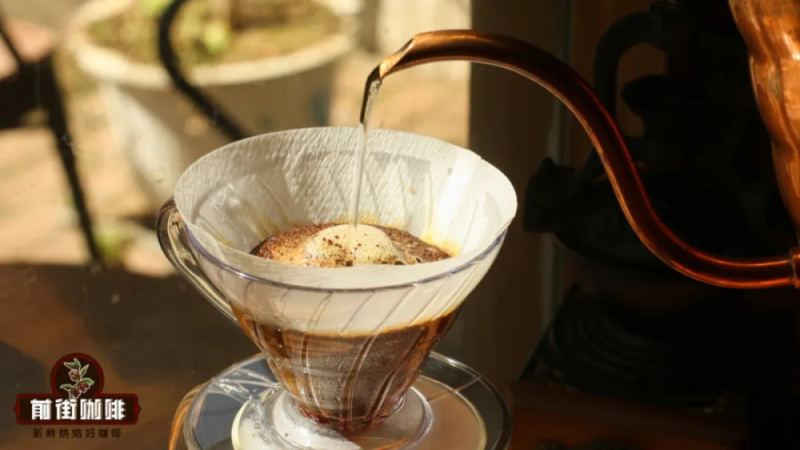
How Does the Three-Pour Principle Shape Delicious Coffee?
Splitting a pour-over brew into three stages works because each stage does a distinct job. A small first pour, the bloom, releases carbon dioxide trapped in the grounds so water can reach them evenly. The main pour extracts most of the sweetness and acidity, and a final finishing pour tops up the volume. Staged pouring also keeps the coffee bed temperature steadier and raises extraction consistency.
The order matters because acidity, sweetness, and bitterness dissolve at different rates: the longer water contacts the grounds, the more of each is released. Pauses between pours let the bed drain, which changes how long water stays in contact with the coffee. Matching dose, grind, water temperature, and ratio to the three stages is what makes delicious coffee repeatable at home rather than accidental.
In the previous article, Front Street explained why it has always used the three-stage pour-over method. This time, we will go deeper into the principles and operational details behind it. Starting from the logic of extraction, the article explains why blooming releases carbon dioxide, how staged pouring enhances complexity, and how the interval between pours affects the temperature of the coffee bed and extraction efficiency. Front Street will then provide the complete brewing parameters, including coffee dose, grind setting, water temperature, coffee-to-water ratio, and dripper choice, and will demonstrate step by step the specific techniques for the three stages — blooming, main extraction, and finishing — as well as how to finally swirl the coffee liquid to integrate the flavors from each stage. This is suitable reading for coffee enthusiasts who want to refine their pour-over technique.
Since Front Street already introduced the three-stage method that way in the previous article (for details, click "Why Does Front Street Always Use the Three-Stage Method to Brew Coffee?"), it would seem unjustifiable not to follow up with a hands-on tutorial. After all, when writing brewing experiments on ordinary days, the pouring step is often glossed over, and it is hard for readers to grasp from text alone what to pay attention to in actual practice and how to go about it. Therefore, today Front Street will share a detailed tutorial on three-stage brewing.
Before getting started, it will be more helpful to first understand the principles and logic behind three-stage brewing. Only by understanding why the pouring is divided into stages can you use the three-stage method better and brew the delicious coffee you envision. The principles behind three-stage brewing The essence of pour-over coffee is manually pouring hot water to extract the soluble substances from the coffee. In this process, the three types of substances — acidity, sweetness, and bitterness — are released in different proportions due to their different dissolution rates. The longer the extraction time, the more fully the substances are released (though of course not all of them need to be released). Before formal extraction, people first use a small amount of hot water to drive out the carbon dioxide in the coffee grounds, because carbon dioxide hinders hot water from extracting coffee substances. After degassing, the remaining hot water is used for formal extraction. But if all the hot water is poured in at once, the coffee flavor tends to become too concentrated, and there is little margin for error — once something goes wrong, it is hard to correct. So people split the pouring, aside from the bloom, into two stages, in exchange for richer complexity.
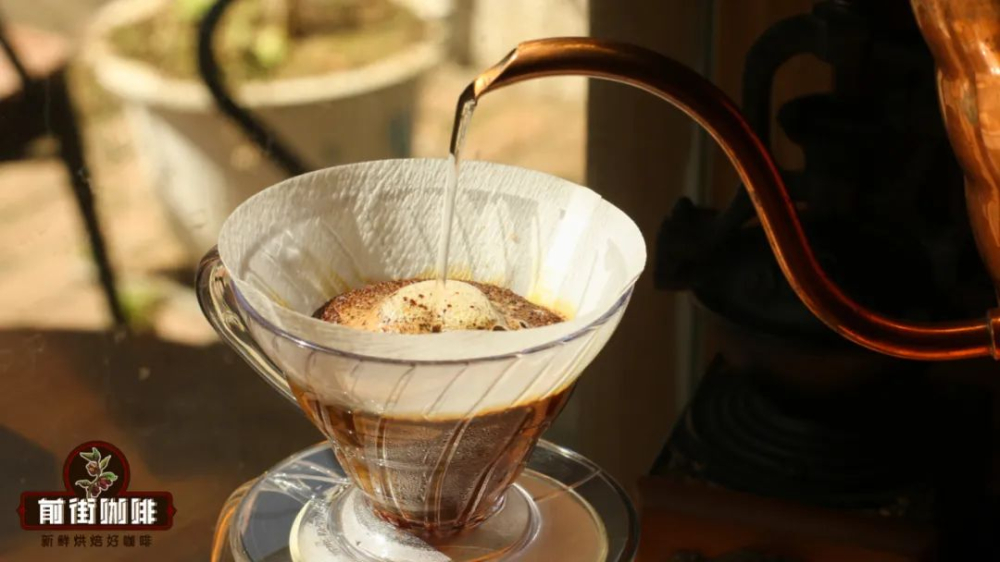
Of course, if you simply divide the pouring into two stages and immediately follow the first with the second, the result certainly will not be ideal. This involves a small point that is easily overlooked — the interval between pours. Whenever Front Street talks about three-stage brewing, it always adds after the second pour: wait until the water level is almost at the bottom before pouring the next stage of hot water. This waiting time is the interval between pours. There is a saying online that three-stage pouring causes the temperature of the coffee bed to fluctuate continuously. Indeed, the 30 seconds of blooming and the wait while the second stage of hot water descends are both processes in which the coffee bed temperature drops, and it only rises again after the next stage of hot water is poured.
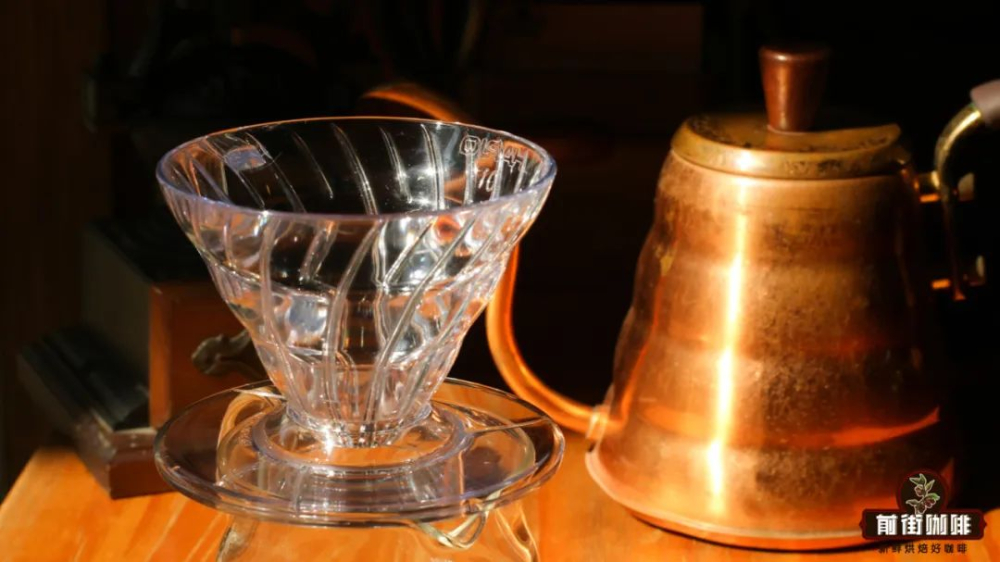
During these intervals, the temperature of the hot water in the kettle also keeps dropping, so by the time of the third pour, the extraction efficiency has already decreased considerably compared with the beginning. Therefore, under the premise that all extraction parameters are normal, the extraction capacity of the third stage of hot water is no longer enough to extract all the remaining bitter substances, greatly reducing the probability of over-extraction. So three-stage pouring can both highlight the flavor and make over-extraction less likely to occur frequently — that is why it is so popular. Now, back to the main topic — let us begin our brewing tutorial. How do you brew with the three-stage method? As usual, let us first list the brewing parameters used by Front Street: Coffee dose: 15g Grind setting: for light-roasted beans, use an EK43 setting of 10, with an 80% pass rate through a No. 20 sieve; for dark-roasted beans, use an EK43 setting of 10.5, also with an 80% pass rate through a No. 20 sieve. (For why the pass rate is the same, click "Same Grind Setting, but Different Coarseness?" to learn more.) Water temperature: for light-roasted beans, 90°C~92°C is recommended; for dark-roasted beans, 86°C~88°C. Coffee-to-water ratio: 1:15 Dripper used: V60/Kono
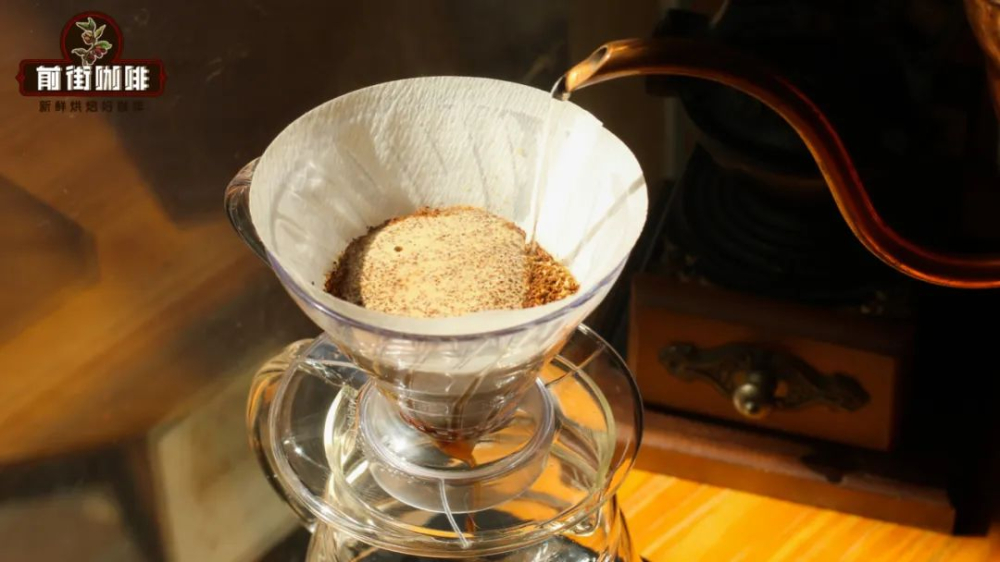
Three-stage method, first stage: Bloom First, use water at twice the coffee dose, that is, 30ml, for a 30-second bloom. Starting from the center and spiraling outward, pour the hot water quickly while expanding the range.
We all know that blooming is meant to release the carbon dioxide in the coffee so that the subsequent hot water can better extract the coffee substances. But this also means that the portion of hot water used for blooming extracts the least coffee substances. That is why people control the bloom water at twice the coffee dose: first, this amount of water is just enough to wet the coffee bed; second, it is also just about the amount of water that dry coffee grounds need to absorb (though not all of it will be absorbed). Note: because blooming begins as soon as you pour, you need to press the timer to start timing at the same time as (or before) pouring, and pour quickly. Three-stage method, second stage: Main extraction After the bloom ends, pour 120ml of hot water, using a small steady stream in large circles, aiming to finish pouring in about 55 seconds.
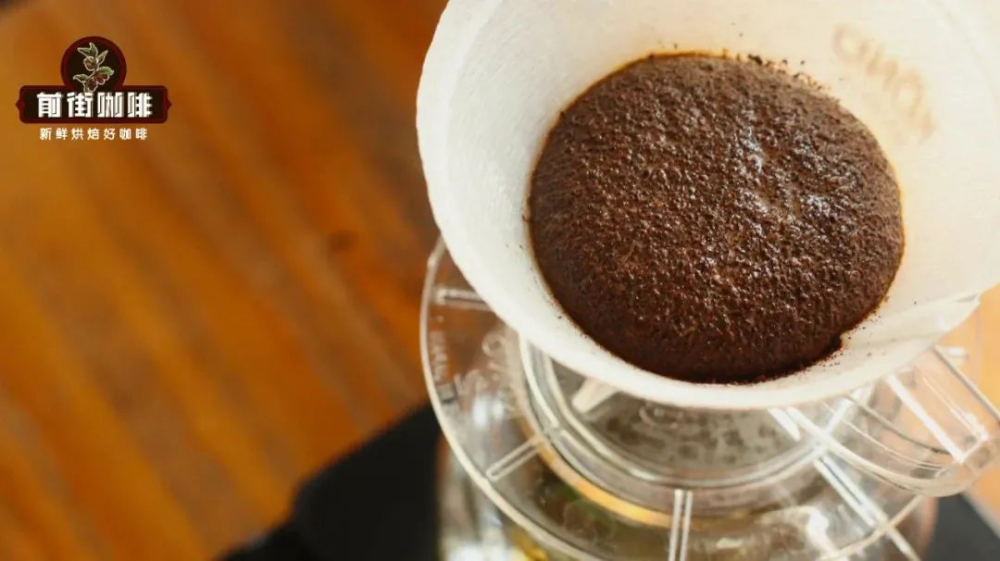
After the bloom, this extraction stage is crucial. Whether a cup of coffee tastes good depends to a large extent on the extraction in this stage. At this point the water temperature is still relatively high, and after the protective shell of carbon dioxide has been removed, the coffee bed, brewed with high-temperature hot water, easily releases the acidic and sweet substances. Three-stage method, third stage: Finishing When the water level is almost at the bottom (the coffee grounds begin to appear), pour the final stage of hot water (75ml), in small circles around the center of the dripper.
This pour is the final stage of three-stage brewing. As Front Street said in yesterday's article, this is a stage that can correct deficiencies. If the second stage of hot water does not descend and permeate at a normal flow rate, we must decide whether to use a small or large stream according to its speed. When the water level in the second stage drops too quickly, it easily causes under-extraction; in that case, use a small stream to prolong the extraction time and increase the extraction yield. If the water level drops too quickly and easily causes clogging and over-extraction, then use a large stream to raise the coffee bed, increase the area through which water can permeate, and speed up the flow rate. Finally: Integration The coffee substances extracted in each stage of hot water are different, and because of differences in concentration they remain somewhat separated and will not automatically merge together. If you drink it directly at this point, the mouthfeel may not be very pleasant. Therefore, you need to swirl the coffee in the server to mix it thoroughly.
Only then can you move on to the actual drinking stage. A clean, full-bodied flavor and rich, varied complexity — these are precisely the supreme enjoyment that three-stage brewing can bring.
Front Street Coffee
No. 10, Baoqian Street, Yandun Road, Dongshankou, Yuexiu District, Guangzhou, Guangdong Province
The above content is compiled by CoffeeHunters, a coffee news website.


