







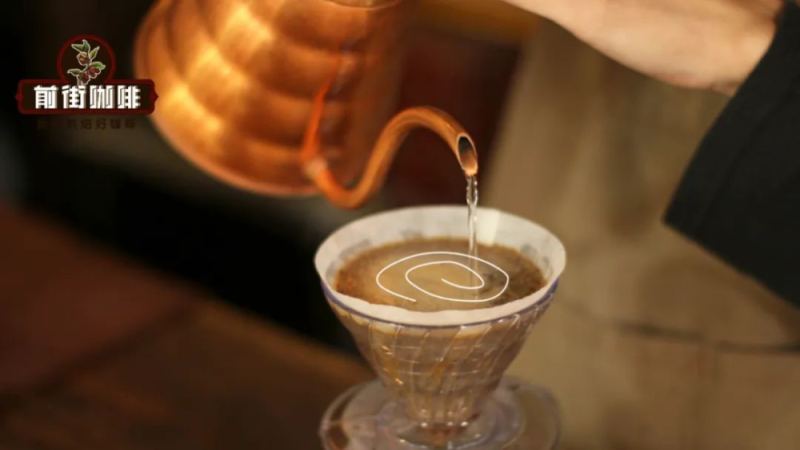
How Do We Make Coffee in a V60, and Does Pouring Direction Matter?
Counterclockwise pouring in a V60 does not clearly change the taste. The 60° cone angle and the clockwise spiral ribs guide water along the inner wall, propping the filter paper away from the dripper so flow stays smooth through the large single outlet. A comparison brew at Front Street with a medium-light Ethiopian Huakui 7.0, poured clockwise and counterclockwise, showed extraction time, concentration, and flavor stayed close.
The ribs run clockwise, so following that direction lets water travel with the grain, but the effect on the final cup is small next to grind size, water temperature, and a steady, controlled pour. For hand poured coffee, the practical gain comes from consistent circling over the coffee bed rather than from the direction of the circles, so beginners can focus their practice there and stop worrying about which way they stir.
Friends who are just getting into pour-over coffee are mostly advised to start with a V60 dripper. Once you have the dripper, the next thing to figure out is your pouring technique—circular pouring is the most common agitation method, but should you go clockwise or counterclockwise, and does the direction actually make a difference in taste? This article starts from the structural characteristics of the V60, explains the design principles behind its 60° cone angle and spiral ribs, and through a comparative test at Front Street, uses a medium-light roast Ethiopian Huakui 7.0 coffee bean brewed with clockwise and counterclockwise pouring respectively, comparing extraction time, concentration, and flavor performance, to help you decide whether the direction of your circles is really worth fussing over.
Friends who have just fallen into the pour-over coffee rabbit hole, if they ask an experienced person which entry-level dripper to buy, will nine times out of ten get the same answer—the V60.
Once the equipment is in hand, you naturally start thinking about various brewing techniques. Circular pouring is the agitation method we use most often, but at this point some people start wondering: should you circle clockwise or counterclockwise? Does the direction make a difference in the final flavor?
The structural characteristics of the V60
This V60 dripper, created by the Japanese company Hario, has become almost a must-have piece of equipment for every beginner. The V60 in its name comes from its 60° conical angle. This angle was determined by Hario after repeated testing, and it allows the coffee grounds to gather toward the center, while during pouring the water also converges toward the center of the dripper, ensuring sufficient contact time between water and coffee grounds, thereby extracting the ideal coffee liquid.
If you look carefully, you'll notice that the inner wall of the dripper is lined with spiral ribs extending all the way to the bottom. The core function of these ribs is flow guidance; they prop up a gap between the filter paper and the dripper wall, allowing water to flow more smoothly and quickly. Add to that the large single outlet hole at the bottom, and the water is almost completely unobstructed as it falls.
The ribs of the V60 run in a clockwise spiral direction. If you pour in circles following the grain of the ribs, the water will gather along the grooves like a whirlpool toward the center of the dripper, and the coffee grounds will be rinsed more evenly. So some people proposed a hypothesis: if you pour against the direction of the ribs, that is, counterclockwise, the water streams will collide head-on with each other, and wouldn't the pressure generated by this interaction, like wringing a towel, be able to raise the extraction rate and release the coffee's flavor more fully?
To verify this idea, Front Street conducted a comparative test using the V60.
Front Street chose a medium-light roast Ethiopian Huakui 7.0, set the grind size to 80% passing a No. 20 sieve (ek43s 10 clicks), water temperature 91°C, dose 15g, used a single-pour method, and brewed one pot clockwise and one pot counterclockwise.
The resulting extraction times were: 2 minutes 08 seconds for clockwise pouring, and 2 minutes 12 seconds for counterclockwise pouring. After measuring the concentration values, it could be seen that although there was a numerical difference between the two, the gap was not obvious.
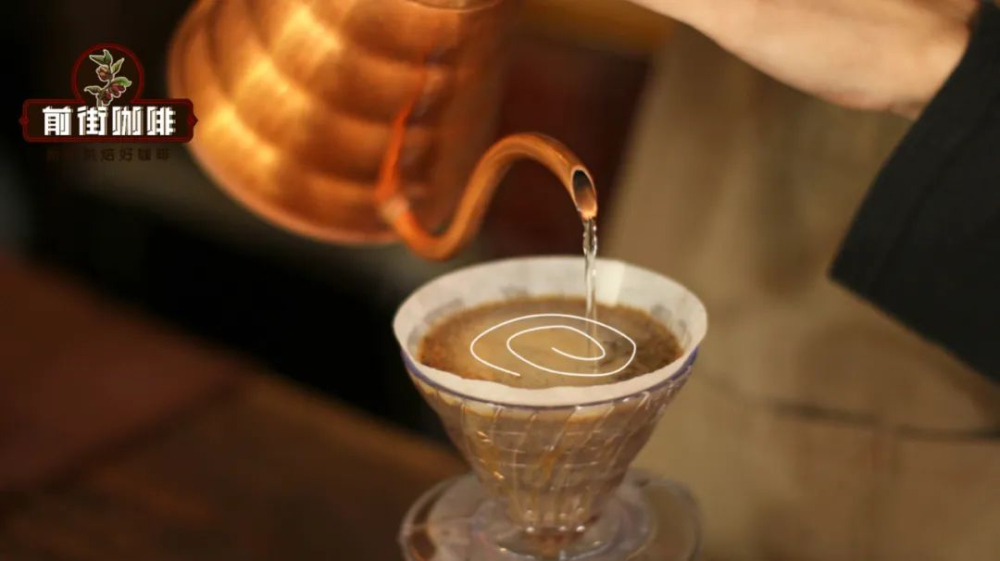
In actual tasting, both pots of coffee showed the soft citric acidity characteristic of Huakui, with white floral and citrus notes as the main thread. However, after the temperature dropped slightly, the flavors of the two pots began to diverge: the counterclockwise pot had a sharper citric acidity and slightly inferior cleanliness; the clockwise-poured one was noticeably rounder, with a more prominent honey-like sweetness. But if you weren't drinking the two cups side by side for comparison, it would be hard to tell much of a difference.
The purpose of circular pouring is to allow the water stream to reach every bit of coffee grounds in the cup, fully and evenly extracting the soluble flavor substances. The turbulence generated during brewing is mainly due to pouring and agitation that are not standardized or stable enough. If you always maintain the same direction while pouring, obvious turbulence rarely occurs.
Returning to the pouring technique itself, the size of the circling amplitude, the stability of the water stream, the height of the water column, the speed... all affect the final flavor presentation of the coffee, and the direction of the circles is only one very subtle variable among them. If you are using a dripper with a smooth wall or with ribs perpendicular to the outlet, then the effect of pouring direction can be completely ignored.
If you want to effectively adjust coffee flavor through pouring technique, Front Street's suggestion is that you'd be better off starting from simpler aspects, such as practicing a stable water stream, adjusting the strength of agitation, and controlling the pouring time well.
- END -
The above content is compiled by CoffeeHunters, a coffee news website.


