







What gives geisha coffee from Nuevo Oriente its flavor?
Geisha coffee became famous in 2005 when Hacienda La Esmeralda in Panama entered the variety in the top Panama competition and auction, winning and setting an auction record. Since then many producing countries have planted it, Guatemala among them. Nuevo Oriente is the youngest of Guatemala's regions, with high altitude, abundant rainfall and metamorphic rock soil.
Guatemala sits between Mexico, Honduras, Belize and El Salvador, with two-thirds mountains and highlands and more than 30 volcanoes in the west and south. Its wet season runs May to October and the dry season November to April. Those conditions, plus variable microclimates, shape the elegant acidity and layered flavors found in Guatemalan geisha coffee beans, including honey-process lots.
Since the Geisha variety shot to fame in 2005 at Hacienda La Esmeralda in Panama, it has been introduced and cultivated by many coffee-producing countries, and Guatemala is one of them. Starting from Guatemala's overall geographical and climatic conditions, this article sorts out the distribution of five volcanic regions and three non-volcanic regions among its eight well-known producing areas, with a focus on the youngest Nuevo Oriente region, analyzing how its high altitude, abundant rainfall, and unique metamorphic rock soil shape a complex and varied coffee flavor. At the same time, it traces the spread of Geisha from Ethiopia's Kaffa Forest to Central America, and presents specific information and brewing performance of Front Street Coffee's Guatemala Nuevo Oriente Geisha coffee beans for coffee lovers' reference.
When Geisha is mentioned, most people first think of Panama. In 2005, Hacienda La Esmeralda entered the Geisha variety in the Best of Panama BOP competition and auction, and with its unique flavor and far-higher-than-competitors score, it won the championship while also setting a coffee bean auction record at the time, and Geisha rose to fame as a result. This wave also prompted other coffee-producing countries to introduce Geisha one after another, and Guatemala was among them.
Guatemalan Coffee
Guatemala is located in the southern part of the North American continent, bordering Mexico, Honduras, Belize, and El Salvador, with the Gulf of Honduras of the Caribbean Sea to the east and the Pacific Ocean to the south, and its national economy is dominated by agriculture. Two-thirds of Guatemala's territory is mountains and highlands, with the Cuchumatanes Mountains running through the west, the Sierra Madre in the south, and both the west and south lying in a volcanic belt, with more than 30 volcanoes distributed there, among which Volcán Tajumulco, at 4,211 meters above sea level, is the highest peak in Central America. Guatemala has a tropical climate, with a dry season and a wet season throughout the year; May to October is the wet season, and November to April of the following year is the dry season. The combination of tropical rainforest, volcanic geological soil, and variable microclimates gives Guatemalan coffee beans elegant and lively acidity, a clean and defect-free presentation, and clearly layered flavors.
Nuevo Oriente Region
Guatemala has 22 departments in total, of which 20 produce coffee. There are eight relatively well-known producing regions, which can be divided into five volcanic regions and three non-volcanic regions, and coffee cultivation altitudes are generally above 1,500 meters. The non-volcanic regions include Huehuetenango, Coban, and Nuevo Oriente. The volcanic regions cover Atitlan, Antigua, Acatenango, Fraijanes, and San Marcos. Among them, Huehuetenango and Antigua are more famous. FrontStreet Coffee has a washed Huehuetenango coffee, which as an entry-level selected representative carries citrus and berry acidity, nutty aroma, and a tea-like finish.
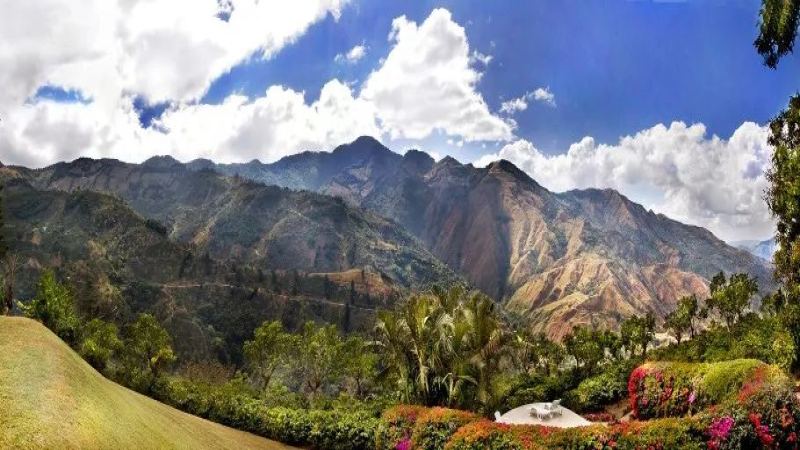
The Nuevo Oriente region is located in eastern Guatemala, bordering Honduras. Nuevo Oriente Nuevo Oriente is Guatemala's youngest coffee-producing region, and coffee was not planted there until the 20 th century 50 s. Local rainfall is abundant year-round, and the altitude is relatively high, between 1500-2050 meters, so the area is often shrouded in misty fine fog, with relatively fewer sunshine hours and overall humidity higher than other producing regions. Nuevo Oriente was once one of Guatemala's poorest and most isolated areas. Because this place belonged to a volcanic region in ancient times, its soil is composed of metamorphic rock evenly mixed with multiple minerals, differing from other producing regions that also have volcanic soil. Coupled with abundant rain and high altitude, the coffee beans produced here are quite complex and variable in flavor.
Geisha Variety
Geisha was first discovered in 1931 in Ethiopia's Kaffa Forest, but at the time people only cared about yield and not quality, so the Geisha variety did not receive much attention. Later it was sent to the Lyamungu research station in Tanzania, and then in 1953 it was brought to the Tropical Agricultural Research and Higher Education Center ( CATIE ) in Central America, where it was registered as T2722 . By 1970 , after Costa Rica's Geisha showed resistance to leaf rust, it was distributed to Panama for planting, and finally because Hacienda La Esmeralda discovered its delicate jasmine aroma and peach flavor, Geisha became famous overnight and was introduced for cultivation by other countries.
FrontStreet Coffee Guatemala Nuevo Oriente Geisha Coffee Beans Region: Nuevo Oriente Altitude: 1500-2050 meters Variety: Geisha Processing Method: Honey Processing Flavor: White Florals, Sweet Orange, Bergamot, Honey, Toffee FrontStreet Coffee's Nuevo Oriente Geisha uses honey processing and is roasted at a medium-light level. Front Street uses V60 , a 1:15 ratio , and 92 °C water temperature for brewing. You can smell elegant white florals; on the palate there is slight fruit acidity, with sweet orange and bergamot flavors, as well as a toffee-like sweetness; the mouthfeel is soft and smooth like honey, and overall it has rich layered variation.
The above content is compiled by CoffeeHunters, a coffee news website.


