







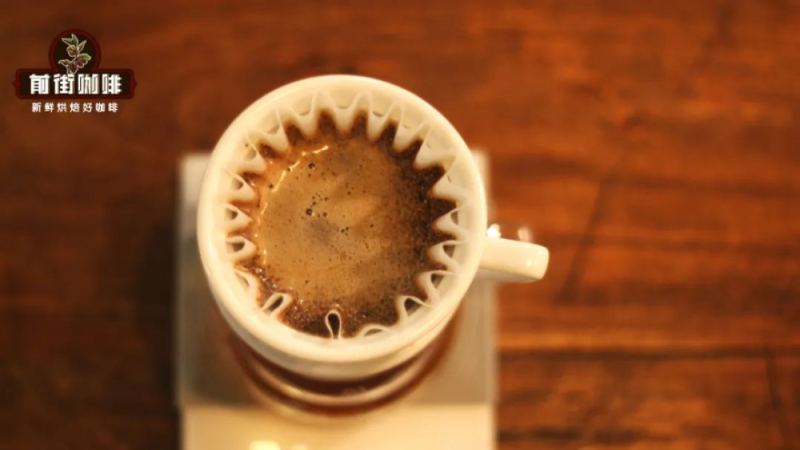
How does a flat-bottom dripper compare with a coffee v60 brewing cup?
Flat-bottom drippers have a circular base that spreads the coffee bed into a shallow, even layer, so water passes through the grounds more uniformly and small pouring mistakes matter less. That is why they are often recommended to people starting pour-over. Conical drippers such as the coffee v60 brewing cup, by contrast, form a deeper bed that offers more room to adjust extraction.
The difference comes down to coffee bed shape, rib design and drain hole layout. In conical drippers the bed is an inverted triangle, thicker at the center and thinner near the wall, so extraction varies across the bed and pouring stability matters more. Familiar flat-bottom models include the Melitta 101, Lili, Ice Eye B75, Torch Donut and April Brewer, alongside kono coffee designs.
When it comes to choosing a dripper, there is a common consensus: flat-bottom drippers offer greater tolerance for error and are friendlier to those just getting into pour-over. Front Street Coffee has mentioned in several articles that the flat-bottom structure has a natural advantage when it comes to even extraction. What mechanism actually makes this possible? This article will clarify the differences between flat-bottom drippers and conical drippers from the perspectives of coffee bed shape, rib design, and drain hole layout, with the cake dripper as the main thread, and extend into different schools of approach such as the Melitta 101, Lili, Ice Eye B75, Torch Donut, and April Brewer, helping you understand what kind of brewing approach flat-bottom drippers suit, and the role they play in the "fine grind, fast brew" trend.
In discussions about coffee drippers, there is a widely circulated view: flat-bottom drippers are less prone to mistakes during brewing, so they are especially friendly to beginners. Front Street Coffee has also occasionally mentioned the advantages of flat-bottom drippers in even extraction in many past articles. So how exactly do they work?
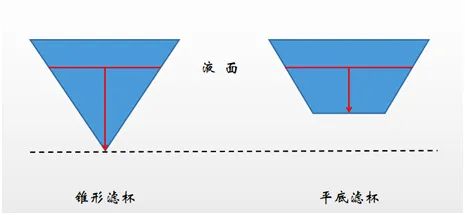
The most core difference between flat-bottom drippers and conical drippers lies in the stacking state of the coffee grounds after they fall in. If you look from the side, the coffee bed cross-section in a conical dripper is an inverted triangle, while in a flat-bottom dripper it appears as a trapezoid that is wider at the top and narrower at the bottom.

Taking conical drippers as an example, the Hario V60 and KONO that Front Street Coffee uses in its daily production are typical examples. The closer to the center area, the thicker the coffee bed, and the resistance through which the water flows increases accordingly, pushing the extraction yield higher; the closer to the dripper wall, the thinner the coffee bed, and the soluble substances in the coffee are more easily released. Therefore, in actual operation, conical drippers give us greater room for adjustment and allow us to produce layered flavor expression. But the corresponding cost is that if you want all the coffee grounds to extract as evenly as possible, the demand for pouring stability is higher.
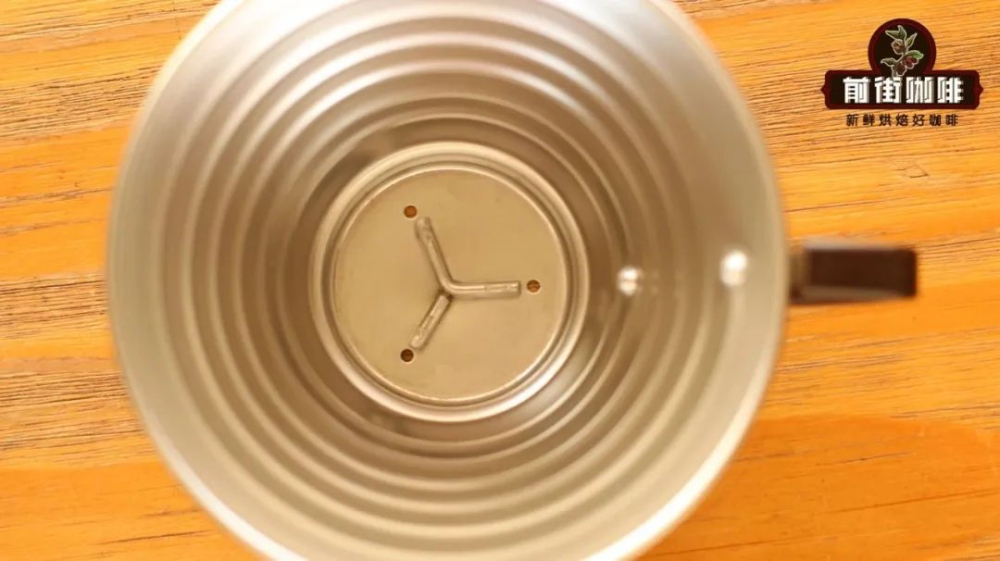
Back to today's topic—flat-bottom drippers, represented here by the most frequently seen cake dripper. The circular flat bottom lets the coffee grounds spread into a thinner layer, and the thickness is largely consistent throughout, so the resistance when hot water passes through is lower. The bottom of the cup generally has 3 to 4 drain holes with relatively small diameters, and the holes are connected by staggered raised lines. These raised lines prop up the filter paper in order to maintain a smooth flow rate.
The rib arrangement of this type of flat-bottom dripper usually falls into two categories: one is ring-shaped ribs distributed horizontally, whose function leans toward retaining water; the other uses vertical ribs like the V60, mainly serving to guide flow.

Here is another example: the Lili dripper, which originated from the German Melitta 101 design and was improved upon. Although it is also a flat-bottom dripper, the inside of the cup body has been changed to 48 guide ribs running from top to bottom to increase flow rate, while the bottom has 8 drain holes arranged in a circle, with the aim of making the coffee grounds less likely to clog or accumulate during extraction.
Of course, in addition to the classic small-hole styles mentioned above, in recent years, in order to follow the "fine grind, fast brew" extraction trend, many flat-bottom drippers emphasizing "high water flow" have also appeared on the market. For example, the Ice Eye B75 that Front Street Coffee has introduced before, as well as Japan's Torch Donut dripper and the April Brewer designed by a Danish barista, have all made changes to the bottom structure, allowing more finely ground coffee to achieve both a more three-dimensional immersion-style extraction and a drip-style extraction at the same time.
Front Street Coffee
No. 10, Bao'an Front Street, Yandun Road, Dongshankou, Yuexiu District, Guangzhou, Guangdong Province

The above content is compiled by CoffeeHunters, a coffee news website.


