







What Does the ASD Process Add to Yirgacheffe Coffee Quality?
The Aricha lot from the Amederaro station in Yirgacheffe, Ethiopia, is grown at about 2,200 meters in red soil and processed with the Anaerobic Slow Dry method: 120 hours of sealed fermentation followed by five weeks of slow drying. That combination produces a full-flavored cup with citrus, berries, cream, rose tea and white grape notes.
The lot won Ethiopia's national competition and the Africa TOH championship in 2019/2020, scoring 90.7 in cupping, a marker of the coffee quality the region can reach. Front Street Coffee roasts it medium-light to hold those layered notes. Yirgacheffe itself spans roughly 1,700 to 2,100 meters, and its citrus and floral character led to it becoming a separate region from Sidamo.
Ethiopia, as the birthplace of coffee, has nurtured countless native varieties, among which the Yirgacheffe region stands out as a separate zone with its unique floral and citrus notes, becoming a focal point for coffee lovers worldwide. Within the Konga Cooperative in Yirgacheffe, the Amederaro processing station cultivates coffee cherries at an altitude of 2,200 meters in red soil, employing the Anaerobic Slow Dry (ASD) process, undergoing 120 hours of sealed fermentation and 5 weeks of slow drying to create a full-flavored specialty coffee. This Amederaro coffee bean won both the Ethiopian National Competition and the Africa TOH championship in 2019/2020 consecutively, with a cupping score as high as 90.7. Front Street Coffee selects this bean and presents it with a medium-light roast, showcasing layers of citrus, berries, cream, rose tea, and white grape. This article will delve into its regional background, processing techniques, and brewing performance.
When it comes to the origin of coffee, Ethiopia is an unavoidable name. This country, recognized as the birthplace of coffee, not only has a profound coffee culture but also harbors countless native varieties. Ethiopia is located in northeastern Africa, with a landscape dominated by mountains and plateaus, which account for about two-thirds of the country's area. The East African Rift Valley runs through the entire country, with an average elevation of nearly 3,000 meters. It is this high altitude, suitable climate, and fertile soil that give Ethiopia a natural advantage for growing coffee.
Yirgacheffe Region
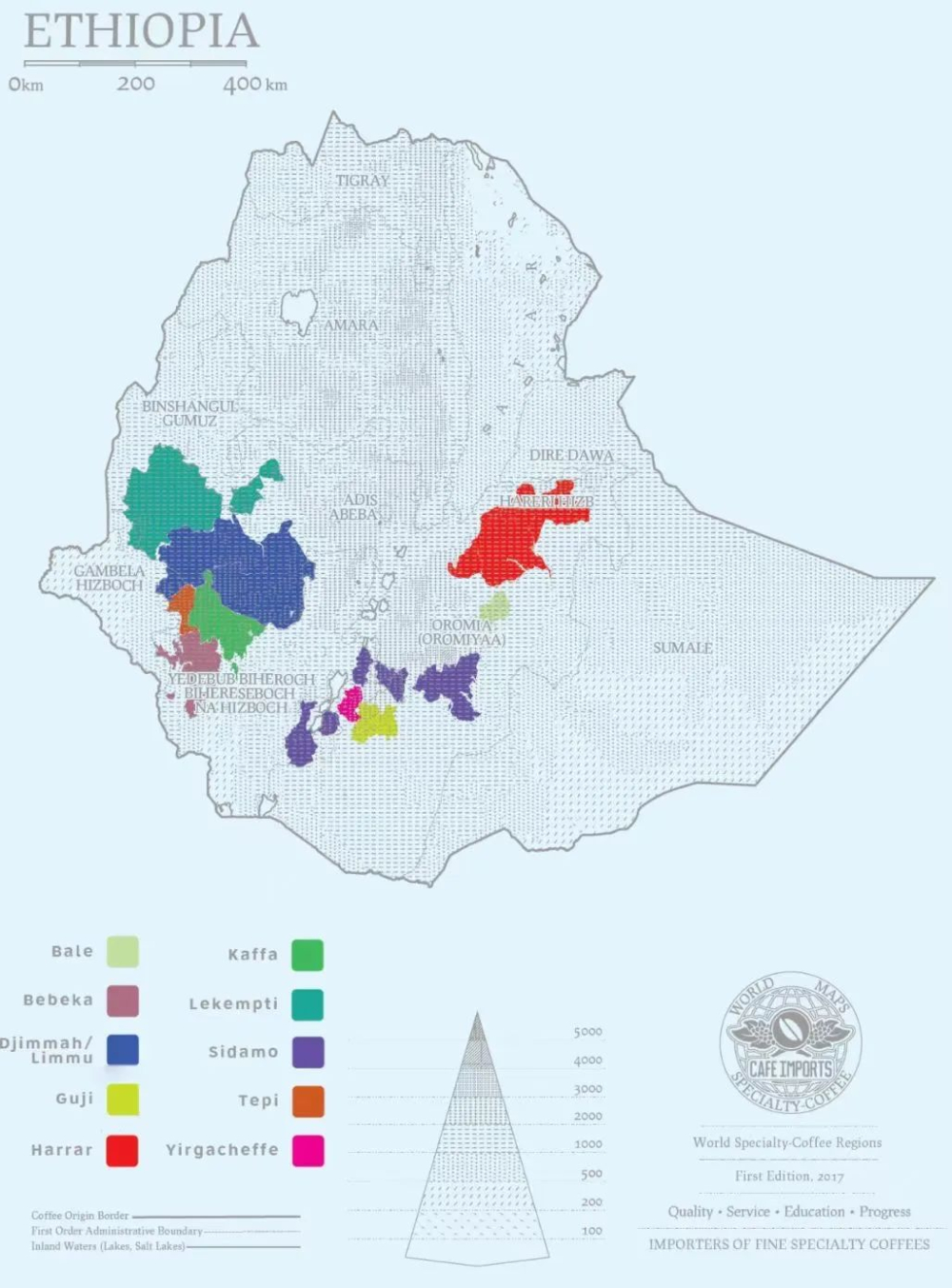
In Ethiopia, there are many well-known coffee regions, such as Sidamo, Jima, and Harrar. Guji and Yirgacheffe were originally part of the Sidamo region, but later, due to their unique flavor profiles, they were separated into independent coffee regions.
Yirgacheffe was originally part of Sidamo. Because the coffee beans produced around Yirgacheffe town have a distinctive floral and citrus character, it was separated from Sidamo and became a renowned independent region in Ethiopia. The region spans an altitude of 1,700 to 2,100 meters, making it one of the highest coffee-growing regions in the world. Combined with fertile soil, abundant water resources, and a pleasant climate, the coffee produced here has signature citrus and floral notes. Front Street Coffee offers a washed Yirgacheffe coffee as an introductory selection, presenting flavors of jasmine, orange, and tropical fruits, with lemon-like acidity and a soft, refreshing mouthfeel.
East Africa Taste of Harvest Competition TOH
Several countries on the African continent grow coffee, including Ethiopia, Kenya, Uganda, and Tanzania. In 2000, these countries jointly established the African Fine Coffees Association (AFCA) to promote trade development in African coffee-producing countries and enhance coffee quality. The association also launched an event called the East Africa Taste of Harvest Competition (TOH), a green coffee cupping competition jointly organized by 11 African coffee-producing countries, similar in nature to the international Cup of Excellence (COE) green coffee competition.
The TOH competition is divided into two stages: the national competition and the African regional finals. Scoring is based on the green coffee cupping standards of CQI and SAC. Winners of the national competition advance to represent their country in the African regional finals. Among them, the Amederaro coffee bean performed exceptionally well, winning the Ethiopian National Competition twice consecutively in 2019/2020 and also claiming the African regional washed category championship, with a competition score as high as 90.7, making it a double champion.
Amederaro Station
The Yirgacheffe region has 28 member cooperatives, one of which is the Konga Cooperative. The cooperative is located 5 kilometers south of Yirgacheffe town and is named after the nearby Kongga River and Konga village. The Amederaro processing station is located in Konga and is responsible for processing coffee grown at an altitude of 2,200 meters in Konga. These coffees grow in iron-rich red soil, and the combination of high altitude and fertile soil allows the coffee to develop high-quality and rich flavors.
Anaerobic Slow Dry (ASD)
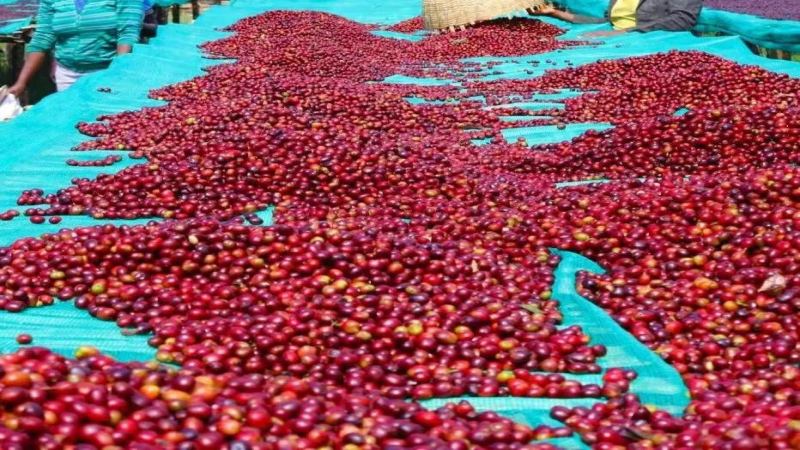
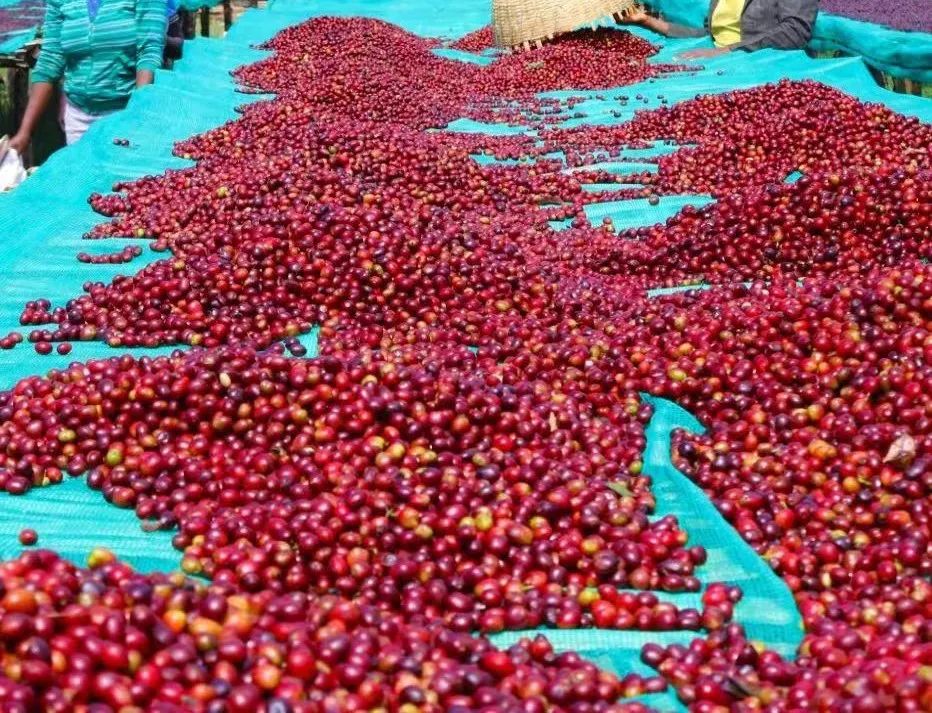
Anaerobic Slow Dry, abbreviated as ASD. After the coffee cherries are harvested, they are placed together with the pulp into sealed tanks for anaerobic fermentation, which lasts for 120 hours. After the anaerobic fermentation is completed, the coffee cherries are spread on drying beds and allowed to dry slowly for up to 5 weeks. This processing method requires producers to invest more time and effort, and it also allows the coffee beans to develop richer and fuller aromas and flavors.
Front Street Coffee Ethiopian Amederaro Coffee Beans Region: Yirgacheffe Region Farm/Processing Station: Amederaro Station Altitude: 2,200 meters Variety: Heirloom Processing Method: Anaerobic Slow Dry (ASD)
Flavor: Citrus, berries, cream, lemon, rose tea, white grape, fermented notes
This Amederaro coffee bean from Front Street Coffee is processed using the Anaerobic Slow Dry (ASD) method and roasted to a medium-light level. Front Street uses a V60 dripper with a 1:15 coffee-to-water ratio and a water temperature of 92°C for brewing. It yields a slight fermented aroma, with flavors of citrus, berries, rose tea, and white grape on the palate, lemon-like acidity, and a smooth mouthfeel with a tea-like quality.
The above content is compiled by CoffeeHunters, a coffee news website.


