







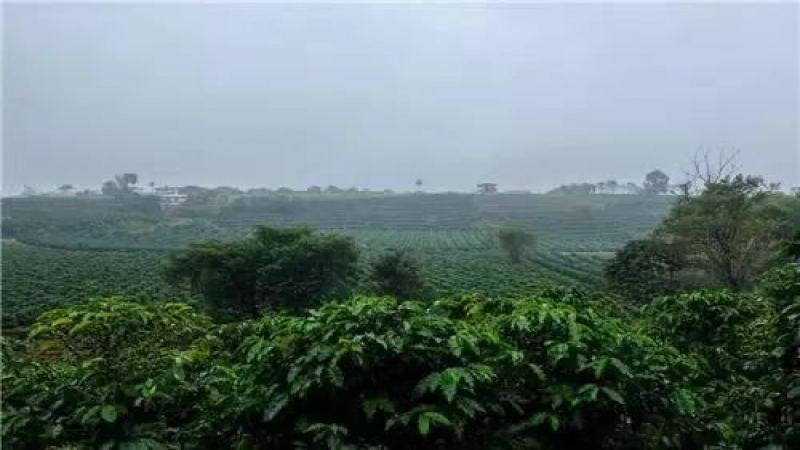
How does arabica coffee from Costa Rica Tarrazu get its flavor?
Costa Rica sits in Central America with volcanic soil and a climate suited to high-quality arabica coffee. Within it, Tarrazu holds a designation of origin and is known for hard-bean flavor, while Mirazu Estate applies raisin honey processing to produce beans with heavy sweetness and a strawberry candy character.
Owner Esteban Sanches, trained as a coffee expert and machine technician, refined that raisin honey method. Brewed with a V60, the beans show rose fragrance, strawberry, raisin, and almond, with a silky body. The country's tropical rainy and dry seasons, plus nutrient-rich volcanic soil, support these results.
Costa Rica is located in Central America and, thanks to its volcanic soil and excellent climate, has become an important producer of high-quality Arabica coffee. Among its many producing regions, Tarrazu is famous for its designation of origin certification and hard-bean flavor profile, and Mirazu Estate is one of its small but exceptional gems. Estate owner Esteban Sanches is formally trained, both a coffee expert and a machine doctor, and he has pushed raisin honey processing to the extreme, creating strawberry candy coffee beans with abundant sweetness and a unique flavor. Front Street Coffee selects these beans from Mirazu Estate in Tarrazu, and when brewed with a V60 they present rich layers of rose fragrance, strawberry, raisin, and almond, with a silky mouthfeel and ample sweetness. This article will guide you through Costa Rica's coffee-growing background, the terroir of the Tarrazu region, the story of Mirazu Estate, and the secrets of raisin honey processing, while also sharing Front Street Coffee's brewing experience.
People often say that the belt between the Tropic of Cancer and the Tropic of Capricorn is the coffee-growing zone. The Americas happen to have quite a few countries situated on this golden latitude, such as Panama, Honduras, and Costa Rica. Among them, Costa Rica was one of the earlier countries in Central America to receive and cultivate coffee.
Coffee Cultivation in Costa Rica
Costa Rica is located in the Central American isthmus, adjacent to Nicaragua and Panama, with the Caribbean Sea to the east and the Pacific Ocean to the west. The coastal areas are mainly plains, while the central region is cut off by rugged mountains. This is a tropical and subtropical climate, with the year divided into a rainy season (April to early December) and a dry season (late December to April of the following year), and an average annual temperature between 15 and 26°C.
The country also has volcanic regions, where the volcanic soil is rich in nutrients and has good drainage. Together with suitable climatic conditions, this creates the conditions for producing high-quality coffee beans. All coffee grown locally is Arabica. The Costa Rican government places great importance on coffee cultivation and its quality, and in 1948 established the Costa Rica Coffee Institute ICAFE, dedicated to researching coffee varieties and cultivation techniques and promoting the country's coffee globally. In addition, in 1989 the government issued a decree prohibiting the cultivation of Robusta within the country.
Tarrazu Producing Region
Costa Rica has a total of 8 coffee-producing regions—Valley Central Occidental, Valley Central, Tarrazu, Tres Rios, Orosi, Brunca, and Turrialba—and these producing regions are almost all concentrated in the area of the central mountain range.
However, whenever Costa Rican coffee is mentioned, most people first think of Tarrazu. It is also the first producing region in Costa Rica to obtain designation of origin certification. Tarrazu is located in central Costa Rica, within San Jose Province, and is influenced by warm, humid air currents from the Pacific, with annual rainfall reaching 2,400 mm. Coffee is grown at altitudes of 1,500 to 2,100 meters, and the fertile volcanic soil provides excellent conditions for cultivation. The coffee produced here is almost all hard bean, with pleasant acidity and notes of chocolate, flowers, and fruit, and it is deeply loved. Because the region is relatively famous, in 2019 Costa Rica registered the coffee designation of origin name "Café de Tarrazú" with the European Union and the World Intellectual Property Organization (WIPO) to protect coffee produced in the region. In Front Street Coffee's entry-level selection series, there are coffee beans from Costa Rica's Tarrazu producing region.
Mirazu Estate
Mirazu Estate is a relatively small coffee estate in the Tarrazu producing region, run by Esteban Sanches together with his family. Esteban was originally a family member of the neighboring Little Candle Estate. Out of his love for and dedication to coffee, he independently founded an estate and named it "Mirazu," meaning "gazing at Tarrazu from afar."
Estate owner Esteban graduated from the University of Costa Rica with a degree in coffee, making him formally trained, and he pours the knowledge he gained into managing the estate. In addition to trying to grow the Ethiopian native variety ET47, the small wet-processing equipment at the estate's processing plant was designed and assembled entirely by him alone. Because Esteban invests a great deal of energy into machine research and coffee exploration, nearby farmers all call him the machine doctor and coffee expert.
Raisin Honey Processing
Raisin honey processing uses a method that retains 100% mucilage and involves zero-water processing, which increases the difficulty of the honey processing method and also requires strict control of timing. First, the harvested coffee cherries are placed in a tank for flotation, and after screening is completed they are dried, then the skin and pulp are removed, followed by sun drying. To ensure even drying, they need to be turned constantly, while also mastering the frequency of turning to ensure the coffee's fermentation process. This processing method gives the coffee more sweetness and a white wine-like mouthfeel, balanced acidity, and rich fermentation aroma.
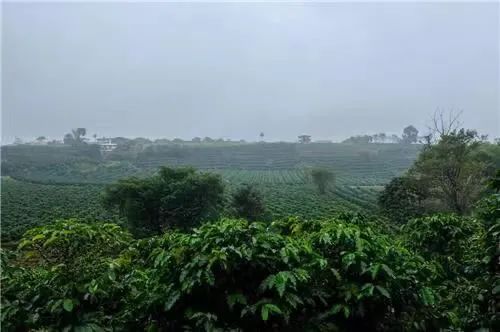
Front Street Coffee Costa Rica Mirazu Estate Strawberry Candy Coffee Beans Region: Tarrazu Producing Region Estate/Processing Plant: Mirazu Estate Altitude: 1,700 meters Varieties: Geisha ET47 MAICO SL28 Processing Method: Raisin Honey Processing Flavor: Raisin Strawberry Candy Rose Cream
This Front Street Coffee Costa Rica Mirazu Estate Strawberry Candy Coffee Bean is raisin honey processed and medium roasted. Front Street uses a V60 and brews at a 1:15 ratio, allowing you to smell fresh rose fragrance; on the palate there are flavors of strawberry, raisin, and almond, with abundant sweetness and a silky mouthfeel.
The above content is compiled by CoffeeHunters, a coffee news website.


