







Why Is Geisha Coffee Priced So High?
Geisha coffee beans typically cost about six to ten times more than ordinary coffee, and the reasons are traceable. The variety is harder to cultivate, yields less per unit area, and has been grown at scale for a relatively short time while demand for it keeps rising. Hacienda La Esmeralda in Panama is the estate that introduced Geisha to the wider market.
That estate runs three farms and 22 plots with similar performance, and price gaps between plots stay around 100 to 200 RMB. Geisha coffee beans from its Red Label line land at roughly 2,200 to 2,600 RMB in China, far below the tens of thousands often quoted online. Auction results at La Esmeralda influence ordinary Geisha pricing.
The price of Geisha coffee often makes people shy away, with reports of it costing thousands or even tens of thousands being ubiquitous, but what is the real market situation? From the perspective of Front Street, this article systematically sorts out the underlying logic behind the high price of Geisha, including the difficulty of cultivating the variety, yield limitations, and market supply and demand relationships. It also deeply analyzes the evolution of the grading system at Panama's Hacienda La Esmeralda—what are the differences between auction, red label, and green label, where does the misconception of high red label prices come from, and the linkage effect between auction prices and ordinary Geisha. Whether you are a novice just getting into specialty coffee or a seasoned enthusiast关注 the green bean market, you can gain a clear cognitive framework from it.
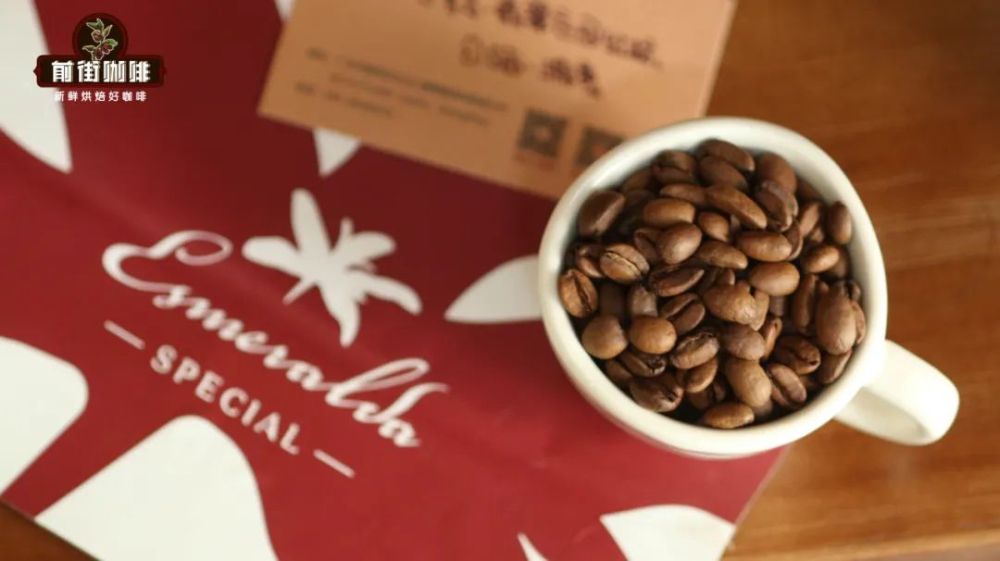
If coffee beans are regarded as ordinary agricultural products, the price of Geisha being slightly higher than general varieties actually has traceable reasons, and Front Street shares three here. First, the cultivation difficulty of this variety is indeed somewhat greater; second, the low yield per unit area is also an indisputable fact; third, Geisha has been around for a short time and has not yet formed large-scale widespread cultivation, while market demand for this novelty is also true. Combining these factors, the price of Geisha coffee beans is about 6 to 10 times higher than ordinary coffee beans.
Panama's Hacienda La Esmeralda is the starting point that made the world aware of the Geisha variety, and only afterward did it gradually spread to surrounding estates and even neighboring countries. It can be said that without Hacienda La Esmeralda, there would be no widely known Geisha boom today.
Taking the latest harvest season's green bean prices as an example, the same Panama Hacienda La Esmeralda Red Label Geisha costs about 2,200 to 2,600 RMB after arriving in China. Hacienda La Esmeralda currently has 3 major estates and 22 plots, with differences between plots not being significant, and price differences of about 100 to 200 RMB. From this detail, it can also be seen that the estate considers most plots to have relatively similar performance levels. This may differ greatly from the information received daily, as many claims online reach tens of thousands or even nearly 100,000 RMB; the prices themselves are not wrong, but that is only the auction price.
Each 1 kilogram of green beans roasts to about 0.79 to 0.83 kilograms of roasted beans, meaning that without calculating other costs, the cost price of 100 grams of Red Label Geisha is about 280 to 330 RMB. Of course, there are also packaging and other allocated expenses, which explains why online prices for Red Label Geisha are mostly concentrated in the range close to 380 to 700 RMB, with different merchants having their own cost accounting methods and pricing strategies.
The latest adjusted grading for Panama Hacienda La Esmeralda Geisha is: auction, red label, green label, which may help correct the above perception. But in past years, its grading was: red label (ordinary red label and auction collectively called red label), green label; going further back, the grading was: red label, green label, and blue label. Since red label did not make subdivisions or explanations for a long time, the public naturally associated auction prices with ordinary red label.
The above explains the cause of the high-price misconception for red label, and next Front Street will discuss the prices of auction Geisha and the reasons for their continuous rise.
Therefore, using Hacienda La Esmeralda as a benchmark, ranked auction estate beans will have higher prices, and the prices of other ordinary Geisha from that estate will also rise accordingly. Those unknown estates or some neighboring countries will naturally be closer to their original price levels.
The above content is compiled by CoffeeHunters, a coffee news website.


