








Which Espresso Extraction Details Matter Most?
Espresso extraction lasts only twenty to thirty seconds, yet overlooked steps can flatten the final cup. Common issues include a wet portafilter basket before dosing, clumped coffee particles after grinding, uneven distribution, inconsistent tamping, and the timing of locking in the portafilter or flushing the group head before brewing.
Each detail affects how evenly water moves through the puck. Grounds stuck to a damp basket wall soak early and clump, so water detours around dense patches and the flow rate swings between fast and slow, which explains why what's a espresso pulled at home often tastes inconsistent next to a cafe version.
Espresso extraction takes only twenty to thirty seconds, but in this brief process, a single overlooked operational detail can greatly diminish the final flavor. From cleaning the portafilter basket, dealing with clumped coffee grounds, to the evenness of distribution, tamping technique, and even the timing of locking in the portafilter and the habit of flushing the group head, every step can become a critical variable affecting espresso quality. Front Street Coffee has compiled seven easily overlooked details in making espresso, analyzing their causes and impact on extraction results one by one, and offering specific improvement suggestions to help coffee enthusiasts consistently produce a delicious cup of Espresso at home or in a shop.

Espresso occupies a core position in the Italian coffee system. Although the extraction time is short, often completed in twenty to thirty seconds, if certain operational steps are overlooked before pressing the brew button, the final taste is likely to be unsatisfactory.
Today, Front Street is here to walk you through seven operational details that may be overlooked when making espresso.
1. The portafilter basket is not dried before dosing
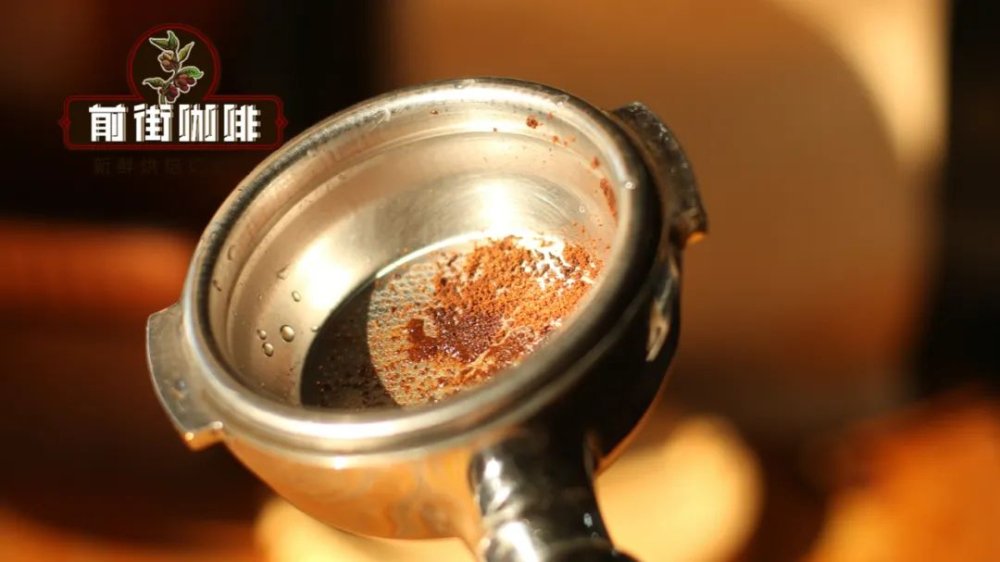
After extraction, knock out the puck, rinse the residual coffee stains and fragments from the inner wall of the basket with water, and dry the basket before the next dose—this is almost every barista's muscle memory.

However, some people are impatient and dose directly while water droplets still cling to the inner wall of the basket. The layer of coffee grounds that first touches the basket wall gets soaked by the moisture ahead of time and clumps together. The subsequent distribution and tamping can hardly break up these already formed clumps. Extracting in such a state, it's no surprise that the flow rate of the espresso fluctuates between fast and slow, and the final flavor of the Espresso in the cup is naturally hard to keep consistent.
2. Obvious clumping in the ground coffee
The grounds used for espresso are extremely fine, and clumping is inherently prone to occur during grinding. In addition, on particularly dry days, clumps that were originally inconspicuous become especially prominent.
After tamping, the surface may look flat, but these clumps have a tight internal structure, making it difficult for hot water to penetrate evenly. The water can only detour and find areas of lower resistance to flow through. This creates channels, and in severe cases, you may even see the liquid column spraying, directly interfering with the extraction flavor. If you find that the ground coffee clumps are very obvious, try using a distribution needle or a fine needle-like tool to gently break up these clumps.
3. Tamping directly without distributing
The purpose of distribution is to spread the coffee grounds evenly and level across the basket, so that hot water can pass through every coffee particle "fairly," making their extraction levels as consistent as possible.
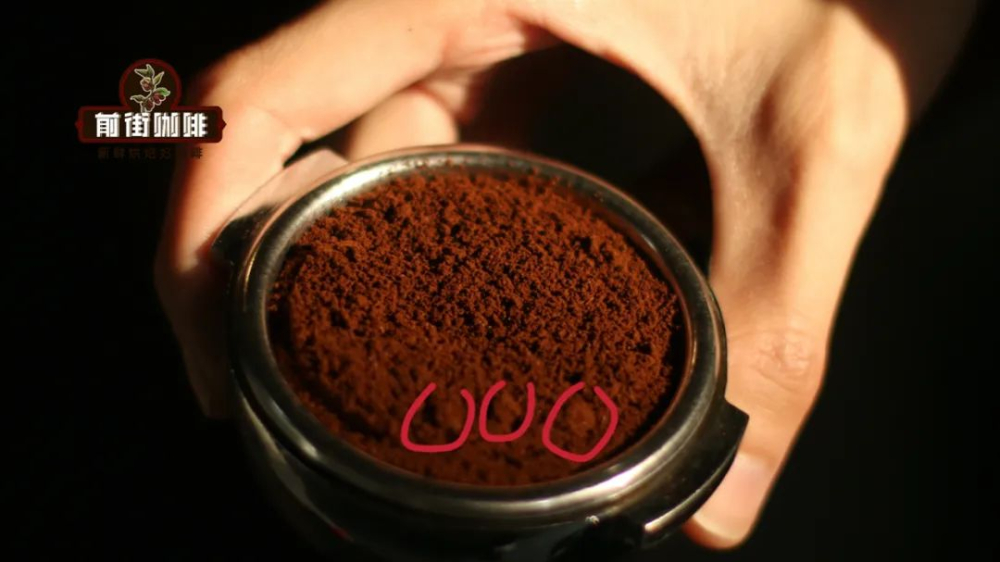
But some people, after dosing, tamp directly with the tamper without leveling the grounds first. From the surface, the puck will have a slight, inconspicuous depression. During actual extraction, the hot water under 9 bar pressure will rush toward this weak point, causing perforation accompanied by liquid column spraying. In addition, if there is residual moisture on the surface of the tamper, it will also stick and remove some coffee grounds during tamping, making the surface of the grounds uneven. Therefore, Front Street suggests that after dosing, let the fluffy grounds settle into a level layer before tamping, or use a distribution tool to assist with this step.
4. Uneven force during tamping
Besides uneven distribution, inadequate tamping technique also affects the final flavor of the espresso. Some friends new to espresso are not yet skilled at the tamping motion and press back and forth repeatedly. Although the surface of the grounds looks flat, the internal density distribution of the coffee particles is already chaotic, and the probability of channeling during extraction rises significantly.
So, when tamping with the tamper, try to do it in one smooth motion. If that's really difficult, Front Street suggests revisiting the correct tamping motion.
5. Knocking or bumping when locking in the portafilter
Front Street has encountered situations like this: a new colleague is not yet familiar enough with the shop's espresso machine and probes or bumps around the group head a few times before finding the right angle to lock in the portafilter. During this process, the puck that was originally tightly fitted against the basket may loosen or even crack, greatly increasing the likelihood of perforation and channeling in the subsequent extraction. This situation is not only very common in home operations, but also occurs from time to time among new baristas with larger movements. (Note: Front Street gives such new colleagues a certain adaptation period before arranging them to participate in daily service.)
6. The group head is not flushed beforehand
Each time you remove the portafilter and knock out the puck, pressing the brew switch to flush water is probably already a reflex for baristas at the bar. The reason is that after extraction, some coffee fragments and stains inevitably adhere to the dispersion screen. If not rinsed off promptly with water, by the next extraction these residues have long been dried by the high temperature and stuck to the dispersion screen, eventually mixing into the espresso—you can imagine how it tastes.
Another scenario is when a long time has passed between this extraction and the last one, and the group head dispersion screen is at a relatively high temperature. Locking in the portafilter directly at this point risks scorching the surface layer of coffee grounds, which may give the espresso a burnt, bitter taste.
Therefore, to avoid the above situations bringing negative flavors to the coffee, Front Street suggests developing the habit of flushing water both before and after extraction.
7. Not pressing the brew button for a long time after locking in the portafilter
Some friends, after tamping and locking in the portafilter, find that the scale hasn't been zeroed yet, so they fumble around to operate it. By the time extraction starts, the coffee that comes out may already carry a burnt, bitter taste. (When Front Street shoots product photos, focus issues often delay things by about ten seconds, and that final espresso always ends up with a bit of a burnt taste.)
The temperature of the group head is very high. If extraction does not begin immediately after the portafilter is locked in, the puck will be baked by the high temperature and develop a burnt taste. Therefore, before locking in the portafilter, be sure to have all preparations in place (scale zeroed, shot glass ready, etc.). Once locked in, start extraction immediately to avoid over-extraction caused by delay and wasting the coffee for nothing.
- END - Front Street Coffee
No. 10, Baoqian Street, Yandun Road, Dongshankou, Yuexiu District, Guangzhou, Guangdong Province
The above content is compiled by CoffeeHunters, a coffee news website.


