








Where does coffee originate from in the Combo serving style?
Combo coffee, short for Coffee Combo, is an Italian-style coffee service in which one dose of coffee grounds is extracted into two or three small cups of espresso, and each cup becomes a different drink. The set is usually served on a small tray, so the guest gets one bean turned into two or more brews rather than a single cup.
The common format is one black and one white: an espresso paired with a milk coffee, each around 150ml. Some cafes split the espresso three ways and add a specialty coffee. The method has roots in barista competition service, where judges taste several preparations from the same coffee. Front Street Coffee has not yet added Combo to its menu.
In the past two years, Combo coffee has continued to rise in popularity within the coffee community. Many customers visiting Front Street Coffee stores often ask whether they offer Combo. Some think it's simply a matter of attaching a splitter handle, with one cup getting water and the other getting milk—but is it really that simple? This article will start from the concept and origins of Combo, the logic of tasting, and the difficulties in preparation, to help you understand this Italian-style serving method of one bean, two drinks—or one bean, multiple drinks—and discuss why Front Street Coffee has not yet launched Combo.

Since last year, Combo has gradually gained popularity in the coffee community, and Front Street Coffee has frequently been asked by customers whether the store offers Combo. Upon learning that it doesn't, one customer even retorted: "Isn't Combo just attaching a splitter handle to extract, then adding milk to one cup and water to the other? Why don't you offer it?"
What is Combo?
The full name of "Combo" should be "Coffee Combo"—that is, a coffee combination, which is a form of Italian-style coffee service. The method involves extracting a single dose of coffee grounds into 2 or 3 small cups of espresso, then using each to make different types of coffee, ultimately combining them into a set. Simply put, it's one bean, two drinks—or one bean, multiple drinks. Only children make choices; adults, of course, want it all.
.
Currently, the mainstream presentation of such combo sets on the market is "one black, one white"—that is, one cup of black coffee paired with one cup of milk coffee, with the cup size typically controlled around 150ml.
Some cafés divide the espresso into three portions and additionally make a cup of specialty coffee. A small tray holds two or three drinks, looking both compact and exquisite. Even if all three cups are finished, there's no need to worry about excessive caffeine intake, and the burden on the body is not significant.
From an operational standpoint, it seems just as that customer said: simply attach a splitter handle to extract two portions of espresso, then add water and milk respectively. But if Combo were truly that simple, you'd be underestimating it.
What does Combo offer in terms of taste?
In fact, Combo originated from the WBC World Barista Championship. In the competition, each contestant must complete a presentation within 15 minutes, while serving the judges espresso, milk coffee, and signature coffee separately.
Combo can be said to be closely linked to the core concept of the third wave of specialty coffee—"taste of terroir"—which focuses on the origin, variety, cultivation, processing methods, and a series of modifiable source information of coffee beans, to taste the aromas presented under these conditions. Therefore, the roast level is no longer centered on dark roasting.
It should be noted that the darker the roast, the more small-molecule aromatic substances that express floral and fruity acidity in the coffee beans are lost, and the flavor gradually leans toward bitter notes like nuts and chocolate. Combo, as a serving method of one bean, multiple drinks, not only allows you to taste the aroma of the coffee itself but also to try its flavor when paired with milk. Therefore, in order to showcase the unique flavor of a bean through Combo, cafés often choose relatively lighter-roasted coffee beans, even serving them as SOE.

Different coffee beans express different flavors. A bean might make a wonderful Americano, but when combined with milk, it may be disappointing; or a bean might be suitable for milk coffee but lacks distinction as an Americano. Therefore, in selecting beans for Combo, one needs to consider both the flavors of black coffee and milk coffee, finding a relatively balanced and harmonious bean between the two. Front Street Coffee suggests choosing coffee beans with full-bodied, rich, or strongly directional flavors.
Combo is not simply 1+1
The difficulty in preparing Combo also lies in how to make the extracted espresso simultaneously cater to the flavors expressed in milk coffee and black coffee (espresso/Americano).
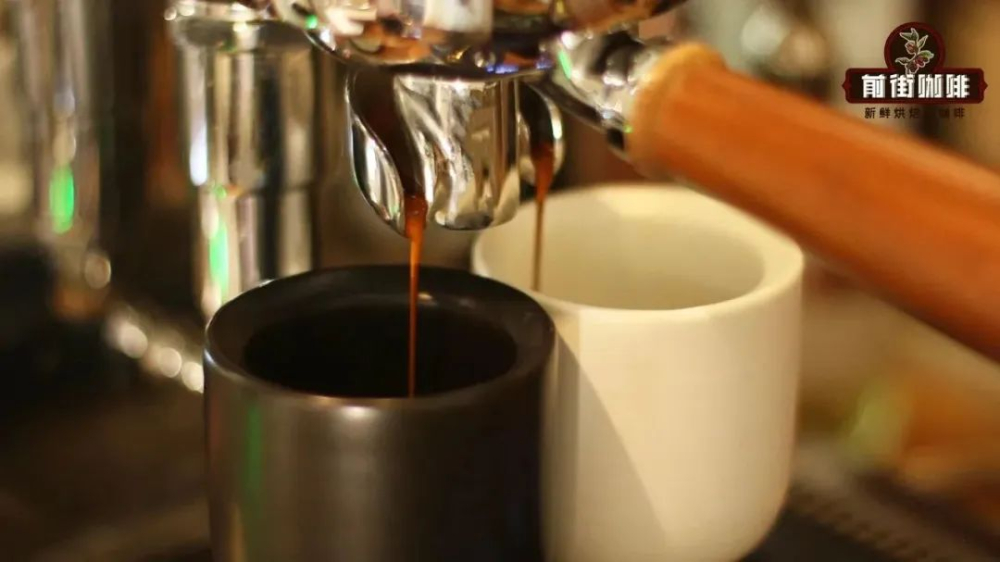
Front Street Coffee also used a splitter handle to make two drinks, referencing the Combo serving style of one Americano and one milk coffee. We used the Warm Sun Blend espresso beans, with parameters that day being 20g of grounds extracted in 28 seconds to yield 40g of coffee liquid, split so each Espresso was around 20g. The hot Americano was made according to the normal serving ratio of about 1:4, injecting 80ml of hot water; the Piccolo was made at 1:2, normally adding about 40ml of steamed milk foam.
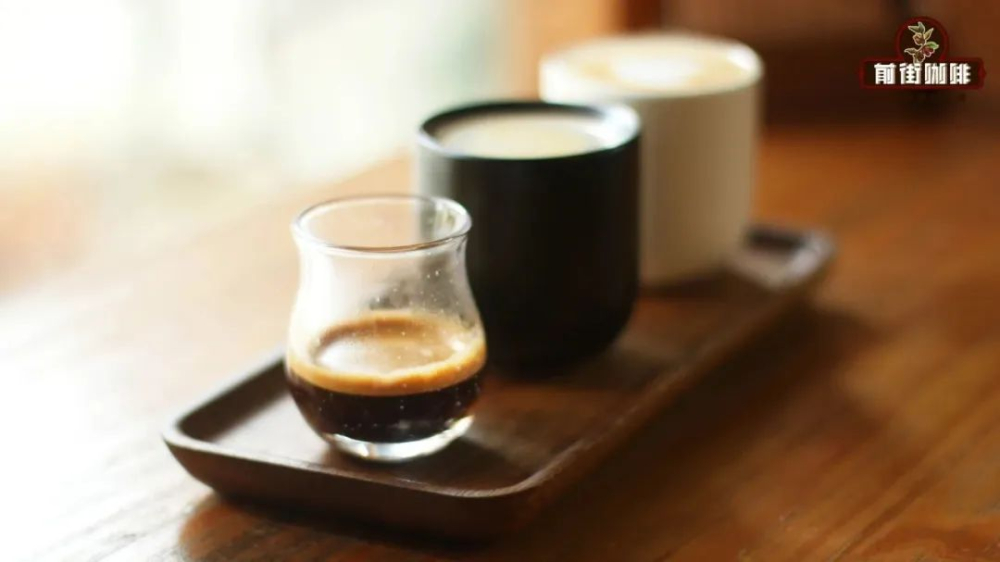
Upon actual tasting, we found that this hot Americano was somewhat dull, with flavors that seemed very "crowded." Upon closer tasting, one could still detect hints of whiskey and vanilla cream; while the Piccolo coffee, as expected, displayed perfect butter cookie and chocolate flavors, with a rich coffee aroma while also offering a slight milky sweetness.
From the tasting, we learned that a hot Americano made from a split single shot cannot simply use the original 1:4 coffee-to-water ratio; this ratio needs to be lowered, adding more water to give the aroma more room to express itself; or the extraction parameters need to be readjusted to improve the espresso flavor, but carelessness can easily weaken the milk coffee flavor. And if our Americano (/espresso) performs well, but the milk coffee is mostly milky, then it's worth reducing the milk ratio.
Why doesn't Front Street Coffee offer Combo?
The hardest part of Combo is how to make a trade-off between milk coffee and Americano (/espresso), which requires us to spend a lot of time and materials to find a compromise extraction plan. The only espresso bean offered at Front Street Coffee stores is the Warm Sun Blend. Although this bean is also suitable for making Combo, readjusting a perfect extraction parameter specifically for Combo seems to be more trouble than it's worth, given the low serving volume.
- END - Front Street Coffee (FrontStreet Coffee)
No. 10, Bao'an Qian Street, Yandun Road, Dongshankou, Yuexiu District, Guangzhou, Guangdong Province
The above content is compiled by CoffeeHunters, a coffee news website.


