








Can a Mortar and Pestle Produce Usable Coffee Particles?
Whole beans and hot water but no grinder is a common situation. A mortar and pestle can crush coffee beans into particles roughly the size of white sugar, and the method was tested with 18 grams of washed Green Label Geisha from Hacienda La Esmeralda, brewed at 93°C with a 1:15 ratio after about 15 minutes of manual grinding.
The main problem is unevenness: manual pounding creates fine powder alongside coarse fragments, and those fines clog the filter and slow the pour, so extraction runs unevenly from start to finish. Pouring in stages and keeping the water gentle limits the damage, giving coffee enthusiasts a genuine reference when professional equipment is missing.
If you have coffee beans and hot water on hand but are missing a grinder, what other methods can we use to turn the beans into grounds? This article documents a complete experiment of crushing a washed Green Label Geisha from Hacienda La Esmeralda using a mortar and pestle: 18 grams of beans, 93°C water temperature, 1:15 coffee-to-water ratio, brewed after about 15 minutes of manual grinding. The article describes in detail the grind size, pouring technique, final flavor performance, and analyzes the fine-powder clogging and uneven extraction problems caused by manual crushing, providing a genuine reference for coffee enthusiasts lacking professional equipment.

Has anyone ever imagined such a scenario: you have coffee beans, hot water, and all the various tools needed for pour-over ready at hand, but just don't have a grinder that can crush the beans into grounds.
When returning to the village before the New Year, Front Street specifically packed a few favorite coffee beans into the suitcase, thinking they could satisfy their coffee cravings during the holiday. But just as they were about to brew a pot, the hand grinder that had been kept at home all year round simply wouldn't turn anymore. The beans were still whole—how were they going to turn them into grounds?

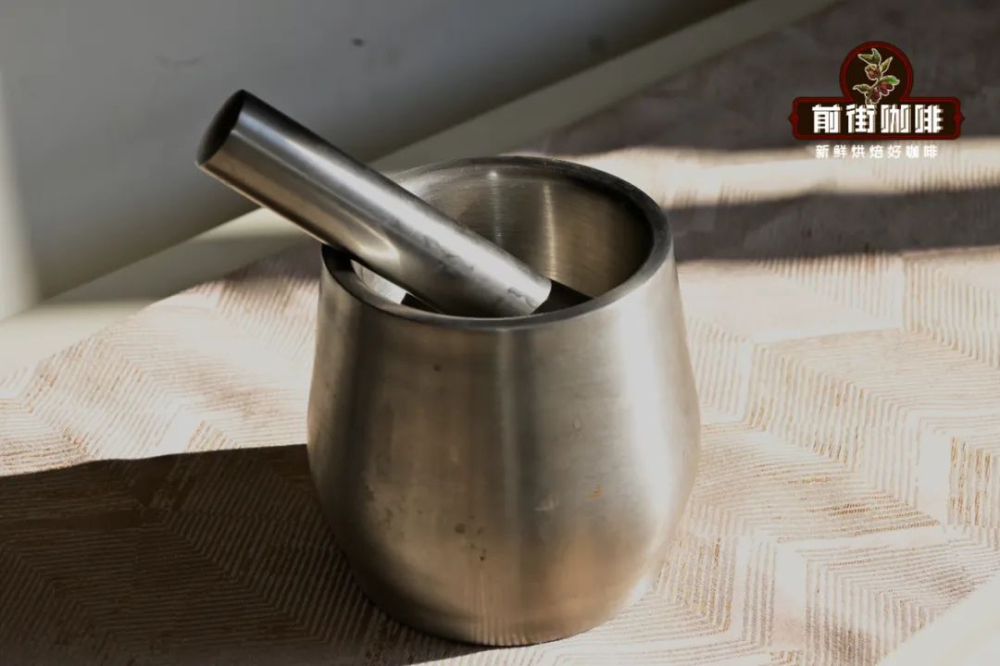
As the saying goes, there are always more solutions than difficulties. Front Street had a flash of inspiration and set their sights on the common mortar and pestle in the kitchen. People used to use this set of tools to crush pills, herbs, and spices, relying on repeated pounding and rolling grinding. Since it could handle those things, coffee beans should be no problem either.
So today let's actually give it a try and see just how coarse or fine the coffee grounds produced by this "primitive" method are, and what the brewed coffee tastes like. Without further ado, let's start pounding.
Coffee beans: Hacienda La Esmeralda Washed Green Label Geisha
Dose: 18 grams
Coffee-to-water ratio: 1:15
Water temperature: 93°C
Dripper: 60-degree V-shaped dripper
Grind size: Visually judged to be about the coarseness of white sugar
Front Street first poured the weighed 18 grams of washed Emerald Green Label Geisha into a cleaned mortar, placed it flat on the countertop or floor, and covered it with the round lid to prevent beans from flying out during pounding. Then, with one hand holding the mortar steady and the other gripping the pestle, they smashed down forcefully until the bean particles turned into powder and the coarseness was roughly appropriate.
Normally when brewing this type of floral and fruity coffee at the bar, considering that these beans are relatively hard, are light roasts, have less cell expansion, and weaker water absorption capacity, hot water needs more time upon contacting the coffee particles to bring out the desired flavor compounds. So in order to release more aromatic components, the extraction yield can be appropriately increased through the parameters. Front Street generally uses a relatively high water temperature (91–93°C) combined with a finer grind size (fine sugar coarseness, EK43s setting 10) for brewing.
After about 15 minutes of effort, the coffee beans gradually transformed from distinct chunks into fine powder with a small amount of coarse particles. Although it still felt a bit rough to the touch, the overall coarseness was close to that of white sugar, and it was ready for brewing.
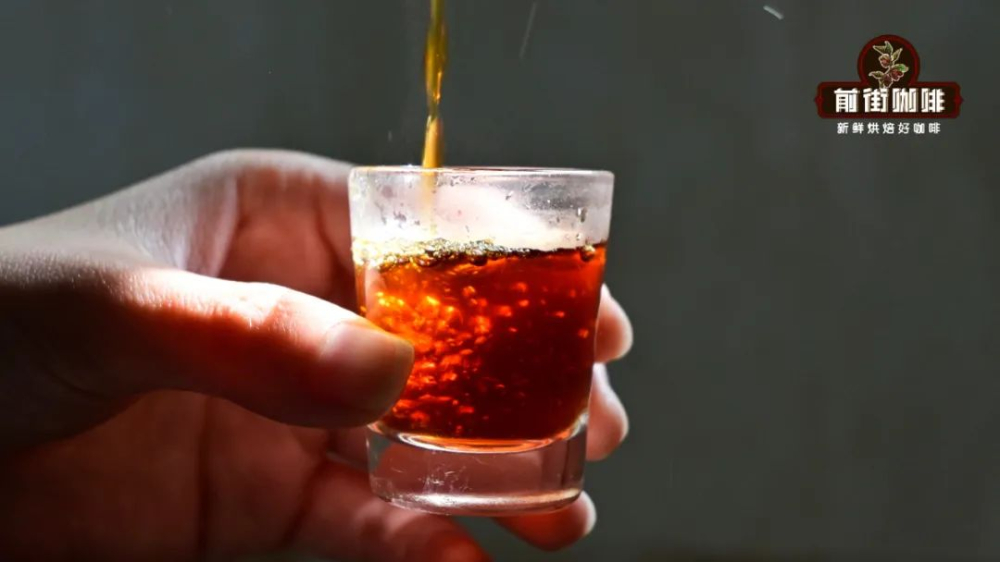
Pouring method: First pour 35 grams of water, bloom for 30 seconds; then pour 110 grams (scale reads about 145 grams), finishing in about 50 seconds to 1 minute; when the water level drops to two-thirds of the coffee bed, pour the remaining 125 grams (scale reads about 270 grams), finishing in about 1 minute 35 seconds. The coffee liquid finished dripping at about 2 minutes 10 seconds. Remove the dripper, and extraction is complete.
This cup of coffee tasted of honey tangerine, green tea, and lime—those bright, uplifting notes—with a hint of white floral aroma and brown sugar-like sweetness. But the overall mouthfeel was somewhat muddy, and after swallowing, an uncomfortable astringent and杂 aftertaste lingered on the tongue.
Front Street examined the coffee bed after brewing and found a large number of irregularly shaped coarse chunks piled on the surface, with signs of the coffee wall having been broken through. There wasn't much coffee grounds on the filter paper; instead, a layer of muddy powder had coated it. Front Street speculated that this pot of coffee had both under-extracted portions and a high likelihood of over-extraction.
When crushing coffee beans with a mortar and pestle, because it relies on a "grinding" motion, the moment the beans are forcefully fractured, a large amount of dust-like fine powder is produced. During brewing, as the water flow stirs, these fine particles are the first to land on the filter paper, getting stuck in the drainage holes and causing clogging, leading to localized over-extraction.
Additionally, the manual crushing process itself is rather messy. Whether the coffee powder "smashed" out with the pestle is of acceptable coarseness mainly depends on the operator's patience (and enough hand strength) as well as visual judgment combined with brewing experience. It is difficult to define with precise numerical values, and even less like a professional grinder that can freely adjust settings and precisely control particle size and uniformity, so in the end there will inevitably be some large "escapees."
- END - Front Street Coffee
No. 10, Bao'an Qian Street, Yandun Road, Dongshankou, Yuexiu District, Guangzhou, Guangdong Province
The above content is compiled by CoffeeHunters, a coffee news website.


