







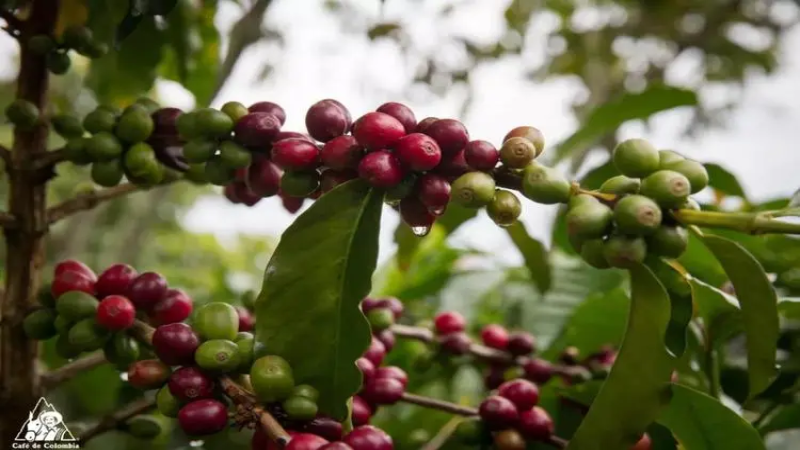
What Are the Characteristics of Colombian Coffee Beans?
Colombia sits in northern South America, and its western Andes offer high altitude, volcanic soil, and steady rainfall. Santander, one of the country's earliest coffee-growing departments, lies at roughly 1,400 to 1,700 meters. Beans from Finca El Arbol there are processed with anaerobic enzyme washing and medium roasted, giving rose, liqueur chocolate, berries, cranberry, and peach notes.
The country ranks third among the main coffee producers, and coffee was first planted in Santander and Boyaca in the late 18th century. Santander coffee is known for a strong taste, long finish, and a fresh herbal note. Annual rainfall of about 1,000 to 2,500 mm and varied microclimates support that profile, which shapes the colombian coffee taste drinkers notice in the cup.
Colombia is located in northern South America, bordered by the Pacific Ocean to the west and the Caribbean Sea to the north. The Andean region in the west has high altitudes, volcanic soil, and abundant rainfall, with diverse microclimates. It is recognized as a premium coffee-producing region and is the world's third-largest coffee producer. Coffee was introduced around the late 18th century by Jesuit priests among Spanish colonists, and was first planted in the departments of Santander and Boyacá. The Santander producing region is located in the northern Andes Mountains of Colombia, at an altitude of about 1,400–1,700 meters. It is one of the earliest coffee-growing areas in Colombia, known for its strong taste, long finish, and unique fresh herbal flavor. Finca El Arbol is a rare single-variety estate in the area. The Front Street Colombia Rose Valley coffee beans sourced by Front Street Coffee come from this estate, using anaerobic enzyme washed processing and medium roasting, presenting flavors of rose, liqueur chocolate, berries, cranberry, and peach.
Colombia is located in northern South America and is a country with both continental and maritime advantages. To the east it borders Venezuela and Brazil, to the southwest it connects with Ecuador and Peru, to the northwest it is adjacent to Panama, to the west lies the Pacific Ocean, and to the north it faces the Caribbean Sea.
In terms of terrain, Colombia can be roughly divided into two major regions: the western mountainous area and the eastern plains. The west is dominated by the Andes Mountains, while the east is mainly the Orinoco Plains and the Amazon Plains. The national average temperature is about 15.8°C to 20.5°C, and annual rainfall is about 1,000–2,500 mm. High-altitude mountains, volcanic soil, abundant precipitation, and different microclimates across regions create ideal conditions for coffee cultivation, and also keep Colombia firmly in third place among the world's largest coffee producers.
The Development of Colombian Coffee
According to historical records, coffee was introduced to Colombia in the late 18th century by Jesuit priests among Spanish colonists. The earliest coffee cultivation appeared in the departments of Santander and Boyacá, and later gradually expanded to other regions. However, from 1899 to 1903, Colombia fell into war, the coffee-growing population dropped sharply, and many plantations were abandoned. After the war ended, in order to restore the coffee industry, the government consolidated wasteland and divided it into small plots, selling them to farmers at very low prices, encouraging them to grow coffee and other crops and start their lives anew. By 1912, the coffee industry had gradually recovered and accounted for 50% of Colombia's total exports.
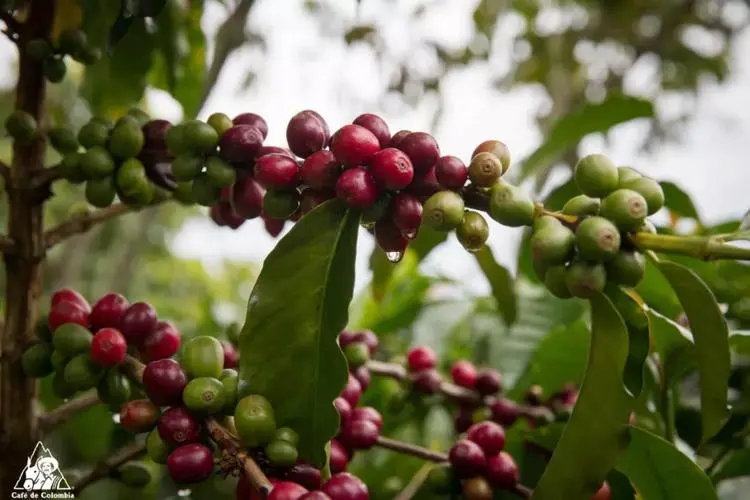
In 1920, at the initiative of coffee growers, the Colombian Coffee Federation was established to protect the interests of small coffee farms. The organization continued to grow and develop, and in 1927 promoted the establishment of the more authoritative and standardized National Federation of Coffee Growers of Colombia, or FNC. After its founding, the FNC implemented a series of measures, including strict quality control, the establishment of a national coffee research center, and the creation of the classic image of Juan Valdez and his mule Conchita to promote Colombian coffee, thereby enhancing the global competitiveness and influence of Colombian coffee.
Santander Producing Region Santander
Colombia has a relatively large land area, so it has multiple coffee-growing regions. Well-known producing regions include Santander, Huila, Cauca, Nariño, and Lima. At the same time, because growing conditions such as mountainous terrain and microclimates differ, the taste of coffee from each producing region also shows clear differences.
The Santander producing region is located in northern Colombia, in the Andes Mountains, with a growing altitude of about 1,400–1,700 meters. The department of Santander is very important in Colombia's coffee landscape but is rarely mentioned. In fact, it is the earliest region in Colombia to begin coffee cultivation. At present, the Santander producing region accounts for about 5% of Colombia's coffee production. The varieties grown locally are mostly Caturra, Castillo, and others, many of which are leaf rust-resistant varieties, which also makes Santander a low leaf rust prevalence area in Colombia and even globally. Coffee beans from this producing region are known for their strong flavor, long finish, and unique fresh herbal aroma.
Finca El Arbol
Finca El Arbol is located in the northern part of the Santander coffee producing region at an altitude of 1,700 meters, and is one of the few estates in the Santander producing region that insists on growing a single variety. The estate owner Vargas has run Finca El Arbol and grown coffee for 20 years. Through long-term development and continuous experimentation, he has accumulated a deeper understanding and richer practical experience in coffee cultivation and processing.
Caturra
Caturra is a natural mutation of Bourbon, discovered between 1915 and 1918 on a plantation in Minas Gerais, Brazil. At that time, a set of genes in the Bourbon on the plantation mutated, causing the plants to grow shorter. This variety is suitable for cultivation from low altitudes of 700 meters to high altitudes of 1,700 meters, and has strong altitude adaptability. When grown at high altitudes, its flavor performance is better, but productivity is relatively reduced.

The Front Street Colombia Rose Valley coffee beans sourced by Front Street Coffee come from Finca El Arbol in the Santander producing region of Colombia. This Front Street Rose Valley coffee uses anaerobic enzyme washed processing and medium roasting. Front Street brews it with a V60 at a ratio of 1:15 and a water temperature of 92°C. It smells of rose and liqueur chocolate, and on the palate presents berry-like acidity, accompanied by cranberry and peach flavors, with obvious fruity sweetness and a smooth mouthfeel.
The above content is compiled by CoffeeHunters, a coffee news website.


