







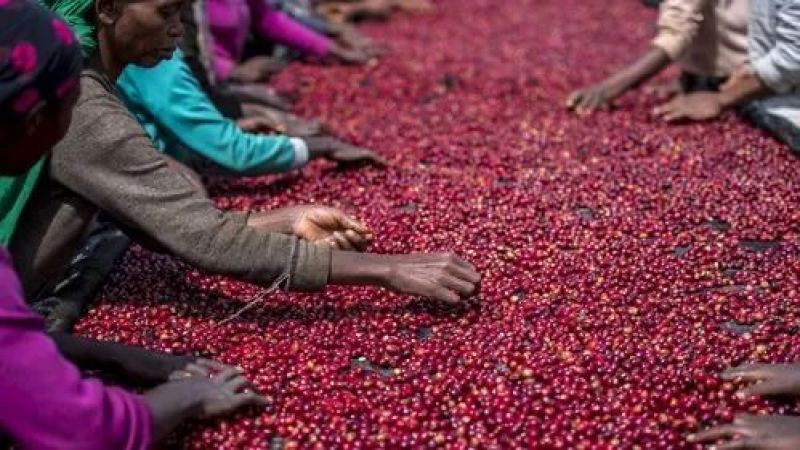
How Are Coffee Producing Nations Like Ethiopia Faring?
Ethiopia exported 117,955 tons of coffee in the first half of the 2023/24 fiscal year, earning more than US$570 million, according to the Ethiopian Coffee and Tea Authority. Main buyers include Saudi Arabia, South Korea, the United States, Germany, Japan, and China. The country also signed a port lease memorandum with Somaliland for 50-year use of the Port of Berbera.
Coffee supplies 30 to 35 percent of Ethiopia's total export revenue, so export routes matter greatly for a landlocked country. In the previous fiscal year Ethiopia shipped about 240,000 tons for US$1.3 billion, down from a record of roughly 300,000 tons and US$1.4 billion. Unstable markets and conflict keep the outlook uncertain for coffee producing nations.
Latest data from the Ethiopian Coffee and Tea Authority shows that in the first half of the 2023/24 fiscal year, the country's coffee exports reached 117,900 tons, with export revenue exceeding US$570 million. As one of Africa's most important coffee-producing countries, Ethiopia's coffee industry is facing the dual test of global market volatility and regional conflict. At the same time, in order to escape its predicament as a landlocked country and broaden its export channels, Ethiopia signed a port lease memorandum of understanding with Somaliland, obtaining a 50-year right to use the Port of Berbera in exchange for recognizing Somaliland's independence. This article will review the latest developments in Ethiopia's coffee exports, the challenges it faces, and the far-reaching impact of this port agreement on the country's coffee trade.
The Ethiopian Coffee and Tea Authority (ECTA) recently announced that in the first six months of the 2023/24 fiscal year, the country exported a total of 117,955 tons of coffee to overseas markets.
In terms of export destinations, Saudi Arabia, South Korea, the United States, Germany, Japan, and China are the main buyers of Ethiopian coffee. Although the government is actively promoting growth in both coffee export volume and foreign exchange earnings, relevant parties also admit that the unclear trend of the international coffee market, coupled with instability in some coffee-importing countries themselves, has added uncertainty to the export outlook. Looking back at the previous fiscal year (2022/23), Ethiopia exported about 240,000 tons of coffee and earned US$1.3 billion. This figure represents a clear decline from the previous record of about 300,000 tons exported and US$1.4 billion in foreign exchange earnings.
The reason coffee exports attract so much attention is closely related to Ethiopia's domestic situation. Although a peace agreement was reached in 2022, sporadic violence has still not subsided, continuously affecting the national economy. Coffee accounts for 30% to 35% of Ethiopia's total export revenue, making it both a critically important traded commodity and a major source of foreign exchange. Because the government needs US dollars to purchase weapons, it naturally hopes to obtain more hard currency from coffee exports.
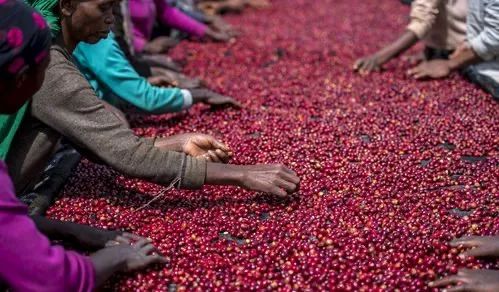
However, the issue of export routes has always plagued this country. In 1993, Eritrea broke away from Ethiopia and became independent, and Ethiopia lost its coastal territory and became a landlocked country. After the border war between the two countries from 1998 to 2000, the border was sealed off, and Ethiopia could no longer continue using the Port of Assab, on which it had long relied, and could only turn to neighboring Djibouti's ports instead. Ports are crucial to Ethiopia, as 95% of the country's foreign trade depends on ports. The country's economy cannot do without exports of agricultural products and minerals, among which coffee accounts for about 30% of export revenue, while it also depends on imports of key industrial goods such as oil. Clearly, relying on only one port cannot meet demand.
To this end, Ethiopia's prime minister recently signed a memorandum of understanding with the leader of the local authorities in Somaliland in northern Somalia. Under the agreement, Ethiopia will obtain the right to use Somaliland's ports to expand exports, increase revenue, and in the future recognize Somaliland as an independent state. It is understood that the Port of Berbera involved in the lease agreement is Somaliland's only large port, with an annual handling capacity of up to 500,000 standard containers. It has already received financial support from British International Investment and DP World and is undergoing comprehensive modernization. Ethiopia will obtain a 50-year right to use the port, thereby increasing foreign exchange earnings from coffee, minerals, and other products. For friends who love coffee, the export trends of Ethiopian coffee are worth continued attention. If you also want to taste authentic Ethiopian flavors, you might try the washed Yirgacheffe or sun-dried Sidamo recommended by Front Street Coffee and experience the unique charm of the African highlands.
The above content is compiled by CoffeeHunters, a coffee news website.


