







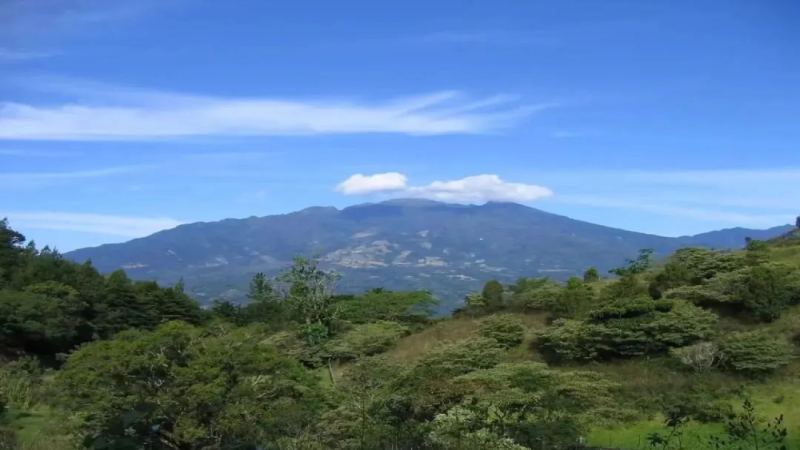
How Do Arabica Coffee Varieties Perform in Boquete, Panama?
Panama's Boquete region in Chiriqui Province grows more than Geisha. Typica, Catuai and other arabica coffee varieties are cultivated on volcanic slopes, and Elida Estate sits among them above 1,900 meters. The area's east-west terrain traps cool air, producing diverse microclimates, temperatures of 23 to 27 degrees Celsius and 1,500 to 2,500 millimeters of annual rain.
Panama's reputation grew after Geisha won the 2005 reliable of Panama competition and set an auction record, which led many drinkers to assume the country grows only that variety. In practice, arabica coffee here also includes Typica and Catuai, planted in Boquete, Volcan and Renacimiento. Boquete's fertile soil near the Costa Rican border supports these lots, and Elida Estate shows how Typica performs in that environment.
Panama coffee rose to fame in one battle at the 2005 Best of Panama competition thanks to the Geisha variety, breaking the auction record at the time and making coffee lovers around the world take notice of this small Central American country. However, Panama is not only about Geisha; varieties such as Typica and Catuai also put down roots here. This article will take you deep into Panama's coffee-growing environment, focusing on the geographical advantages of the Boquete region, as well as the cultivation details of Elida Estate and the unique charm of the Typica variety. Front Street Coffee will also recommend related specialty beans for you, and together we will explore the coffee flavors nurtured by this volcanic soil.
Panama coffee enjoys an extremely high reputation in the international specialty coffee circle, and among its varieties, Geisha is especially prominent. In 2005, Geisha took first place with a stunning performance at the Best of Panama competition and auction, while also setting a new coffee auction record at the time. Because of this, many people mistakenly believe that Panama only grows Geisha, but in fact the country also cultivates several other coffee varieties.
Panama's terrain is varied and undulating, with crisscrossing valleys. Apart from plains along the north and south coasts, most of the country is mountainous. Because it lies near the equator, it has a tropical maritime climate, humid during the day and cool at night, with an average annual temperature between 23 and 27 degrees Celsius. The year is divided into a dry season and a rainy season, with average annual rainfall of about 1,500 to 2,500 millimeters, providing exceptional natural conditions for coffee cultivation.
Panama's Boquete Region
The country's coffee cultivation is mainly concentrated in three areas: Boquete, Volcan, and Renacimiento, all located in Chiriqui Province. The province's most famous landmark is Baru Volcano, one of the highest volcanoes in Central America. Among these producing regions, Boquete is especially well known.
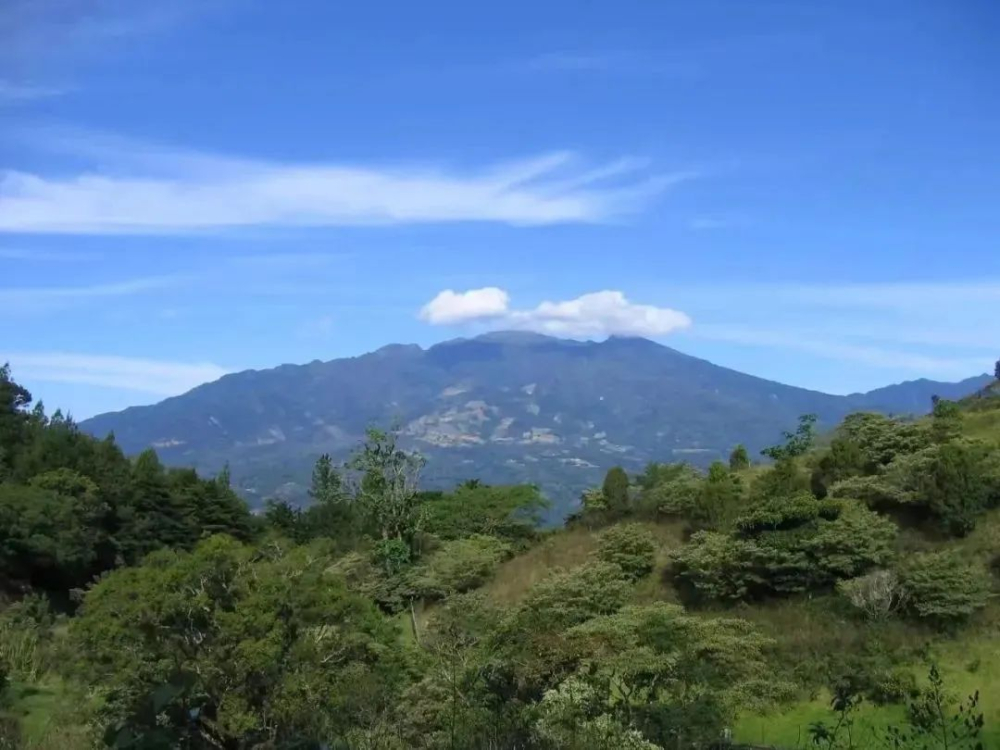
The name of the Boquete region comes from Boquete town, which is close to the Costa Rican border and has very fertile soil. The unique microclimate of the Boquete highlands is an irreplaceable and important resource for specialty coffee here. The east-west orientation of the terrain causes cold air to flow through the mountains and converge in areas above 1,900 meters in elevation, creating diverse microclimates and making local temperature and rainfall conditions very suitable for plant growth. Combined with the nourishment of volcanic soil, the coffee trees in this region grow under extremely ideal conditions. Many well-known estates are located here, such as Elida and Hacienda La Esmeralda.
Elida Estate
Elida Estate covers 65 hectares, more than half of which lies within Baru Volcano National Park. Only 30 hectares are actually used for coffee cultivation, while the rest remains primary forest. Coffee is grown at elevations between 1,670 and 1,850 meters, making it one of the two highest coffee estates in Panama. In a high-altitude environment, lower temperatures slow the ripening process of coffee cherries, while fertile volcanic soil provides ample nutrients. Combined with the region's unique microclimate, this has enabled Elida Estate to achieve excellent results many times in BOP competitions.
Elida Estate's processing plant is located halfway up the mountain, so harvested coffee cherries can be sent to the factory for processing immediately, thereby ensuring the quality of the cherries. In addition, the estate insists on hand-picking the ripest cherries, and because they are highly ripe, the mucilage also has a higher sugar content. At present, the main varieties cultivated at Elida Estate include Catuai, Typica, and Geisha.
Typica
Typica is one of the oldest Arabica coffee varieties still in existence. Its beans are slender, and its fruit is oval. It is characterized by extremely low yields and susceptibility to various coffee diseases, but its quality is outstanding, and it can adapt to cold climates. Its main growing areas are concentrated in Central America.
The above content is compiled by CoffeeHunters, a coffee news website.


