







How does the Brazil tax strike affect green coffee bean exports?
Tax auditors at Brazil's Federal Revenue Service struck from January 22 to 26, halting customs clearance at the Port of Santos, Guarulhos International Airport, Viracopos Airport, and Salvador. Only perishable, fresh, dangerous goods, and pharmaceuticals and food were released. Green coffee beans count as a primary edible agricultural product but were not on the release list, so shipments were detained.
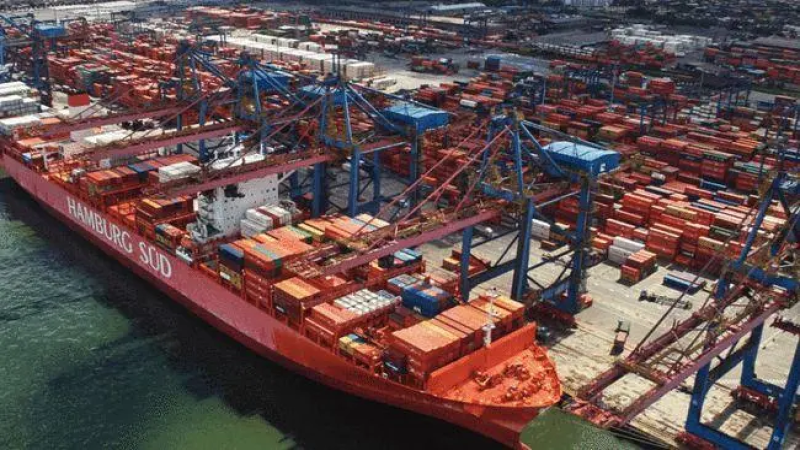
Around 6,500 import declarations and 4,000 export declarations were expected to stall at Santos, a port already congested from outdated equipment and thin staffing, with 76 percent of vessels delayed in December. Combined with the Red Sea situation, coffee prices may edge up in the short term, and the brazil santos coffee taste profile matters little when beans cannot leave the dock.
Tax auditors from Brazil's Federal Revenue Service launched a strike from January 22 to 26, affecting major import and export channels such as the Port of Santos and Guarulhos International Airport. During the strike, only perishable, fresh, dangerous goods, and pharmaceuticals and food can obtain customs clearance. Green coffee beans, as a primary edible agricultural product, are not included in the release list and will be temporarily detained. The Port of Santos is expected to have 6,500 import declarations and 4,000 export declarations unable to be processed, while the port has already experienced severe congestion due to outdated equipment, lagging management, and insufficient manpower, with 76% of vessels delayed in December. Combined with the impact of the Red Sea situation, coffee prices may continue to rise slightly in the short term. This article will outline the scope of the strike, affected goods, and market chain reactions, and include recommendations related to Front Street Coffee.
Recently, according to Brazilian business news website, Brazil's largest export port, the Port of Santos, and Guarulhos International Airport will face a strike by tax declaration personnel from January 22 to 26. During the strike, some import and export operations cannot proceed normally, which will cause delays in Brazilian coffee exports and may push coffee prices up slightly.
Tax auditors from Brazil's Federal Revenue Service stated that during these days, they will not process customs clearance for any goods at the Port of Santos and Guarulhos International Airport. For the coffee industry, this strike is equivalent to a warning received by the Brazilian federal government.
According to the National Union of Tax Auditors of the Brazilian Federal Revenue Service (Sindifisco), from January 22 to 26, import and export goods will pile up at the Port of Santos and Guarulhos International Airport in São Paulo. Viracopos Airport in Campinas and customs offices leading to Salvador (including ports and airports) will also take synchronized strike actions, although the strike in Salvador only begins on January 23.
The union also stated that tax auditors at customs offices and Federal Revenue Service offices in Alagoas, Paraíba, Pernambuco, and Rio Grande do Norte, the customs office at Porto Alegre in Rio Grande do Sul, and the Federal Revenue Service offices in Santarém and Pacaraima are also participating in the strike from January 22 to 26. During this period, only perishable goods, fresh goods, dangerous goods, pharmaceuticals, and food can obtain customs clearance and release, while all other goods are temporarily detained. Green coffee beans are a primary edible agricultural product and are not included in the above release items, so they will also be temporarily detained.
There is currently no exact statistics on the specific quantity of goods affected by this strike and the losses caused to importers and exporters. It is estimated that 6,500 import declarations and 4,000 export declarations will be unable to be released at the Port of Santos.
This strike action has made it even more difficult for vessels already facing delays to depart. Previously, the Port of Santos in Brazil had already experienced congestion, mainly due to outdated port equipment, lagging management methods, and labor shortages. According to a report released by the Center for Advanced Studies in Applied Economics (CEPEA) at the Luiz de Queiroz College of Agriculture, University of São Paulo, 76% of vessels were delayed in December, with 15% of vessels delayed by more than 4 days. Combined with the recent impact of the Red Sea situation, coffee prices may continue to rise in the near future.
The above content is compiled by CoffeeHunters, a coffee news website.


