







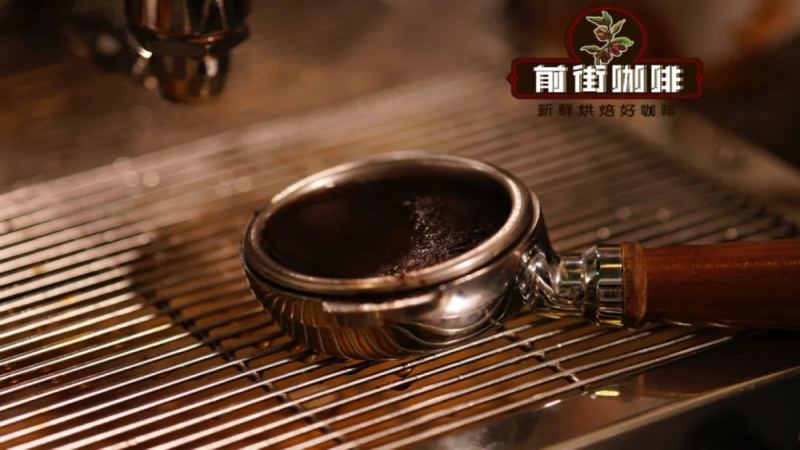
Why do coffee particles leave water in the portafilter basket?
A wet, muddy puck with water sitting in the basket after extraction points to a problem in the process rather than normal behavior. Grinding too fine shrinks the gaps between coffee particles, so hot water cannot pass through the bed in time and stays trapped in the puck at the end of the shot.
The usual sign is a pressure gauge that holds peak pressure for more than ten seconds while the liquid only drips and total extraction time stretches out. Bean freshness, dose matching, group head cleanliness and machine pressure can all contribute, so each factor needs checking before adjusting the grind.
Many espresso enthusiasts have encountered this situation: after extraction, you remove the portafilter and find the puck wet and soft, unable to hold its shape, with a pool of water still sitting at the bottom of the basket. This is clearly not an ideal extraction state. Is the problem with the basket or the shower screen, or do the extraction parameters need adjusting? This article will analyze the possible causes of water retention one by one from the perspectives of grind size, coffee bean freshness, dose matching, group head cleanliness, and machine pressure, and provide corresponding solutions. The article will also share Front Street Coffee's experience with dose control during daily dialing-in, helping you find the root of the problem and return espresso extraction to a dry, intact puck state.
For those who use espresso machines, have you also encountered a similar situation: after extraction is complete, you remove the portafilter and find the entire puck soaking wet, with quite a bit of water still pooled on the surface, and the puck comes out like mud, crumbling and unable to hold its shape.
In fact, after a normal espresso extraction, the puck should be relatively dry, and when knocked out it should come out as a single firm, intact cake. If it appears wet, soft, and sticky, or even has obvious water pooling at the bottom of the basket, then there is something abnormal in the extraction process. Today Front Street Coffee (FrontStreet Coffee) will talk with you in detail about which factors may cause water retention.
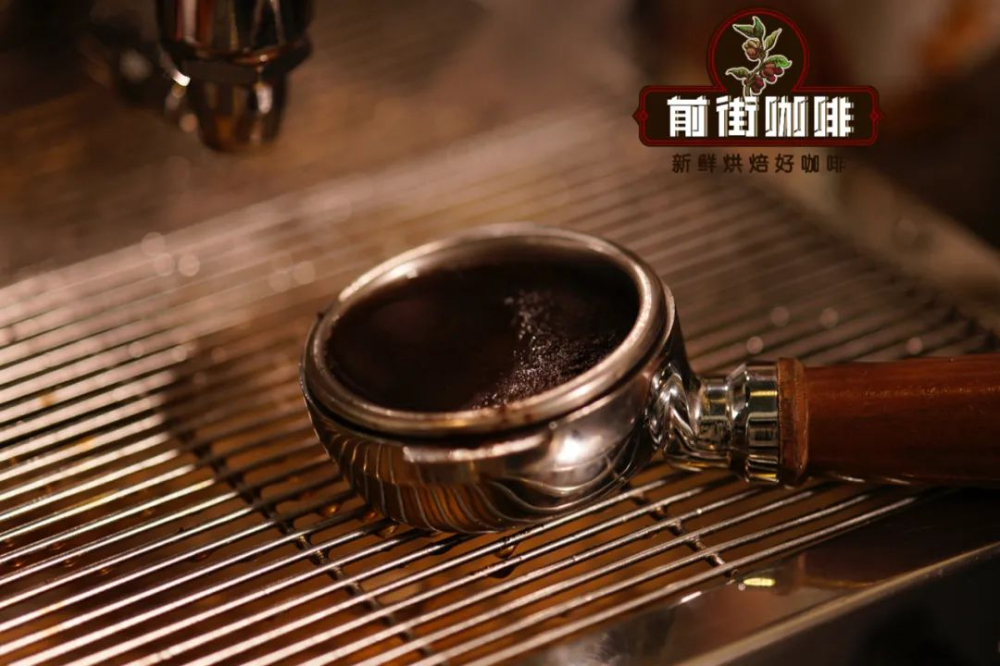
Coffee grounds ground too fine
Espresso extraction relies on high-temperature, high-pressure hot water penetrating the coffee bed. When the grind is too fine, the gaps between coffee particles shrink sharply. Even if the espresso machine has reached maximum pressure, it is still difficult for hot water to pass smoothly through these narrow gaps and carry out the flavor compounds. At the end of extraction, some hot water has not passed through the coffee bed in time and remains trapped inside the puck, forming a wet, sticky mud clump, and in severe cases, water pooling.
The most typical sign of grinding too fine is: the pressure gauge has long since reached peak pressure and stays there for more than ten seconds, yet the coffee liquid still only drips out slowly, and the overall extraction time is stretched very long.
If the water retention is caused by grinding too fine, it is not difficult to identify, and the solution is also very direct—adjust the coffee grind slightly coarser, and this situation will improve.
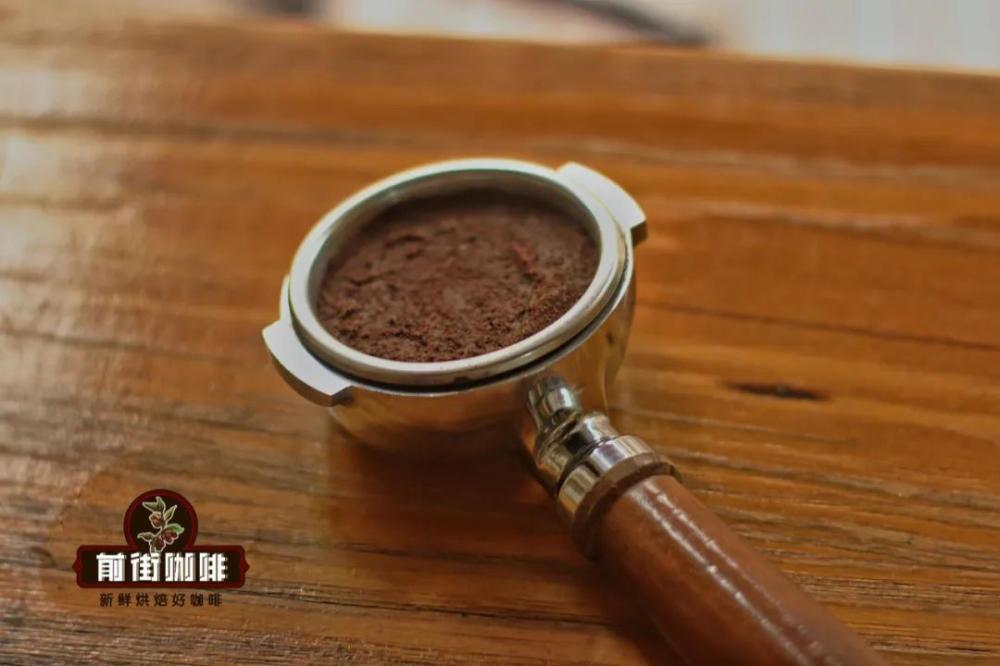
Coffee beans not fresh enough
When the beans are not fresh enough, the cause of water pooling in the basket is often harder to judge. This situation is relatively common among individual espresso enthusiasts who make few cups. If they only make one or two espressos a day, a bag of espresso beans may last a month, and the carbon dioxide in the beans has almost completely dissipated.
You should know that, similar to pour-over, an espresso machine also blooms the coffee grounds during extraction, that is, pre-infusion. When the coffee grounds still contain carbon dioxide, under the action of hot water the gas expands and fills the gaps between particles; if there is little carbon dioxide left in the beans, this expansion will not occur, and at the same grind setting the flow rate of the coffee liquid will speed up.
The espresso extracted this way usually has thin crema or even none at all, tastes noticeably watery, and water pooling in the basket will also recur. If conditions allow, it is recommended to use freshly roasted coffee beans as much as possible.
Too much or too little dose
Generally speaking, baskets have their corresponding capacity standards, and different models of baskets can hold different doses.
If you simply increase the dose in pursuit of a stronger espresso, once it exceeds the basket's maximum capacity, it will trigger a series of problems: for example, the espresso is difficult to extract, after removing the portafilter the surface of the puck is damp but the coffee grounds at the bottom of the basket are dry, and a large amount of coffee grounds sticks to the shower screen.
Conversely, if the actual dose used is far below the basket's standard grammage, after extraction there will be severe water pooling in the basket, and in extreme cases, when you remove the portafilter, a pool of coffee water may even spill out.
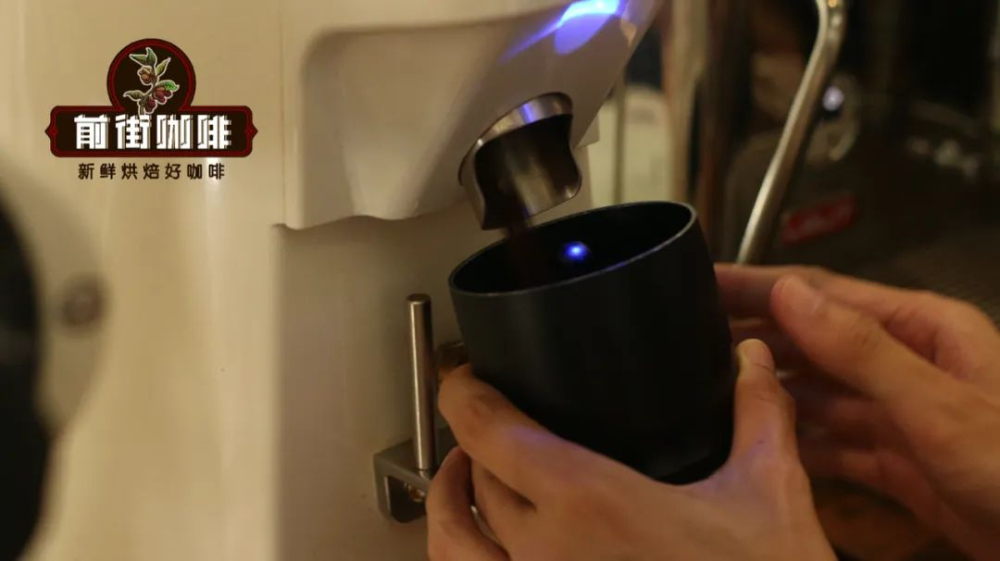
(When the dose is below the groove)
What we need to understand is that the espresso machine releases a pressurized stream of water during extraction, and when the stop button is pressed to end extraction, the pressure relief valve opens, creating back pressure inside the sealed portafilter basket, which discharges the excess water above the puck through the pressure relief valve. But if there is too little coffee, the distance between the puck and the shower screen is too large, and it is easy for some water to remain in the basket, forming water pooling.
If you cannot confirm whether the dose you are using matches the basket, you can observe a groove line inside the basket. After tamping the coffee in the basket, see whether the surface of the puck just reaches the indentation: if it is too high, the dose is too much; if it is too low, the dose is too little.
Taking Front Street Coffee (FrontStreet Coffee)'s daily dialing-in of extraction parameters as an example, Front Street uses a 20g basket and does not use more than 20g during dialing-in; if more than 20g is needed, Front Street will choose to grind slightly finer; when the flavor is close, sometimes the dose is reduced by a few tenths of a gram, but not below 19.7g.
Group head pressure relief problem
If the group head has not been cleaned for a long time, or has not been cleaned thoroughly enough, long-term accumulation of coffee grounds can impair pipeline drainage or drainage function, and after each extraction, too much water will remain in the basket.
When the situation is not serious, you only need to maintain daily cleaning of the group head and regularly use a dedicated espresso machine cleaner for washing; but if the problem persists, it is recommended to contact customer service for inspection and repair.
Insufficient or unstable pressure in the espresso machine
Insufficient pressure is a relatively common problem in home espresso machines. If the pressure is insufficient or unstable during extraction, the pressure gauge will "jump repeatedly."
(For reference only)
The most intuitive manifestation is that the extraction stream suddenly goes from thick to thin, which prevents the pressure stop valve from having enough pressure for back-suction, ultimately leaving a large amount of water pooling after the portafilter is removed.
- END - Front Street Coffee (FrontStreet Coffee)
No. 10 Baoqian Front Street, Yandun Road, Dongshankou, Yuexiu District, Guangzhou City, Guangdong Province
The above content is compiled by CoffeeHunters, a coffee news website.


