







What Causes Fine Coffee Particles in an Espresso Cup?
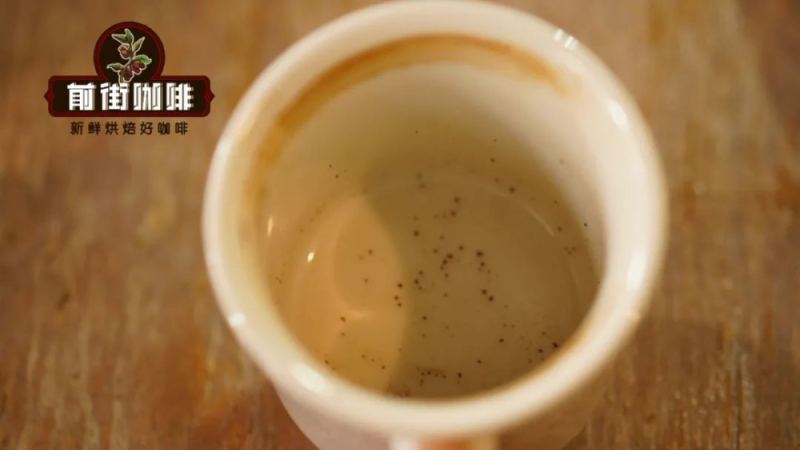
The black specks at the bottom of an espresso or Americano are ultra-fine coffee particles that pass through the portafilter basket with the hot water during extraction. A small amount is normal; the same settling happens with soy milk or fresh juice. Iced drinks simply hide them.
Visible particles mean the count is abnormally high, usually traced to grind size, basket mesh, or a dirty group head. Four fixes help: adjust the grind, check the basket, clean the group head, and keep the dose consistent. A circular filter paper in the basket blocks particles but slows flow, so grind and dose need retuning.
Many people, after finishing an Americano or espresso, notice some fine black particles settling at the bottom of the cup—are these actually coffee grounds? And why are they rarely seen in iced drinks? Drawing on Front Street Coffee's practical experience, this article explains the sources of ultra-fine particles in espresso extraction, including grind size, portafilter basket mesh, group head cleaning, and other factors, and offers four actionable improvement measures. It also documents Front Street's test of placing a circular filter paper in the portafilter basket—while it effectively blocks fine particles, the extraction flow rate and flavor change, requiring readjustment of grind and dose parameters.
Recently, temperatures have suddenly dropped, and noticeably more customers in the shop are ordering hot drinks. After finishing a hot Americano, one customer recalled having encountered a similar situation before—when drinking down to the bottom of the cup, some tiny particles would remain. So they came to ask Front Street: "Are those things at the bottom of the cup coffee grounds? Why have I never noticed them when drinking iced Americanos?"
(Photo for reference only)
In response to this question, Front Street will analyze today why there are fine particles at the bottom of the cup after finishing an espresso, and what methods can reduce this phenomenon.
Is it normal to find coffee grounds at the bottom of the cup?
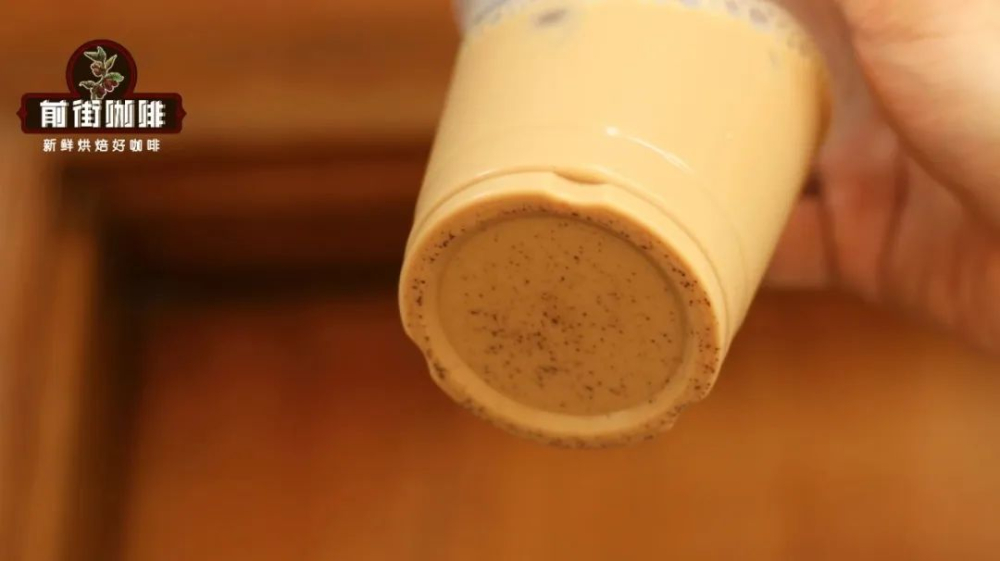
These black particles settling at the bottom of the cup are actually ultra-fine particles that, during espresso extraction, pass through the portafilter basket along with the hot water and fall into the cup. This is similar to how soy milk develops sediment after sitting, or fresh juice has pulp settling at the bottom.
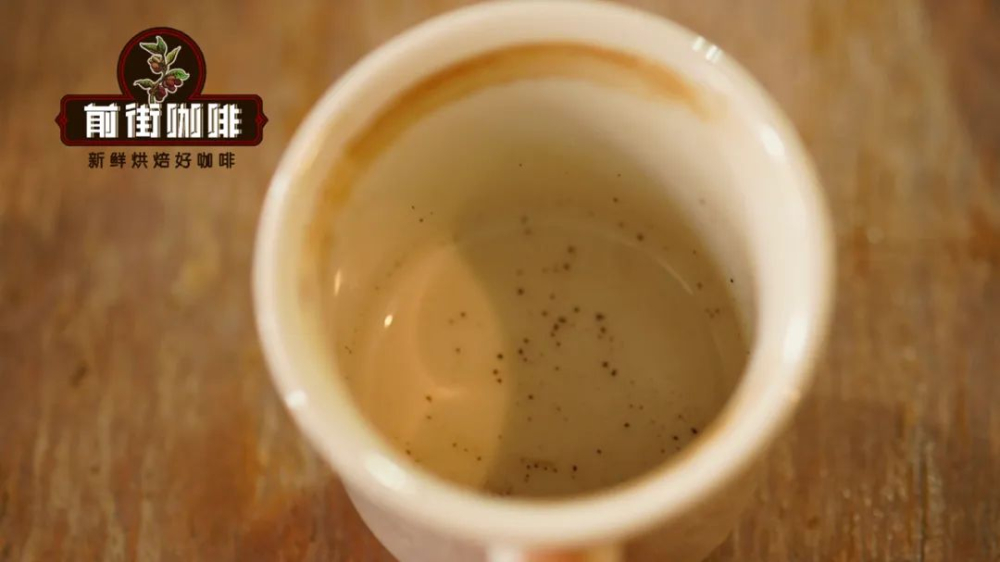
Generally speaking, it is normal for espresso to contain a small amount of ultra-fine particles. If you are not drinking the espresso directly, you basically won't notice their presence; once water or milk is added in a certain ratio to make other espresso drinks, they become even harder to detect. So a trace amount of ultra-fine particles does not affect the overall taste of the coffee.
But if you can see obvious black particles mixed in the coffee with the naked eye, that means the amount of fine particles is "abnormally" high, and it is very likely that something went wrong at some stage of the extraction process.
Where do these fine particles come from?
The coffee grounds used for espresso need to be ground to a consistency close to fine sand, with a particle size range of roughly 200–300 microns. What we commonly call "fines" are produced when coffee beans fracture during cutting and compression; they are smaller than the target particle size and, due to static electricity, cling to the coffee grounds, so this type of fine particle cannot be completely avoided during grinding. (It's like breaking open a coffee bean—some powder will always scatter.) Some commercial-grade grinders produce more uniform particle sizes, which can alleviate the trouble caused by fines to some extent.
The portafilter basket used for espresso extraction acts as a filter through a mesh made of many tiny holes. If you hold the basket up to a light source, the size of the light passing through the mesh is the pore size. When coffee grounds are loaded into the basket and the portafilter is locked in to begin extraction, those fine particles smaller than the pores will enter the coffee liquid under the flush of high-pressure hot water. These fine particles carried out with the coffee liquid usually do not sink immediately; they often settle at the bottom of the cup only after a few minutes.
Back to that customer's question: when Front Street serves a hot Americano, we use a relatively short white coffee cup, so drinking from the top down, you will naturally see some fine particles settled at the bottom; whereas iced Americanos are served in tall glass cups with a straw, and are generally drunk from the bottom up, so you don't notice fine coffee particles at the bottom—it's not that they aren't actually there.
Of course, besides grinding, some overlooked details before and after extraction can also cause unusual powder to appear in the coffee. For example, if the group head gasket is not cleaned properly and still has grounds left from the previous shot, this can cause unwanted coffee grounds to appear in the cup.
How can this situation be avoided?
1. First, check whether it is caused by a technical issue. If so, develop the habit of cleaning the group head and portafilter at all times to avoid contaminating the coffee and to ensure hygiene.
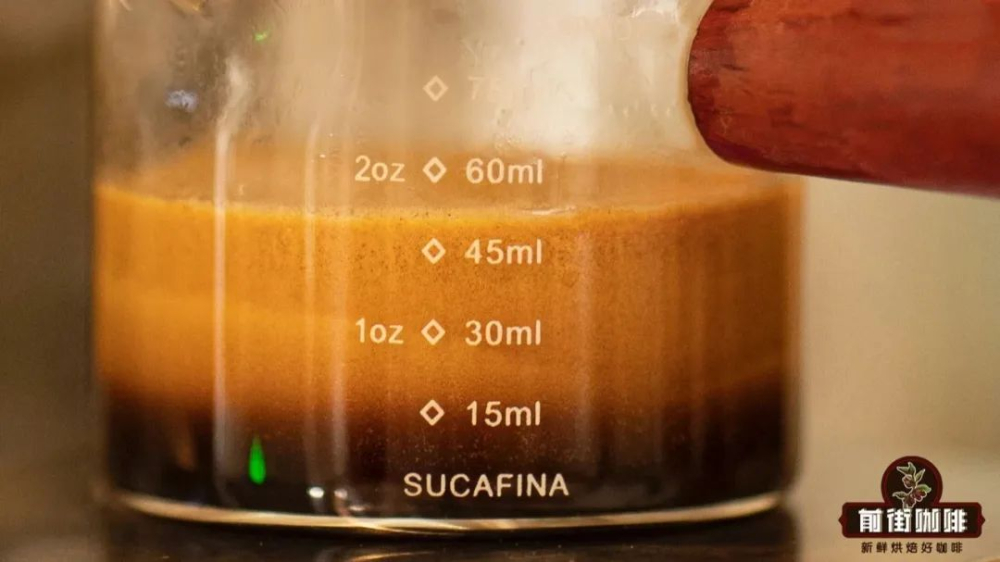
2. Over long-term exposure to high-temperature, high-pressure extraction, the pore size of the portafilter basket can deform with extended use, allowing more fine particles to pass through. However, this phenomenon is not common; it usually only appears after 1–2 years of high-intensity use. The check is simple: just hold the basket up to a light source and see whether any individual holes have become larger. If so, it means the basket needs to be replaced.
3. If, after checking the above two steps, the extracted espresso still has a large amount of ultra-fine residue settling at the bottom of the cup, it is recommended to switch to a better espresso grinder—after all, a good grinder can reduce a lot of extraction headaches.
4. Of course, if you really can't tolerate this kind of fine particle sediment at the bottom of the cup, placing filter paper may be a good option. Filter paper can effectively block solids and oils and other substances; placing a circular filter paper in the portafilter basket before adding coffee grounds can prevent fine particles from falling into the coffee along with the water.
Front Street tested and verified the filter paper method and found that it indeed effectively solves the problem of fine particles falling into the coffee and settling at the bottom of the cup. However, compared with extraction without filter paper, the extraction speed is noticeably faster, and the espresso flavor also changes. Therefore, when using the filter-paper-layered extraction method, extraction parameters (grind, dose, etc.) need to be readjusted to stabilize extraction.
- END - Front Street Coffee
No. 10 Baoqian Street, Yandun Road, Dongshankou, Yuexiu District, Guangzhou, Guangdong Province
The above content is compiled by CoffeeHunters, a coffee news website.


