







How do Yirgacheffe, Kochere and Gedeb differ as coffee regions?
Yirgacheffe is one of Ethiopia's highest coffee areas, sitting between 1,750 and 2,200 meters, where family-based farms supply more than forty cooperatives. Kochere lies about 25 kilometers southeast with roughly 100,000 residents, and Gedeb is one of the cooperatives inside the wider Yirgacheffe zone. These micro-regions and cooperative structures are what make Ethiopian specialty coffee traceable.
Ethiopia is Africa's largest Arabica producer and holds an estimated 10,000 to 15,000 coffee varieties, most still without systematic genetic classification. Guji and Yirgacheffe were once part of Sidamo before gaining independent regional status for their distinct flavors. Beans from Kochere are sometimes named after the source town, such as Chelchele, or after a processing plant, reflecting the smallholder delivery model.
Ethiopia, as Africa's largest producer of Arabica coffee, boasts tens of thousands of coffee varieties, with regions such as Yirgacheffe, Sidamo, and Guji each having their own characteristics. This article focuses on Yirgacheffe and its sub-regions, Kochere and the Gedeb cooperative, outlining their geographical locations, cultivation models, and flavor profiles, and introducing the washed coffee beans corresponding to the Front Street brand. By understanding the division logic of these micro-regions and the operation of cooperatives, coffee enthusiasts can more clearly grasp the traceability and regional flavors of Ethiopian specialty coffee.
Ethiopia is the country with the highest production of Arabica coffee in Africa, with a long history of coffee cultivation. It is estimated that there are approximately 10,000 to 15,000 coffee varieties in the country, most of which have not yet undergone systematic genetic classification.
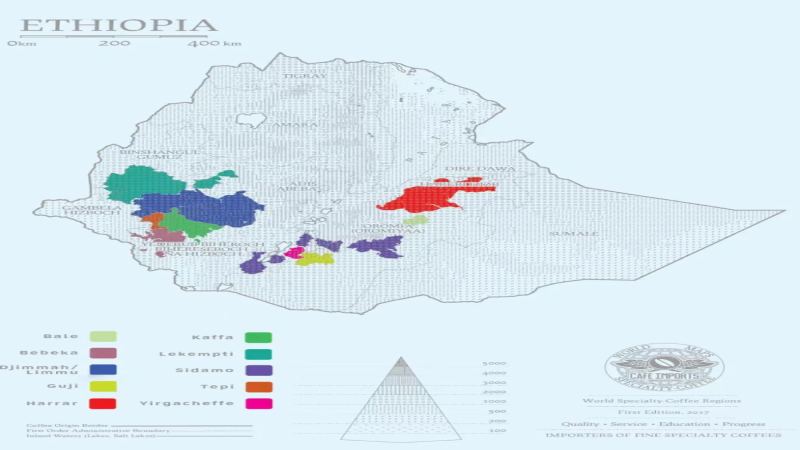
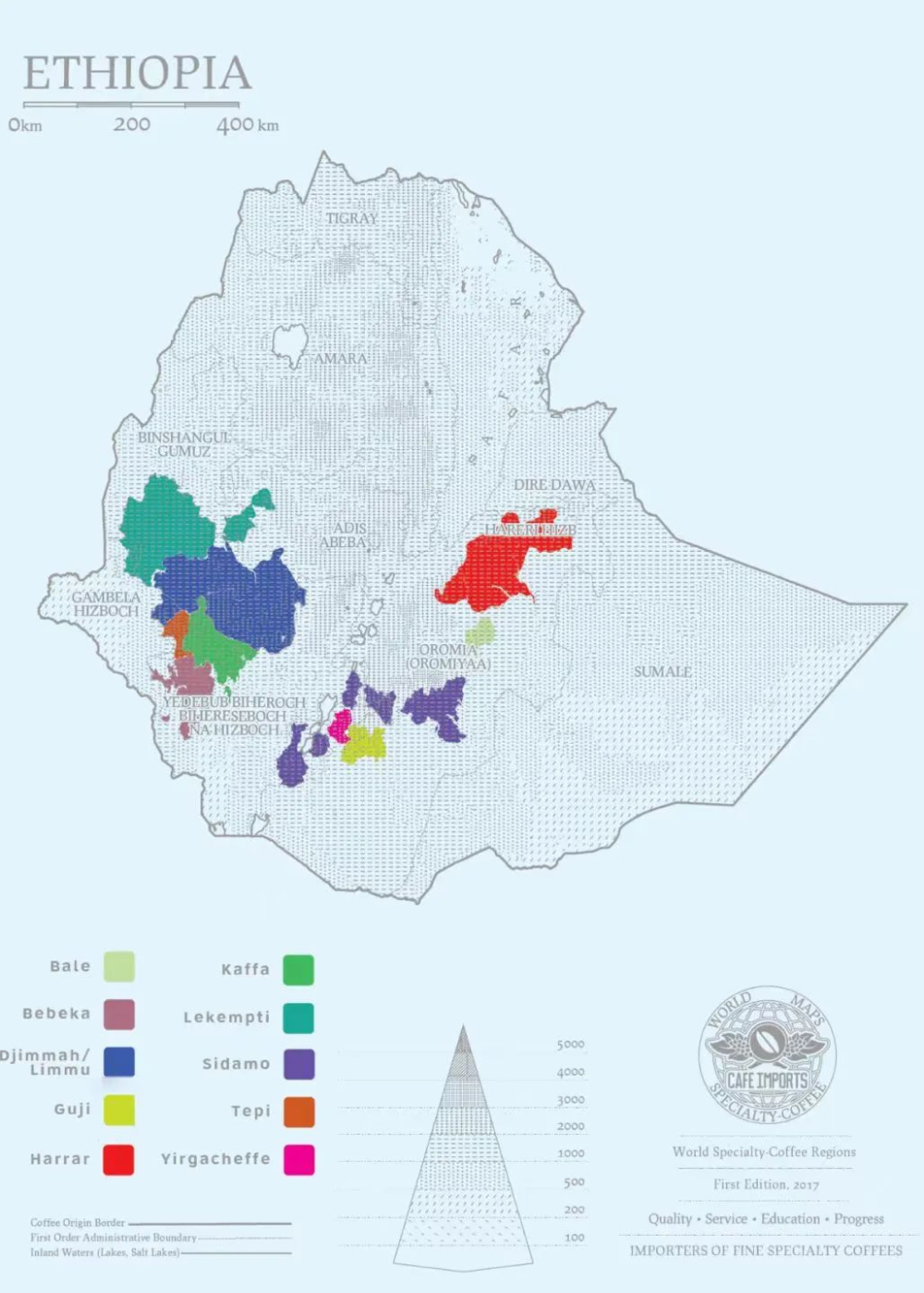
In Ethiopia, well-known coffee regions include Sidamo, Gimma, and Harrar. Guji and Yirgacheffe originally belonged to Sidamo, but later, due to their distinctive flavor profiles, they were elevated to independent coffee regions.
Front Street Yirgacheffe can be considered one of the highest altitude regions, ranging from 1,750 to 2,200 meters. Coffee cultivation in this area is family-based, and it includes many famous micro-regions, such as Kochere and Misty Valley, as well as over forty cooperatives, one of which is Gedeb.
Yirgacheffe itself is a small town with a population of about 20,000. The three small regions nearby—Wenago, Kochere, and Gelena Abaya—are included in the Yirgacheffe region because the coffee they produce has almost no difference in flavor from Yirgacheffe. Kochere is located 25 kilometers southeast of Yirgacheffe, with a population of about 100,000, and coffee beans are the main source of local income. Coffee produced in Kochere is sometimes named after the source town, such as Chelchele, and sometimes after the processing plant, such as the Dambo processing plant. The local production model involves smallholder farmers delivering coffee beans to cooperatives for centralized processing, which better meets current requirements for coffee traceability. Currently, Front Street also has a Kochere coffee bean, which is washed, brewed with V60 at a 1:15 ratio, offering jasmine floral notes on the palate, a sweet and sour taste of fruits like lemon, and an overall smooth experience.
Gedeb is located in the Gedeb region, 60 kilometers from Yirgacheffe town. In the specialty coffee sector, it can be independent alongside Kochere, with coffee produced in villages such as Worka-Sakaro, Halo-Bariti, Banko-Gedeb, and Banko-Dahatu. The Gedeb cooperative is at the southeastern end of Yirgacheffe and was originally part of the Worka cooperative under the Yirgacheffe Coffee Farmers Cooperative Union (YCFCU). Later, due to increased demands for coffee bean traceability, single-origin regions were further distinguished. In 2012, Gedeb village, with about 300 coffee farmers, independently established the "Gedeb Cooperative." Gedeb village was the first village area to be independently separated, and many farmers were originally members of the Worka cooperative, with some foundation in cultivation techniques. Front Street also acquired a Front Street Gedeb Cooperative coffee bean, which is also washed, brewed with V60 at a 1:15 ratio, offering slight floral notes on the palate, citrus, berry, and caramel flavors, a clean and sweet taste with a tea-like body.
The above content is compiled by CoffeeHunters, a coffee news website.


