







What Shapes the Burundi Coffee Industry?
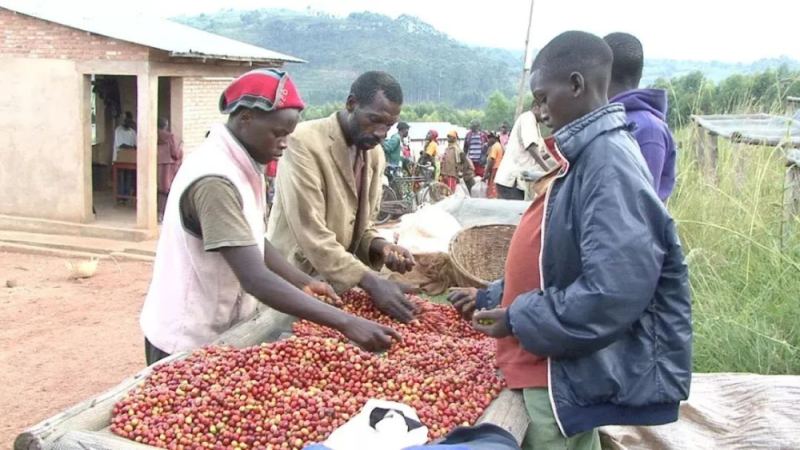
Burundi's coffee industry grew from a crop introduced by Belgian colonists in 1930 into a pillar of the national economy, passing through nationalization, civil war and privatization along the way. The turning point came in 2007, when private washing stations were permitted, followed by the country's first Cup of Excellence competition in 2011.
The country sits in east-central Africa at an average elevation of about 1,600 meters, a setting suited to specialty coffee. Its five main coffee producing regions include Kayanza and Kirimiro, while Bourbon and Caturra are among the leading varieties. A double washed process, similar to Kenya's, is a defining feature of Burundian coffee.
Burundi is known as the "Land of Mountains," located in east-central Africa with an average elevation of about 1,600 meters, giving it a natural advantage for developing specialty coffee. Coffee was introduced in 1930 by Belgian colonists, and thereafter went through nationalization, the impact of civil war, and privatization reforms. It was not until 2007, when private washing stations were permitted, and 2011, when the COE competition was held, that the industry truly embarked on the path of specialization. This article will systematically review the development of Burundi coffee, introduce the five major producing regions including Kayanza and Kirimiro, the main varieties such as Bourbon and Caturra, and focus on analyzing its double washing process similar to Kenya's, bringing you a comprehensive understanding of the unique charm of this East African coffee-producing country.
Burundi is located in east-central Africa, south of the equator. It borders Rwanda to the north, Tanzania to the east and south, and the Democratic Republic of the Congo to the west. The country's terrain is dominated by plateaus and mountains, with most of its territory belonging to the plateau on the eastern side of the East African Rift, with an average elevation of 1,600 meters, earning it the title of "Land of Mountains."
Development History
The local residents of Burundi originally had no tradition of drinking coffee, nor did they engage in coffee cultivation. The coffee tree species was brought to Burundi by Belgian colonists in 1930. Belgian rule ended in 1962, and ten years later, the government nationalized the coffee industry. Since then, people gradually recognized the economic value of coffee and began planting coffee trees, and coffee quickly became an important pillar of the country's economy. However, civil war broke out from the 1990s to the 2000s, causing coffee production to decline significantly. After the civil war subsided, production gradually recovered, and it was not until the early 21st century that the government began to privatize parts of the coffee supply chain. With increased investment, coffee exports also continued to climb.
2007 was the key turning point for Burundi coffee's real takeoff—the government permitted private investment in coffee washing stations. With advice from international clients, practitioners quickly realized that only high quality could command a good price, so they actively learned and improved their techniques. In 2011, the Cup of Excellence COE organization held a coffee competition in Burundi, attracting international attention. Thereafter, with the support of World Bank funding programs, 175 washing stations were built across Burundi. So currently Burundi's cultivation model is similar to Ethiopia's, with smallholder farmers as the main body, and processing stations purchasing uniformly for centralized processing and sale.
Coffee Producing Regions
The main coffee producing regions include Kayanza Kayanza , Kirimiro Kirimiro , Kirundo Kirundo , Muyinga Muyinga , and Ngozi Ngozi , totaling five major producing regions. These areas range in elevation from 1350-1700 meters, and the harvest season is concentrated in April to July .
Coffee Varieties
The varieties planted in Burundi include Bourbon, Caturra, Catuai, Jackson, the SL series, and Mibirzi, in addition to about 4% Robusta.
Processing Methods
Currently, Burundi has about 283 processing stations and 8 hulling plants nationwide, mainly distributed in the northern and central provinces. The main processing method is washed, accounting for 80%, with natural accounting for 15% and honey processing accounting for 5%. Burundi's washing process is quite distinctive, and like Kenya's, it is often called "double washing" or "double fermentation," meaning the coffee beans undergo two washes and two fermentations. The washing channels used in this process are divided into two levels, corresponding to the first and second washes respectively.
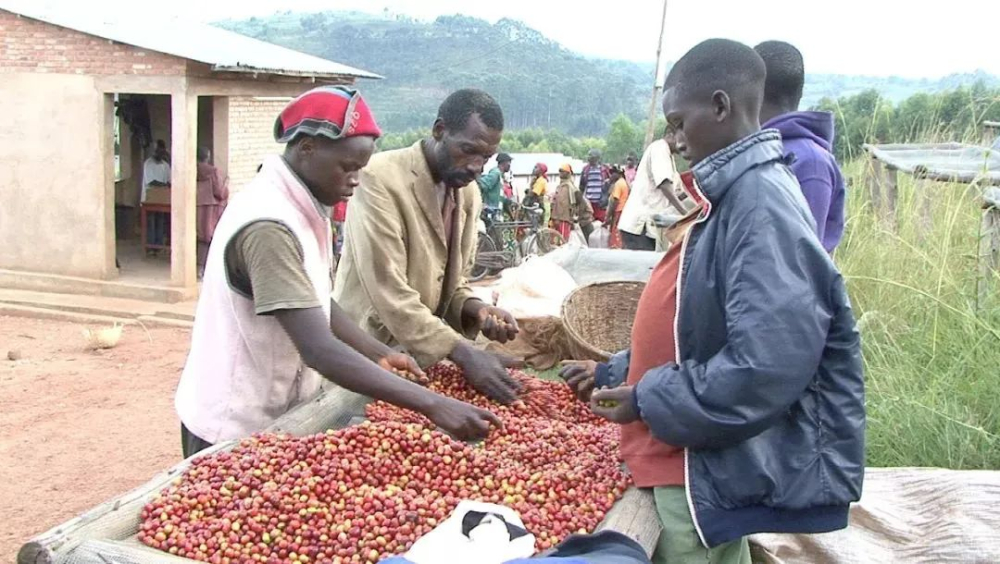
In terms of specific operations, the harvested coffee cherries are first sorted to remove defective fruits and depulped, then poured into the upper fermentation tank for fermentation or dry fermentation. After fermenting for a period, the coffee beans are rinsed with water to remove most of the mucilage on the surface. Then the beans are moved to the lower fermentation tank for a second fermentation. During the second fermentation, the circulating water needs to be changed every few hours to prevent the coffee beans from becoming foul or moldy. After the second fermentation is complete, they are washed again to remove residual mucilage. Then the clean parchment beans are placed in a tank to soak for more than twelve hours, and finally sun-dried.
The above content is compiled by CoffeeHunters, a coffee news website.


