








Do Dark Roasted Arabica Beans Hold More Caffeine?
Roast level has only a small direct effect on caffeine in Arabica beans. The Association for Science and Information on Coffee roasted the same Arabica beans at light, medium, and dark levels and found light roast measured only 0.06 percentage points higher than dark roast, so the common claim that darker means stronger does not hold up cleanly.
Two other variables shift the picture. Dark roasting drives off more moisture, so beans weigh less and more particles are needed for the same weight; the looser internal structure also extracts more easily. Caffeine's melting point sits between 235°C and 238°C, above typical roasting temperatures. In practice, the bean variety and the extraction method matter more than the roast.
Many people choose to drink coffee with the core aim of consuming caffeine. Regarding whether the degree of roast affects caffeine content, two opposing views have long circulated: one side believes dark-roasted beans contain more caffeine, while the other insists that dark roasting reduces caffeine. The Association for Science and Information on Coffee once used the same Arabica beans to conduct light, medium, and dark roasts and tested them, finding that light roast was only 0.06 percentage points higher than dark roast. But if weight loss rate and extraction efficiency are also taken into account, the conclusion changes again. The real key determining caffeine content actually lies in the bean variety itself. This article will break down these variables layer by layer to help you clarify the true relationship between roast level and caffeine.

Caffeine is the primary motivation for most people to drink coffee. For office workers who frequently stay up late rushing work and need to refresh their minds, caffeine is almost a lifesaver—gulping down several cups of coffee in one go is simply to buy a whole night of alertness.
Previously, Front Street briefly discussed the difference in caffeine content between low-caffeine coffee and regular coffee. Afterwards, a reader left a message in the background asking: it is said that coffee brewed with dark-roasted beans has a higher caffeine content than coffee brewed with light-roasted beans—is this true? Does the degree of roast actually influence caffeine content?
Regarding whether roast level affects caffeine, two camps have roughly formed online.
One side argues that dark-roasted beans have a higher caffeine content than light-roasted beans. Their reasoning comes from understanding the weight of coffee beans: the darker the roast, the lighter the weight; if brewed by the same weight, dark-roasted beans require more particles; plus, dark-roasted beans have a looser internal structure, making it easier to extract substances from the beans during brewing. Therefore, they believe that under equal-weight conditions, coffee brewed from dark-roasted beans will have a higher caffeine content.
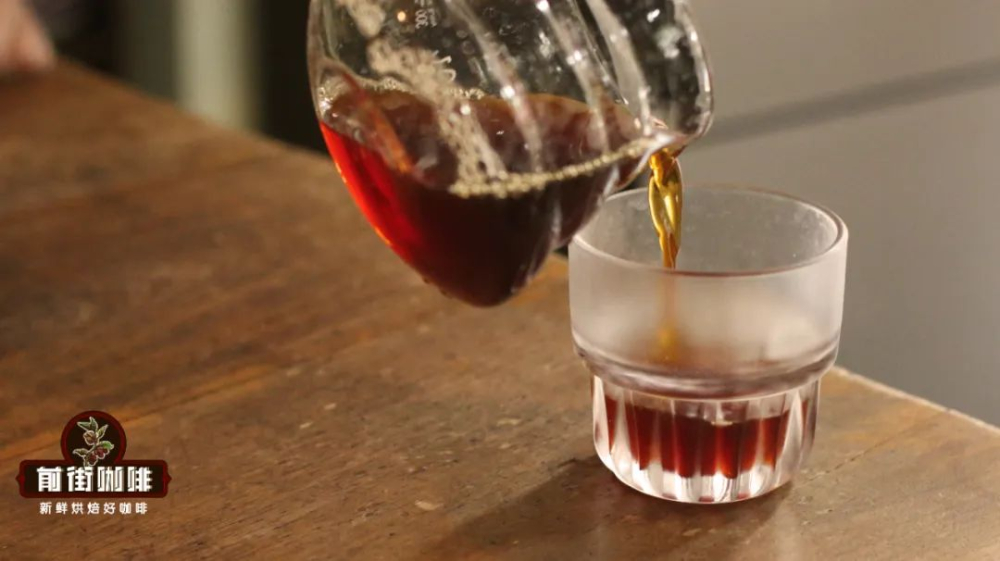
The other side believes that dark-roasted beans actually have a lower caffeine content than light-roasted beans. The reason: caffeine's melting point is between 235°C and 238°C. Although conventional roasting rarely reaches this temperature, caffeine sublimates at 178°C, so they infer that dark roasting causes some caffeine loss.
To give a clear answer to these two claims, the Association for Science and Information on Coffee designed an experiment, taking the same Arabica coffee beans and applying light, medium, and dark roasts respectively. After roasting, tests yielded the following data: 1.37% (light), 1.31% (medium), 1.31% (dark). Light-roasted beans were only 0.06 percentage points higher than dark-roasted beans. From this set of numbers alone, it does support the conclusion that "dark roast has less caffeine."
However, weight loss rate has not yet been factored in. The weight loss rate of light roast coffee is about 11% to 13%, while dark roast coffee is between 15% and 17%. That is to say, although the dark roasting process causes a slight reduction in caffeine, after conversion this loss is almost negligible.
If the same gram weight of beans and the same parameters are used for extraction, and then the caffeine content in the coffee liquid is calculated, dark-roasted beans will have higher extraction efficiency due to their loose texture, and ultimately more caffeine will enter the coffee liquid than with light-roasted beans. It can be seen that both sides have their points, and both are also one-sided.
The real key factor determining caffeine content
Readers familiar with Front Street have probably already guessed that the core factor influencing caffeine content is "bean variety." The genes of coffee beans set the baseline for caffeine content. Among common categories, Arabica has a caffeine content between 0.9% and 1.4%, while Robusta reaches twice that of Arabica, in the range of 1.8% to 4%. After that, the growing environment and post-processing further alter the caffeine content of the beans.
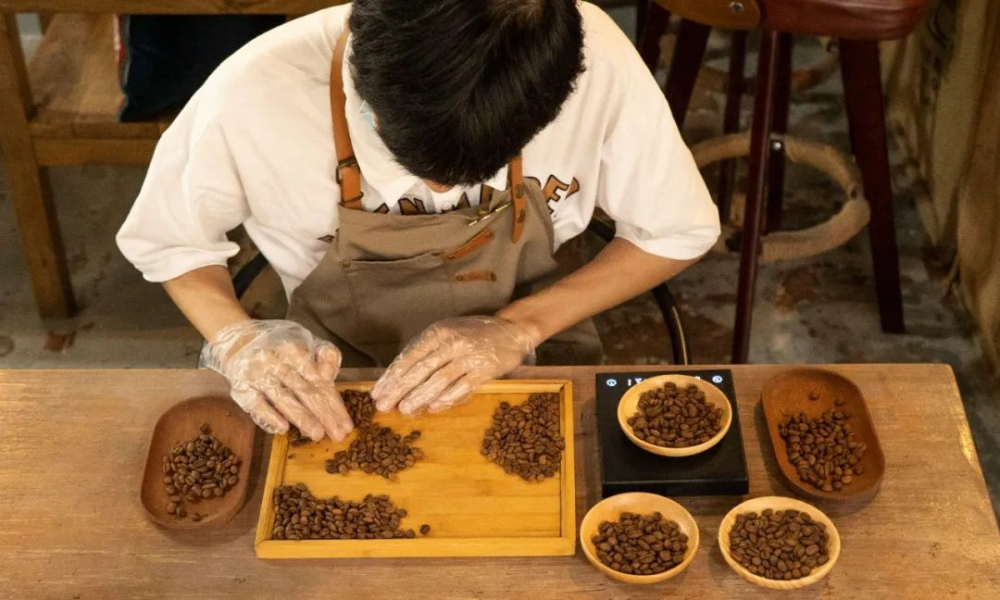
However, the caffeine contained in coffee beans is not completely extracted. The extractable substances in coffee beans account for about 30% of the total, and caffeine is among them; their degree of release is closely related to extraction efficiency.
For example: take 15g of Arabica coffee beans and brew by pour-over; at a 1:15 coffee-to-water ratio, you get about 200ml of coffee liquid. Assuming this normally extracted pour-over coffee contains 100 to 150mg of caffeine, then by using methods such as finer grinding, higher water temperature, or longer extraction time to increase the extraction rate, the caffeine content in the same amount of coffee liquid will rise accordingly; conversely, if extraction efficiency is reduced, the caffeine content will decrease correspondingly.
FrontStreet Coffee
No. 10, Baoqian Street, Yandun Road, Dongshankou, Yuexiu District, Guangzhou, Guangdong Province
The above content is compiled by CoffeeHunters, a coffee news website.


