








How does water chemistry affect americano coffee extraction?
Water makes up more than 98 percent of a brewed cup of americano coffee, so its chemistry shapes flavor almost as much as the beans do. Coffee itself sits at a pH of 5 to 6, and slightly alkaline water neutralizes some of those acids, softening sourness and pushing the cup toward balance. The industry generally aims for brewing water between pH 6.5 and 7.
Dissolved minerals drive hardness and extraction behavior. Calcium and magnesium ions pull soluble compounds out of the grounds, while bicarbonate buffers acidity and can flatten bright notes when present in excess. Comparative brewing with pure water, mountain spring water and mineral water, using the same beans, shows clear flavor differences, which is why tap water is not automatically suitable for brewing.
Many people's first encounter with iced pour-over coffee sparks a thought: since hot americano uses hot water and iced americano uses ice water, then hot pour-over uses hot water—should iced pour-over just be brewed directly with ice water? This idea sounds plausible, but pour-over extraction is far from that simple. This article will first clarify the underlying logic of extraction, then explain why brewing with ice water is theoretically feasible but almost nobody does it in practice. After that, it will break down the relationship between Japanese-style iced pour-over and hot pour-over, provide Front Street Coffee's complete parameters for both hot and iced brewing, and finally include the real results of an ice water brewing experiment for coffee enthusiasts' reference.

With a little thought, this guess seems quite reasonable. Take americano among black coffees as an example: hot americano is made with hot water, while iced americano is prepared with ice water. Following this logic—hot pour-over uses hot water, so iced pour-over should naturally be brewed with ice water. It sounds flawless. But speculation is still just speculation; the extraction process of pour-over coffee is far more complex than it appears on the surface.
What Exactly Is Extraction Doing
In a coffee bean, about 30% of its composition is soluble substances. The task of extraction is to use water to bring these substances out from inside the coffee particles. However, we don't need to extract all 30%—if all soluble substances were fully extracted without reservation, the bitterness of the cup would be unbearable.
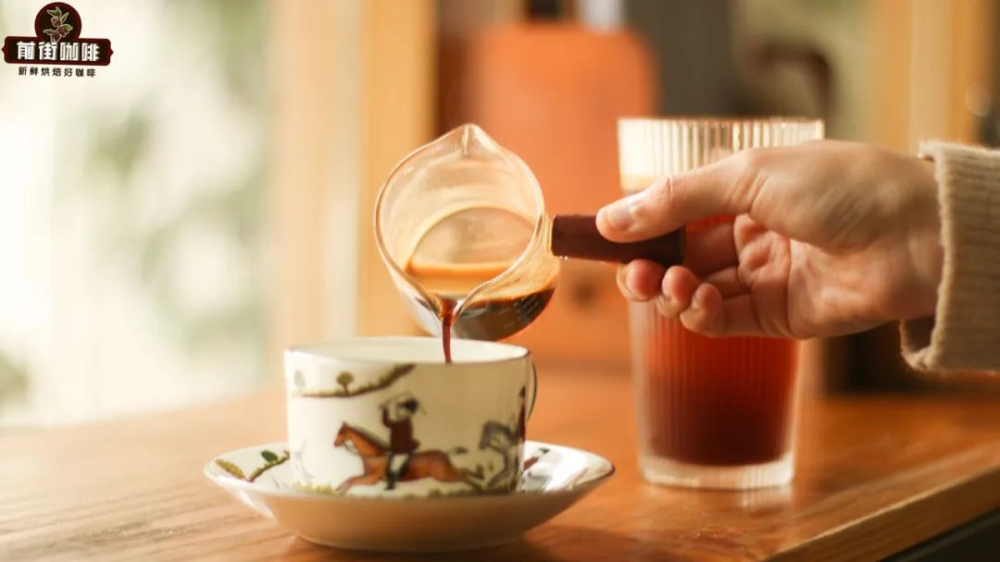
Conversely, the extracted substances shouldn't be too few either, otherwise it will also bring unpleasant flavors. So the key is to manage all parameters within a reasonable range to achieve the proper extraction yield. There are four main extraction variables that can be controlled manually: time, grind size, coffee-to-water ratio, and water temperature. They constrain each other—if you change any one of them while still wanting to maintain the ideal extraction yield, the other parameters must be adjusted accordingly.
From this perspective, if you really intend to use ice water for iced pour-over, it's not theoretically impossible. As long as the parameters are adjusted accordingly, you can still get a cup of coffee with suitable concentration. Of course, there's a prerequisite—your hands need to hold out until the extraction is finished.
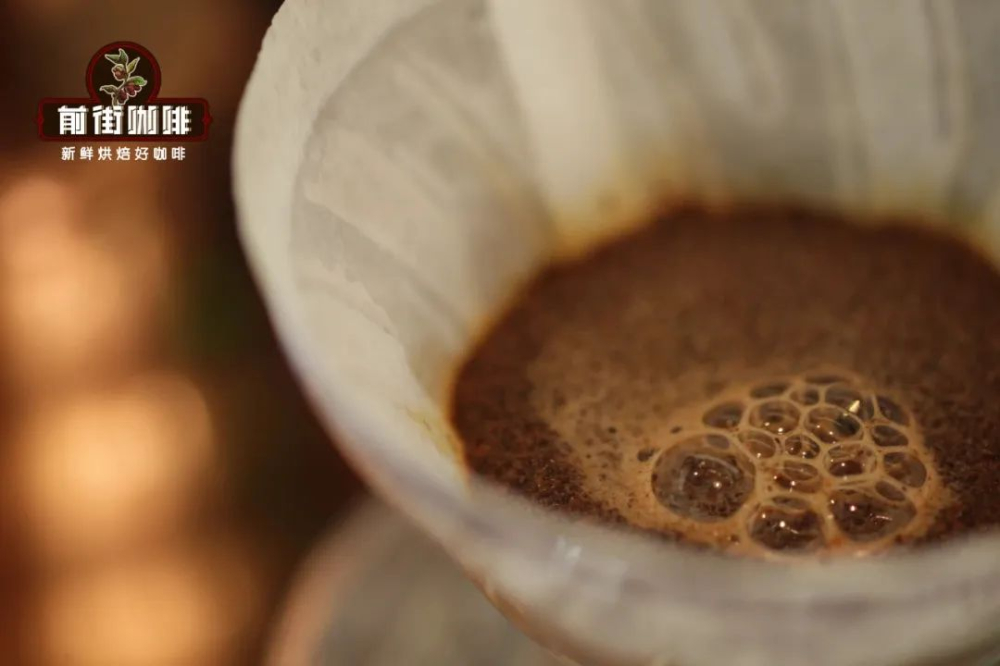
(It should be noted: only the concentration is suitable; a large amount of flavor compounds will still be missing, since some components can only be drawn out by hot water.)
Water temperature directly affects extraction efficiency: the higher the temperature, the faster the extraction; the lower the temperature, the slower the extraction. In other words, whether espresso or pour-over, the core idea is to use high-temperature hot water to quickly dissolve the substances inside the coffee.
If you replace that 90°C+ hot water with near 0°C ice water, to achieve a suitable concentration, a 200ml iced pour-over would probably take nearly two hours using drip-style brewing, letting ice water fall drop by drop, and only through long soaking can the concentration reach the target—and the flavor performance of this cup would not be excellent either (because many substances were never extracted at all).
The conclusion is: it can be done, but there's no need (isn't cold brew coffee easier?). So the conventional iced pour-over method still uses hot water for extraction first, then relies on ice cubes to cool it down.
So how do you brew a delicious pot of iced pour-over?
To brew good iced pour-over, you first need to understand how to brew hot pour-over. After all, the most mainstream iced pour-over method on the market today is Japanese-style iced pour-over, and Japanese-style iced pour-over evolved from hot pour-over.
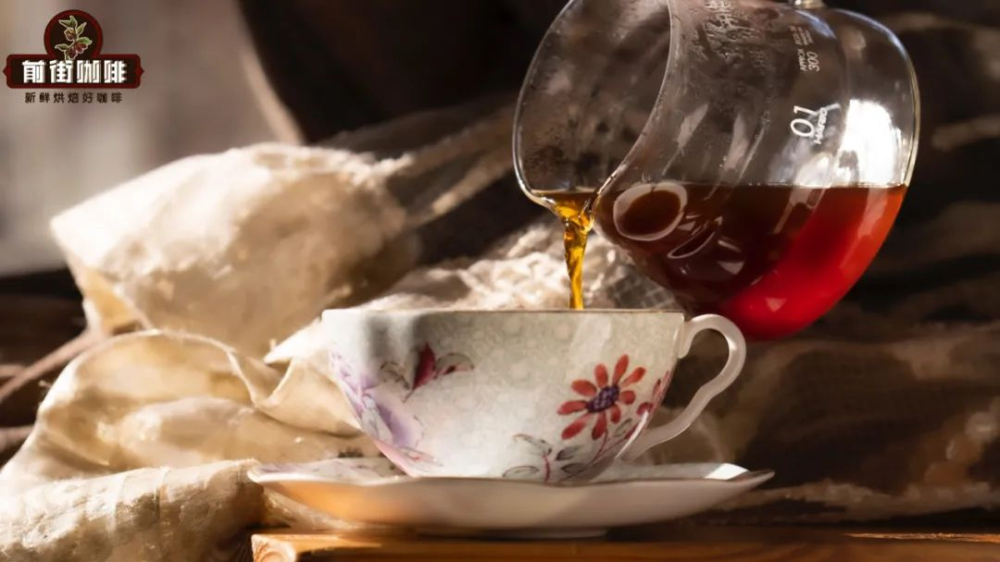
Standard hot pour-over has a relatively complete extraction process, so it can obtain fairly full-flavored substances. The idea of iced pour-over is to remove a portion of the hot water originally used for extraction and replace it with ice cubes, thereby achieving cooling.
But the remaining hot water is clearly not enough to fully extract the substances in the coffee, and brewing directly would cause under-extraction. So it's necessary to adjust other extraction parameters to increase extraction intensity, so that every drop of liquid falling carries a higher concentration. After dilution by ice cubes, the final product's flavor can approach that of hot pour-over (note, only approach). Front Street's brewing parameters are as follows:
Hot brew parameters: 15g coffee grounds, coffee-to-water ratio 1:15, grind setting of 10 on EK43 for light roast beans, 10.5 on EK43 for dark roast beans (corresponding to 75% and 70% passing rate on No. 20 sieve), water temperature 92°C for light roast beans and 88°C for dark roast beans, brewing method is three-stage pouring.
Iced brew parameters: 15g coffee grounds, coffee-to-water-to-ice ratio 1:10:6, grind setting of 9.5 on EK43 for light roast beans, 10 on EK43 for dark roast beans (corresponding to 80% and 75% passing rate on No. 20 sieve), water temperature 92°C for light roast beans and 88°C for dark roast beans, brewing method is also three-stage pouring.
For those who want to understand the distribution of hot water in three-stage pouring in depth, please refer to this article—"Three-stage pouring: how to reasonably distribute the water volume for each stage?"
Ice Water Brewing Experiment
Finally, Front Street actually did a brew with ice water, and the parameters are recorded as follows (strongly not recommended to imitate): beans selected were the relatively easy-to-extract dark roast Golden Mandheling, paired with espresso ultra-fine grind, 20g dose, coffee-to-water ratio 1:15, water temperature 0°C, using three-stage pouring.
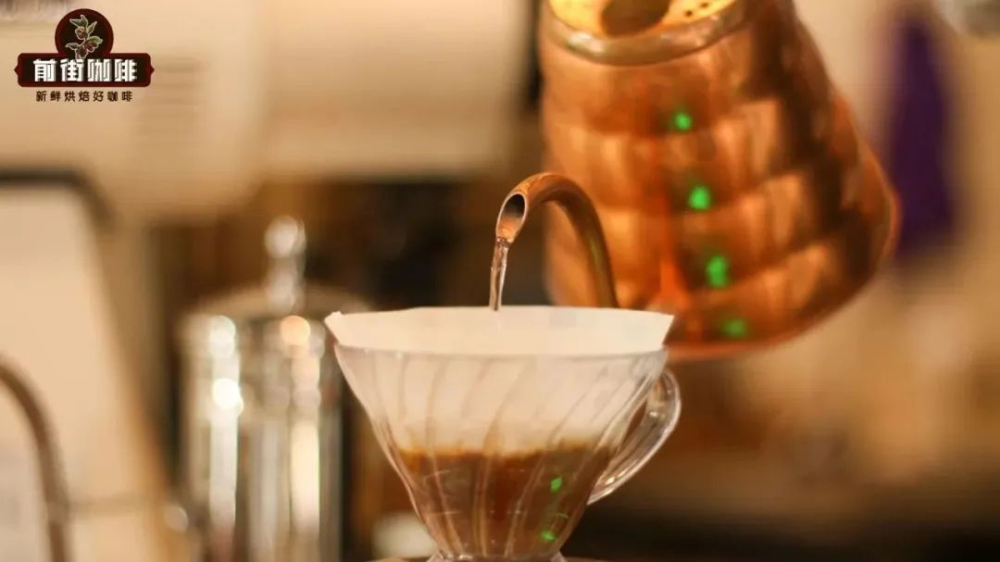
The entire brewing process took 2 minutes and 15 seconds, and the experience of drinking this so-called "iced pour-over" was—a cup of ice water with coffee flavor.
Front Street Coffee (FrontStreet Coffee)
No. 10, Bao'an Qian Street, Yandun Road, Dongshankou, Yuexiu District, Guangzhou, Guangdong Province
The above content is compiled by CoffeeHunters, a coffee news website.


