








Can the Vietnamese drip pot handle standard coffee brewing?
The Vietnamese drip pot is a simple metal filter with three parts: a main body for grounds and hot water, a press plate to tamp the coffee, and a lid that doubles as a base. It is standard gear for Vietnamese condensed milk coffee, and because the coffee is usually Robusta, the cup is strong and bitter rather than floral or fruity.
The device works by gravity filtration, so coffee brewing with it is closer to immersion-and-drip than to a controlled pour-over. Grind, water temperature, and steep time decide the result, much as they do with other brewers. A moka pot uses pressure instead; for reference, how long does it take moka pot to brew is a separate question, while the drip pot relies on slow draining.
In coffee cultures around the world, almost every producing region has its own distinctive brewing device. The Vietnamese drip pot is one of the more representative examples—simple in structure, easy to operate, and an essential tool for making Vietnamese condensed milk coffee. This article will start with the drip pot's construction and historical origins, then detail its standard method of use, and, combined with Front Street Coffee's actual extraction parameters, explore an interesting question: can this drip-filter device be used for pour-over coffee brewing? If you're interested in the many ways to play with brewing gear, why not follow along with Front Street and give it a try.

Almost every coffee origin has its own iconic brewing tool—not necessarily invented locally, but certainly popularized there. For example, Ethiopia's ceramic coffee pot, the Turkish pot with its continuously rising coffee liquid, and the Italian moka pot we just discussed in the previous article—and this time, the star is the Vietnamese drip pot.
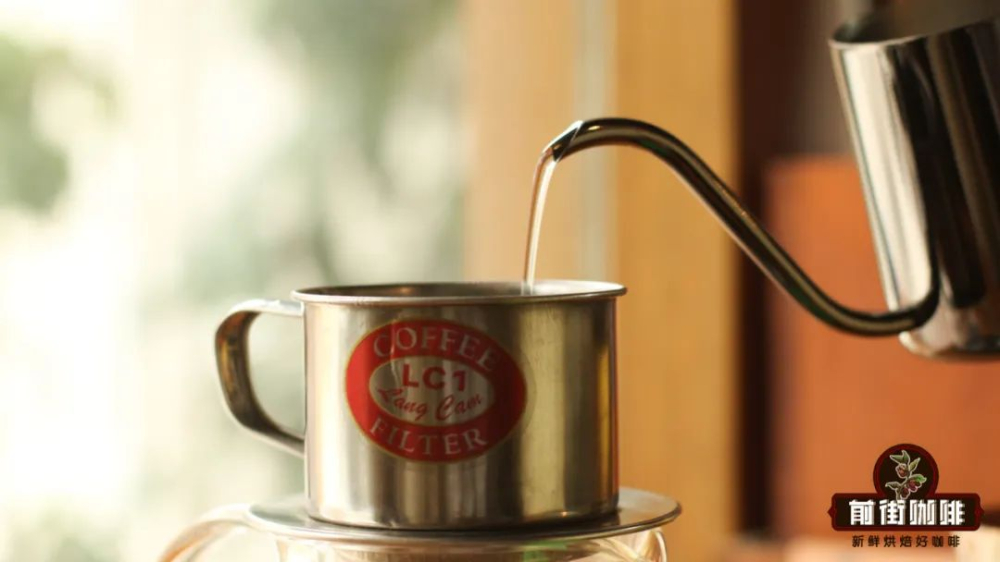
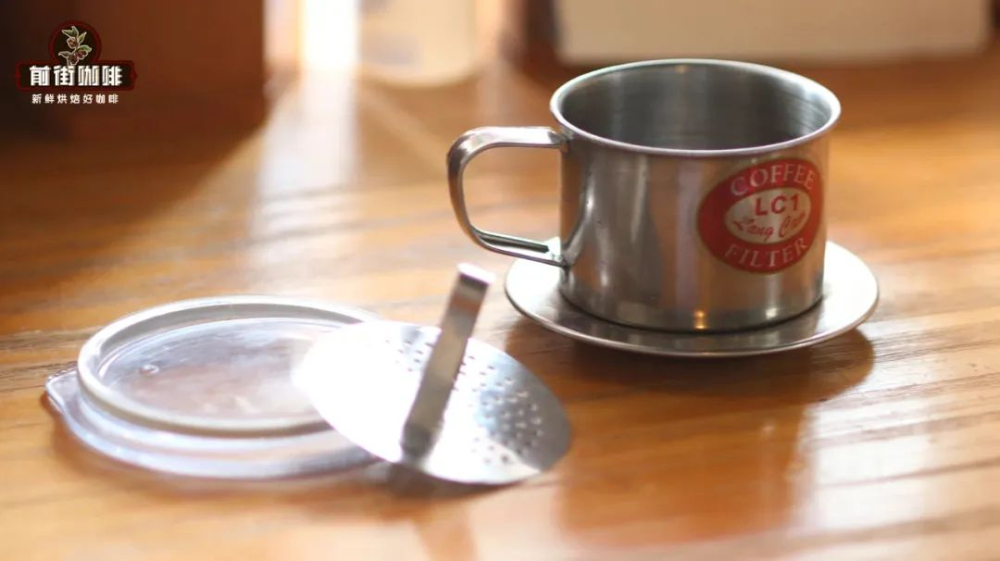
The Vietnamese drip pot, also called a Vietnamese drip filter or drip brewer, is an indispensable tool for making Vietnamese condensed milk coffee. Its structure consists of three parts: the main body that holds the coffee grounds and hot water, the press plate used to tamp the coffee grounds, and the lid that also serves as a base.
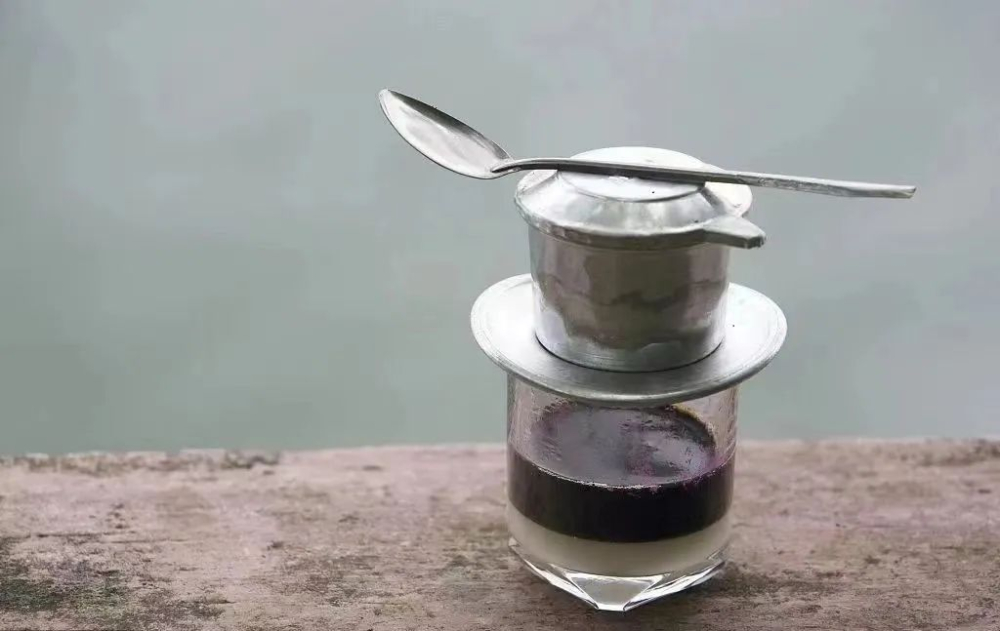
The origins of the Vietnamese drip pot are now difficult to trace precisely. One widely circulated theory online is that it already existed when Vietnam first began growing coffee. Vietnam's coffee cultivation can be traced back to the French colonial period in the late 19th century, which means the drip pot should have appeared before that—after all, Vietnam had only just been introduced to coffee cultivation at the time and could not have invented a brewing device on its own. Based on various inferences, the online conclusion is: although this drip pot bears the Vietnamese name, it was not invented by the Vietnamese. Vietnamese condensed milk coffee Although Vietnam quickly rose to become one of the world's major coffee producers through coffee cultivation, the main variety grown is Robusta, and the extracted coffee is generally heavily bitter and highly concentrated. Therefore, the locals do not demand outstanding floral or fruity aromas in the cup—as long as it is not bitter and is drinkable, that is enough. So they came up with the idea of adding condensed milk to the coffee to neutralize Robusta's bitterness. Unexpectedly, this practice became hugely popular, and at the time, vendors selling Vietnamese condensed milk coffee could be seen everywhere on the streets.
How to use the Vietnamese drip pot Next, let's talk about the specific use of the Vietnamese drip pot—the operation is likewise very simple. Front Street's extraction parameters are as follows: Bean chosen: Indonesia · Golden Mandheling Dose: 10g (Front Street's drip pot is a small-cup specification) Grind setting: Ek43 setting 11, 65% passing rate on a No. 20 sieve Coffee-to-water ratio: 1:15 Water temperature: 90°C The traditional method is to pour the coffee grounds into the body, level them with the tamper, pour in the target amount of water all at once, then cover with the lid and wait for the coffee liquid to finish dripping through the holes. The whole process takes about 3 minutes, and the extracted flavor is quite balanced, with nothing unpleasant.
However, it has a shortcoming: the holes are rather large, and fine particles often drip down along with the coffee liquid. Therefore, Front Street recommends placing a layer of filter paper at the bottom when using it, which can reduce the negative experience caused by fine particles. If you want to make Vietnamese condensed milk coffee, simply add your preferred amount of condensed milk to the bottom of the cup (Front Street's standard is 8ml of condensed milk per 100ml of coffee liquid). Wait—why does it look a bit like a pour-over dripper? This gave Front Street a bold idea: if brewed in a pour-over style, what characteristics would it show? Okay, let's brew it right away! The extraction parameters are as follows: Bean chosen: Kenya · Asaliya Dose: 10g Grind setting: Ek43 setting 10, 70% passing rate on a No. 20 sieve Coffee-to-water ratio: 1:15 Water temperature: 92°C Pouring method: three-stage First pour in water at twice the dose (20ml) and bloom for 30 seconds; after blooming, slowly pour the second stage of 80ml hot water in large circles; when the water level is nearly at the bottom, slowly pour the remaining 50ml of hot water in large circles again, and wait for the dripping to finish.
Total time: 3 minutes 05 seconds. Although the steeping time was longer, there was no bitterness from over-extraction, and Kenya's black plum and tomato flavors were well displayed. Overall, however, it was slightly "flat," with insufficient layering. No matter—this was just a fun experiment, and trying out the diversity of brewing devices is always a good thing.
Front Street Coffee (FrontStreet Coffee)
No. 10, Baoqian Street, Yandun Road, Dongshankou, Yuexiu District, Guangzhou, Guangdong Province
The above content is compiled by CoffeeHunters, a coffee news website.


