







How does honey processing change geisha coffee beans?
Honey processing sits between natural and washed methods, and Costa Rica is its birthplace. High-altitude terrain and rainfall led locals to adapt Brazil's semi-washed approach, sorting lots by the mucilage left on the seed into white, yellow, red, and black honey. Raisin honey is a newer variation, and estates now release lots built around specific flavor goals.
One example blends geisha coffee beans with Ethiopian heirloom ET47, SL28, and MAICO. Brewed in a V60 at a 1:15 ratio, it shows strawberry, raisin, candy, nuts, and creamy honey notes. Where did coffee originate from shapes this story too: fruit from the same tree can taste different under different processing methods, so small step changes matter.
Coffee processing methods are evolving rapidly, with new techniques such as anaerobic, enzyme, and barrel fermentation constantly emerging, but traditional natural, washed, and the honey process in between remain mainstream. The honey process originated in Costa Rica, where the high-altitude terrain and rainfall conditions prompted locals to draw on Brazil's semi-washed method and improve it, resulting in classifications such as yellow honey, red honey, black honey, and white honey based on the proportion of mucilage retained. In recent years, raisin honey processing has appeared, and the Costa Rica Mirazu Estate Strawberry Candy introduced by Front Street Coffee is a representative example. This article will review the development and process details of honey processing, and introduce this bean—a blend of Geisha, Ethiopian heirloom ET47, SL28, and MAICO—which, when brewed with a V60 at a 1:15 ratio, presents flavors of strawberry, raisin, candy, nuts, and creamy honey.
Today the coffee industry continues to evolve, with various processing methods constantly being innovated. New techniques such as anaerobic fermentation, double anaerobic natural, enzyme washed, and barrel fermentation have appeared one after another, but the three traditional processing methods remain the most common.
These three traditional processing methods are the natural sun-dried method, the traditional fully washed method, and the hybrid process in between, the latter covering semi-washed and honey process, among others. However, today processing methods have become increasingly diverse, and some international buyers and green bean traders have ever more varied demands for quality, flavor, and uniqueness. Fruit picked from the same coffee tree will show different flavor expressions if different processing methods are used, and even minor adjustments to the steps or fermentation time can bring about flavor changes. Take honey processing as an example: it lies between natural and washed. According to the degree of honey processing, it can be further divided into yellow honey, red honey, black honey, and white honey, and recently raisin honey processing has also appeared.
Washed White Honey Yellow Honey Red Honey Black Honey Natural
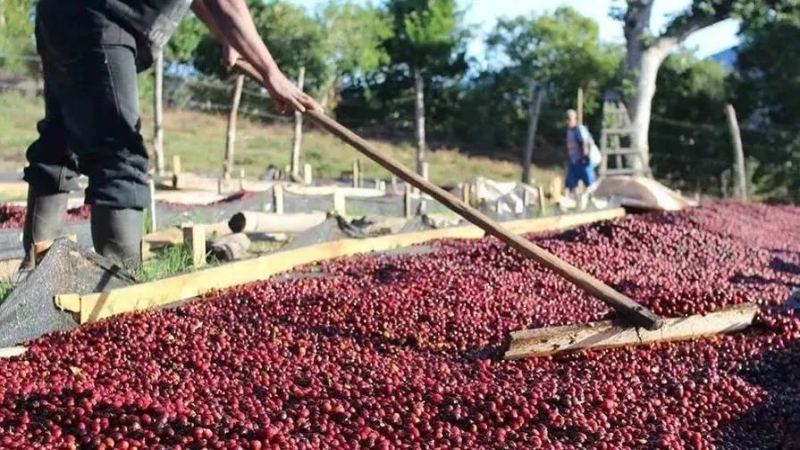
When it comes to honey processing, one cannot fail to mention Costa Rica—this is the birthplace of the honey process, and it can be said that the local geographical environment gave rise to this technique. Costa Rica's coffee-growing areas are mainly concentrated in the Talamanca Mountains, at an altitude of about 1,200 to 1,650 meters. Although rainfall is abundant, water storage in high mountain areas is not easy, making it hard to support water-intensive washed processing; at the same time, it lacks the sufficient sunshine hours of African countries, making natural processing riskier. So locals drew on Brazil's semi-washed method: first remove the skin, rinse with water for one hour, then spread out for sun-drying. Costa Rica, El Salvador, Guatemala, and other Central American producing countries found that this method neither used much water nor required as much sunlight, so they followed suit and improved it according to their own conditions, and Central America thus called this practice honey processing.
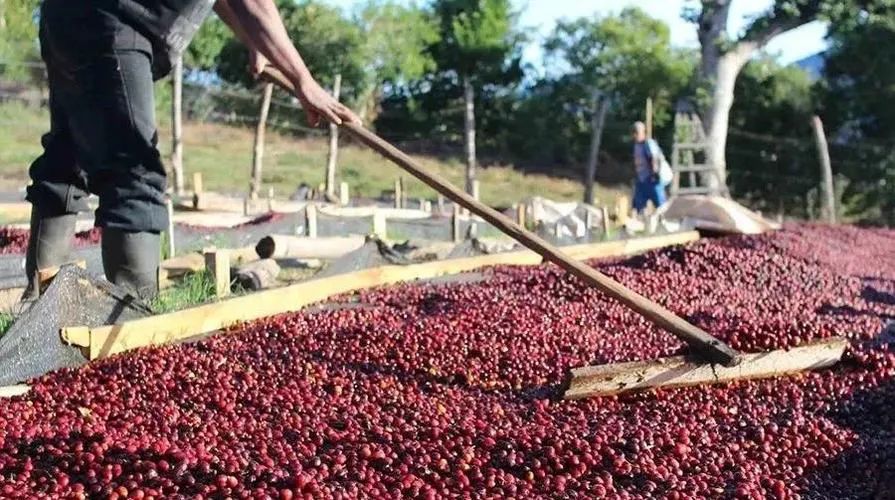
In the improved honey process, the coffee cherry's skin and part of the mucilage are first removed, so a depulper is needed to ensure high precision and precisely control the thickness of the mucilage; then, without touching water, the beans are spread directly on raised drying beds to dry. The subdivisions of black honey, red honey, yellow honey, and white honey are distinguished precisely by the different colors corresponding to the degree of mucilage retention.
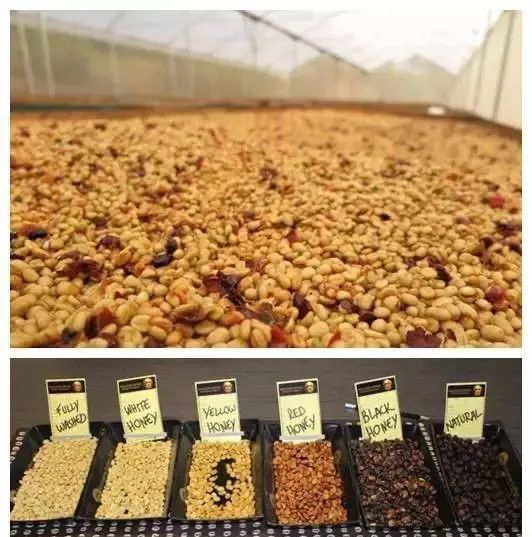
Retaining 80% mucilage and sun-drying for 12 days, the dried parchment beans are reddish-brown, hence red honey; retaining 40% to 60% mucilage and sun-drying for about 8 days, because the mucilage layer becomes thinner, the dried parchment beans are yellowish-brown, called yellow honey; white honey retains 40% mucilage and has a shorter drying time, so the parchment coffee color is lighter; black honey removes almost no mucilage, and drying continues for more than 14 days, so the parchment beans tend to be black.
The newer type of honey processing is raisin honey processing. The Costa Rica Mirazu Estate Strawberry Candy brought by Front Street Coffee uses raisin honey processing. This technique retains 100% mucilage and uses zero water throughout, increasing the difficulty of honey processing and requiring strict control of timing. After harvesting the coffee cherries, they are first poured into a large water tank, using buoyancy to screen out underdeveloped floating beans; then they are dried on raised beds, with the cherry skin removed and the mucilage retained for drying. During drying, they must be constantly turned to ensure evenness, and kept drying slowly to promote fermentation, while also paying attention to weather changes; when the coffee beans' moisture content drops to about 11%, drying is complete.
This Mirazu Estate Strawberry Candy comes from the Tarrazu region and is composed of 50% Geisha coffee beans mixed with Ethiopian heirloom ET47, SL28, and MAICO. Brewed with a V60 at a 1:15 ratio and tasted, it enters with flavors of strawberry and raisin, with a finish of candy and nut aromas, accompanied by a creamy, honey-like mouthfeel.
The above content is compiled by CoffeeHunters, a coffee news website.


