







How Singapore's Nutri-Grade Rules Cover Fresh Coffee
Singapore has extended its Nutri-Grade labeling system to all freshly prepared beverages, effective immediately. Freshly brewed coffee, milk tea, freshly squeezed juice and even toppings such as pearls, coconut jelly, ice cream and grass jelly must now carry ABCD grades and sugar content. The country had already required packaged drinks to show Nutri-Grade labels since December 30, 2022.
Brands including Starbucks Singapore, LiHO, KOI Thé, Boost and Ya Kun have updated paper or digital menus, and Luckin's Coconut Latte landed in Grade D for high sugar and fat. The city-state was also the first to ban advertising for high-sugar drinks. Whether drinking coffee after drinking alcohol does what is not part of this rule, but the labels now shape daily orders for coffee drinkers.
After Singapore implemented a sugar restriction order for beverages at the end of last year, it has recently upgraded its control measures again, extending the Nutri-Grade labeling system to all freshly prepared drinks. From freshly brewed coffee, milk tea to freshly squeezed juice, even toppings such as pearls and coconut jelly must be labeled with sugar content. Brands such as Starbucks, KOI Thé, and Ya Kun have successively updated their menus, and Luckin's Coconut Latte has been classified as Grade D due to its high sugar and fat content. How exactly does this ABCD grading system determine ratings? What impact does it have on lattes and black coffee that coffee lovers often drink? This article will sort out the details of the new regulations and market reactions, and include Front Street Coffee's purchasing suggestions.
▲
Click to follow | Daily specialty coffee culture magazine Coffee Workshop
Singapore began implementing its "beverage sugar restriction order" on December 30, 2022, requiring all packaged beverages sold to be printed with a Nutri-Grade label. On June 30 this year, supplementary regulations were introduced, further broadening the scope of control and making Singapore the first country in the world to prohibit advertising for high-sugar beverages.
Recently, the Singapore government revised the regulations once again. Effective immediately, all freshly prepared beverages must also be labeled with ABCD nutrition grades and sugar content. After the new rules took effect, almost all drinks available in Singapore have been included in this grading system.
In other words, not only are pre-packaged beverages regulated, but freshly made drinks (including freshly brewed coffee, milk tea, freshly squeezed juice, etc.) must also be labeled, and even the toppings added to freshly prepared drinks (pearls, coconut jelly, ice cream, grass jelly) must indicate sugar content.
According to Singapore Eye media reports, many merchants have already replaced their paper or electronic menus. For example, Singapore's national milk tea brands LiHO, KOI Thé, smoothie brand Boost, and Nanyang coffee chain Ya Kun have all attached corresponding grade labels to their drinks to make it easier for customers to choose.
Starbucks Singapore stores, following local customs, also updated their ordering pages on the 27th, adding Nutri-Grade labels to various drinks. Although most freshly prepared beverages fall under Grade C, Starbucks says customers can ask baristas to adjust the recipe and sweetness. For example, a Caramel Macchiato originally rated C can be classified as B if you choose reduced sweetness and switch to low-fat milk.
Some netizens also discovered that Luckin's popular Coconut Latte has been rated Grade D due to its high sugar and fat content. The Thick Milk Latte is no better, classified as Grade C because of its higher sugar content.
So how exactly should this nutrition grade be interpreted? Based on the ratio of sugar content per 100 grams and saturated fat content per 100 grams, all drinks are divided into four levels, A, B, C, and D, and distinguished by dark green, light green, yellow, and red to help consumers more easily identify healthier drinks when purchasing.
Among them, Grade A and B drinks have relatively low sugar and saturated fat content; drinks with more than 5 grams of sugar and 1.2 grams of saturated fat per 100 milliliters are Grade C; those with more than 10 grams of sugar and more than 2.8 grams of saturated fat are Grade D. Simply put, Grade A is the healthiest, such as unsweetened black coffee; Grade D is the least healthy, like honey lemon water.
The relevant regulations state that drinks classified as Grade C or D must display the grade label prominently on the front of the product packaging, and Grade D products are prohibited from advertising. For healthier Grade A and B drinks, manufacturers may decide for themselves whether to print the grade label. Merchants violating the rules for the first time face a maximum fine of 1,000 Singapore dollars, and repeat offenses carry a maximum fine of 2,000 Singapore dollars each time.
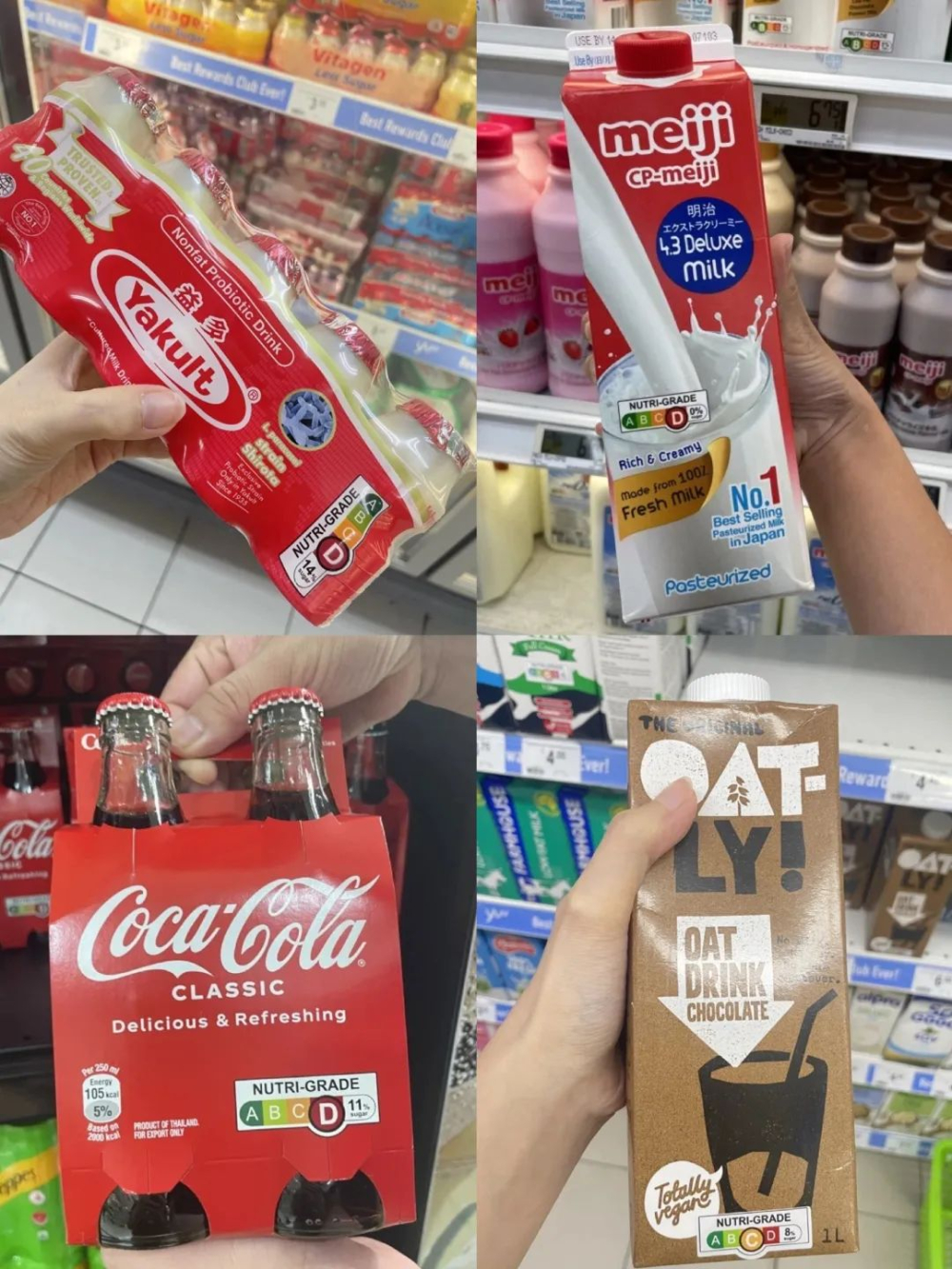
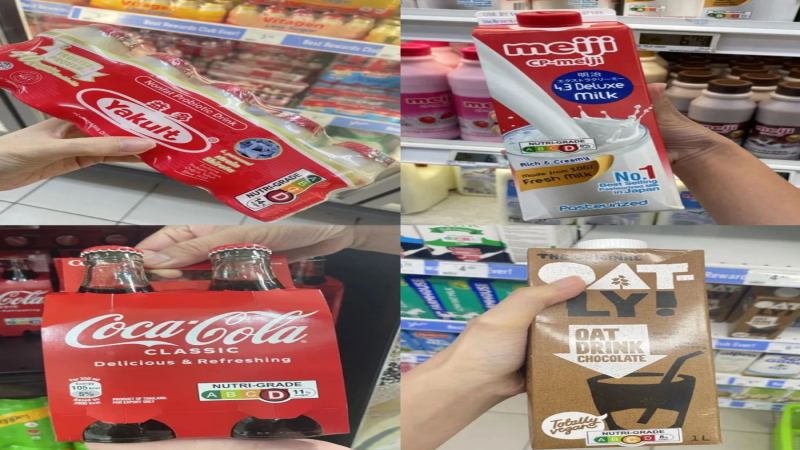
Although within the same type of beverages, the claim that a higher rating is generally healthier largely holds true, it is "unfair" for whole milk. Because the rating system simply measures sugar content and fat content under the same standard, whole milk, which naturally contains lactose/galactose, is forcibly classified as Grade C or Grade D.
The reason the Singapore government mandates this beverage grading system is that local residents really do have too much of a sweet tooth. High sugar intake is closely linked to an increased risk of obesity and diabetes, but the temptation of sweetness is simply too hard to resist.
It is understood that Singaporeans consume an average of 60 grams of sugar per person per day, half of which comes from sweet drinks, leading to a persistently high diabetes prevalence rate of about 8%. If no intervention measures are taken, by 2050 it is estimated that about 1 million Singaporeans will suffer from diabetes. For this reason, the Singapore government began in-depth investigation and research several years ago, and ultimately introduced the "beverage sugar restriction order."
For the sake of its citizens' health, the Singapore government has really gone to great lengths~
For domestic coffee lovers, if traveling or living in Singapore, it is worth paying attention to the grade labels next to drinks when ordering. Those who like black coffee can confidently choose Grade A unsweetened Americano; if you prefer milk coffee, you can also refer to Starbucks' approach and proactively ask for reduced sugar or a switch to low-fat milk. Front Street Coffee suggests that when drinking lattes daily, try to choose versions without added syrup, which preserves the coffee's original flavor while also helping to control sugar intake.
Disclaimer: Some images in this article are from the internet. For some content on the website, such as images, we will respect the original author's copyright and indicate the source, but due to the large quantity, some images and texts may not have been credited in time. Please understand. If the original author has any disputes, they may contact the website for handling. Once verified, we will correct it immediately. Compiled and edited by "Coffee Workshop." Please indicate the source when reposting. If there is infringement, please inform us for deletion. Thank you~!
The above content is compiled by CoffeeHunters, a coffee news website.


