







How Orange Peel Pour-Over Coffee Works in Three Versions
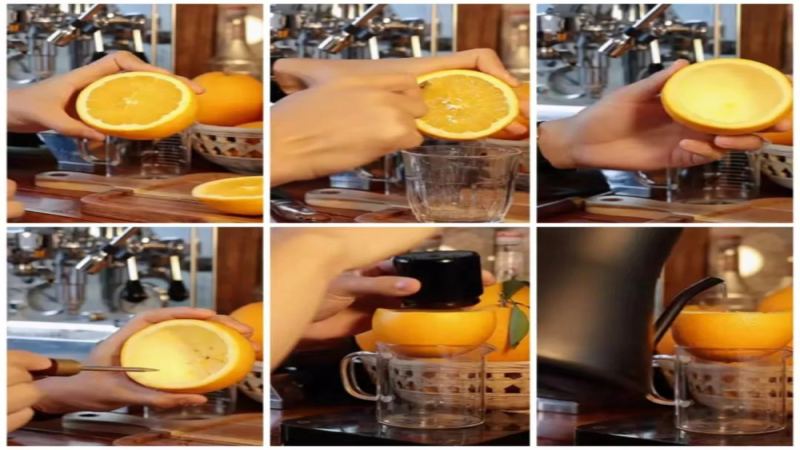
When Gannan navel oranges fill the winter market, the leftover peels can serve as a pour-over brewer. The first version hollows out a fresh orange, pokes a dozen holes in the base, adds coffee grounds and brews normally, leaving a cup with orange aroma. Many attempts failed: small holes clogged with grounds, larger holes let fine particles through.
Version 2.0 lined the peel with filter paper or set the peel inside a dripper to widen the holes and reduce clogging. Later experiments moved to fruit drippers such as watermelon and mango. For coffee ingredients that pair well, light-roasted washed beans bring bright fruity acidity that sits well with orange peel, while medium-dark roasts let the orange aroma mask more of the cup.
In winter, Gannan navel oranges flood the market, and orange peels, instead of being thrown away, can become a fun tool for pour-over coffee. This article takes you through the evolution of orange peel pour-over from version 1.0 to 3.0, showing how netizens solved clogging and fine grounds issues, and tried fruit drippers like watermelon and mango. Meanwhile, Front Street Coffee recommends beans that pair well with fruity flavors, so you can enjoy a layered pour-over while exploring fruity enhancements.
▲
Click to follow | Daily specialty coffee culture magazine Coffee Workshop
Winter is the season for "the treasure of citrus," Gannan navel oranges. Many people buy a few to enjoy, and after eating the juicy, sweet flesh, the leftover peels often go straight into the trash.
However, some netizens, eyeing those bright orange peels, had a flash of inspiration and came up with a way to use orange peels that both releases fruity aroma and avoids waste—orange peel pour-over.
Making a cup of orange peel pour-over is actually not difficult.
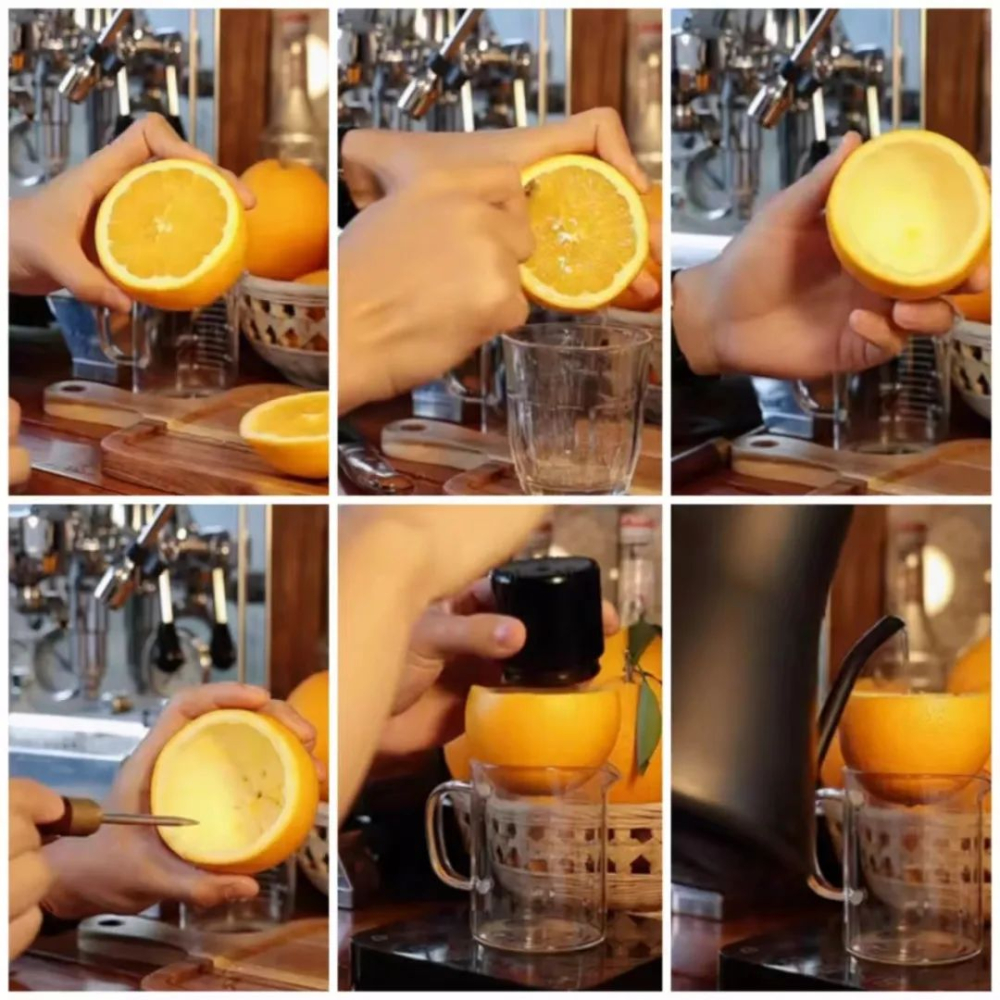
First, cut open a fresh orange, scoop out and eat the flesh, leaving an orange peel container that can hold coffee grounds; then poke a dozen small holes in the bottom of the peel to let liquid flow out; next, add coffee grounds and brew using normal pour-over methods. Once the coffee liquid has drained from the peel, you get a cup of pour-over with orange aroma.
The initial version of orange peel pour-over was just like this. Many netizens tried it, and many failed. The key to failure lies in the holes in the peel: if the holes are too small, they get clogged by coffee grounds and the coffee liquid cannot flow out; if the holes are slightly larger, clogging is solved, but fine coffee grounds are also carried out by the liquid, affecting the taste.
Thus, version 2.0 of orange peel pour-over was born.
This version has two forms: one is to line the orange peel container with filter paper, and the other is to place the orange peel container into a pour-over dripper and use it as a filter. Both methods enlarge the holes in the peel, allowing coffee liquid to flow out faster and avoiding coffee grounds clogging to some extent.
Front Street Coffee suggests that if using light-roasted washed beans, their bright fruity acidity pairs more harmoniously with the orange peel aroma; if using medium-dark roasted beans, the orange aroma may mask their original chocolate or nutty notes.
But for some netizens, scooping out the orange flesh and poking holes is both time-consuming and laborious, so version 2.0 is still too troublesome. Netizens who wanted an easier way to get orange-aroma pour-over developed version 3.0—adding orange peel directly to the coffee grounds.
Tear the leftover orange peel into small pieces or shred it finely, mix it into the coffee grounds, and then brew. The resulting coffee liquid will have a much more pronounced orange aroma than version 2.0.
Advanced players also suggest cutting orange peel into strips, drying them, and grinding them together with coffee beans before brewing; the orange peel aroma will be very intense. On Front Street Coffee's bean list, sun-dried Yirgacheffe or Sidamo already have citrus notes; adding a small amount of orange peel will make the flavor even more layered.
Building on orange peel pour-over, netizens have also made bold attempts: fruits like watermelon, mango, lemon, and pomelo are made into coffee drippers for pour-over; strawberries, apples, raspberries, blueberries, etc., are mixed with coffee grounds before brewing, using real ingredients to add genuine fruit flavor to pour-over coffee.
Netizens say that pour-over coffee made this way has a "strong flavor direction," but some think it's "totally unnecessary." Pour-over coffee "enhanced" with real fruit may have more complex flavor layers, but it also affects the judgment of the coffee beans' original flavors.
Front Street Coffee reminds that if you want to try fruit enhancement, it's best to choose beans with a relatively clean flavor profile and lively acidity, such as Front Street's washed Kenya or sun-dried Huakui, so that the fruit aroma and the coffee's original taste complement each other rather than masking one another.
For some netizens who want to make pour-over coffee more aromatic and flavorful, using fruit as an "enhancement" is a good option. But please don't waste fruit just to try fruit pour-over!
Image source: Xiaohongshu
Disclaimer: Some images in this article are from the internet. We respect the copyright of original works and will credit the source for website content such as images. However, due to the large volume, some images and texts may not be credited in time; please forgive us. If the original author has any disputes, they can contact the website for handling. Once verified, we will immediately correct it. Compiled and edited by "Coffee Workshop." Please indicate the source when reposting. If there is any infringement, please inform us for removal. Thank you~!
The above content is compiled by CoffeeHunters, a coffee news website.


