







Could Natural Decaf Coffee Beans Change How Decaf Is Made?
Brazil's Campinas Agronomic Institute (IAC) has spent more than two decades breeding coffee plants that are naturally low in caffeine or caffeine-free, and the project has now entered a decisive verification stage. Researchers are cultivating and screening hybrid coffee plants in the field. If it succeeds, it would remove the need for industrial decaffeination in major markets such as the United States and Europe.
Today, decaf coffee beans depend on industrial processes, including water-based methods like the Swiss Water Process and treatments using chemical solvents. IAC, founded in 1888, reports that about 90 percent of Brazil's coffee plantations and roughly 70 percent of the world's plantations trace germplasm to its research. Market forecasts put the global decaffeinated coffee market at 28.86 billion USD by 2030, driven by younger health-conscious buyers.
The natural decaffeinated coffee breeding project of Brazil's Campinas Agronomic Institute (IAC), which has spanned more than two decades, has now entered the stage of definitive verification. Researchers are cultivating and screening hybrid coffee plants from different varieties, with the goal of developing coffee varieties that are naturally low in caffeine or even caffeine-free without the need for industrial decaffeination processing. If this breakthrough ultimately comes to fruition, it will profoundly change the commercialization landscape of decaffeinated coffee in major markets such as the United States and Europe. According to market research firm forecasts, the global decaffeinated coffee market will reach 28.86 billion USD by 2030, with young health-conscious consumer groups being the main driving force. Front Street Coffee will also continue to follow the subsequent progress of this transformative research.
Recently, Brazilian researchers announced in a research project that has lasted for decades that the related work has entered a decisive stage. The core goal of the project is to cultivate coffee plants with extremely low caffeine content or even completely caffeine-free.
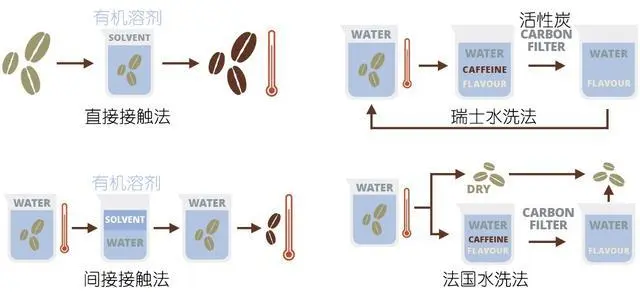
A announcement released by the São Paulo state government pointed out that the results of this research could potentially reshape the commercialization path of decaffeinated coffee beans in major consumer markets such as the United States and Europe. Currently, to obtain decaffeinated coffee beans, industrial decaffeination processes must be relied upon, including water-based methods (such as the Swiss Water Process) and treatment methods using chemical solvents.
This research is led by the Campinas Agronomic Institute (IAC). Since its founding in 1888, this institution has always held a pivotal position in the field of coffee agronomy. According to IAC statistics, about 90% of Brazil's coffee plantations and about 70% of the world's coffee plantations can trace their germplasm origins to IAC's scientific research achievements. Over the past more than two decades, IAC's research team has been dedicated to the cultivation and development of low-caffeine and even caffeine-free coffee plants.
Currently, the institute is cultivating hybrid offspring from multiple coffee varieties in the field, screening out target plants expected to produce naturally low-caffeine coffee. However, the final experimental results will not be revealed for at least two to three years, because the newly bred coffee trees must go through a complete cycle from growth, flowering to fruiting, which is a natural process that no coffee tree can skip.
The São Paulo state government stated that once the cultivation experiment of caffeine-free varieties succeeds, IAC will begin evaluating whether these varieties can be promoted and planted on a large scale commercially. At present, the experiment is being carried out simultaneously in multiple regions of Brazil.
According to a report released by Market Research Future (MRFR), by 2027, the global decaffeinated coffee market value is expected to reach approximately 26.2 billion USD, with a compound annual growth rate of 4.45%. By 2030, this market size will further climb to 28.86 billion USD. The main force driving this growth is young consumers with growing health awareness, who tend to reduce their daily caffeine intake.
In recent years, natural low-caffeine varieties such as Laurina and AC1 have been introduced one after another. Although these varieties provide a potential solution for consumers to reduce caffeine intake while enjoying high-quality coffee, they have never achieved large-scale mass production due to numerous difficulties in the cultivation process. Therefore, this research by Brazil's IAC is of great significance to the global coffee industry—it is expected to truly unlock the market potential of these varieties.
The above content is compiled by CoffeeHunters, a coffee news website.


