







Why Is Vietnam Coffee Facing a Robusta Supply Gap?
The Vietnam Coffee and Cocoa Association (Vicofa) reports that Robusta supply remains tight, so Vietnamese coffee prices are likely to keep rising through 2024. Spot Robusta now trades at 67,200-68,000 Vietnamese dong per kg, about 900-1,000 dong above last week and roughly 8,000 dong higher than early December. The new crop season opened in November at a record 60,000 dong per kg.
Traders are buying early to avoid a repeat of the 2022/23 season, when almost no beans could be found by June, while farmers hold stock in hopes of higher prices, straining contract deliveries. El Nino is expected to cut output in Brazil and Indonesia, tightening what is coffee robusta supply further. Vietnam exported over 120,000 tons of beans in November, about half to fill old orders.
The latest statement from the Vietnam Coffee and Cocoa Association (Vicofa) indicates that Vietnamese coffee prices are highly likely to continue their upward trend in 2024, with the core driver still being severely tight supply. Current spot quotes for Robusta have risen to 67,200-68,000 Vietnamese dong/kg, up 900-1000 dong from last week and about 8,000 dong higher than early December. The new crop season opened in November at a record high of 60,000 dong/kg, with traders rushing to buy early out of fear of repeating last year's June situation when no beans were available, while farmers, expecting further gains, are holding back sales, leading to fulfillment difficulties and distorted export structure. El Niño continues to intensify, with expected production declines in Brazil's and Indonesia's Robusta regions further reinforcing the logic of rising prices, which deserves close attention from coffee professionals and enthusiasts.
The Vietnam Coffee and Cocoa Association (Vicofa) recently pointed out that there is a severe coffee supply gap, so the Vietnamese coffee market is expected to maintain an upward trend in 2024. This week, Robusta spot trading prices fell in the range of 67,200-68,000 Vietnamese dong/kg, equivalent to 2.77-2.8 US dollars, up 900-1000 dong/kg from last week, and compared with early December, they have cumulatively climbed 8,000 dong/kg.
The harvest window for Vietnamese coffee usually runs from November to March of the following year. This November, as soon as the new crop season opened, spot prices had already reached 60,000 Vietnamese dong/kg, setting the highest record for a season opening in history. The main reason driving prices up is the unusually strong purchasing willingness of export traders, who fear repeating the situation in April or May when they could not buy beans, so they stocked up in large quantities early in the season. Looking back at the just-ended 2022/23 season, by June there were almost no beans to be found in the market.
Given that prices are still bullish, local growers are not in a hurry to sell the coffee beans in their hands. Some farmers admit that they are not selling now because the market has been rising, and everyone chooses to hold beans and wait, hoping to sell after prices rise further, so as to save funds for the upcoming Lunar New Year. This mentality puts traders under enormous pressure to execute sales contracts.
In the past November, Vietnam exported more than 120,000 tons of coffee beans, but about half of that was to fulfill orders from the previous crop season. According to estimates by the Vietnam Coffee and Cocoa Association, about 80,000 to 150,000 tons of coffee beans this year may not be delivered on time and can only be postponed to the next crop season.
In terms of prices, due to the significant supply gap, coffee prices are expected to remain between 60,000 and 70,000 Vietnamese dong in the coming months, and may even continue to rise further. It will not be until April and May, when the new Robusta crop seasons begin in Indonesia and Brazil, that prices are expected to fall back. However, the impact of El Niño is still ongoing and will further strengthen by the end of 2023, posing unfavorable conditions for Robusta regions in multiple coffee-producing countries. At present, it is still necessary to closely monitor whether meteorological agencies will extend the end time of El Niño.
According to an earlier report released by Rabobank, Brazil has been hit relatively hard by El Niño weather, especially in the two major Robusta-producing states of Rondônia and Bahia, where production is expected to decline by about 5%-10%. At the same time, Indonesia's Robusta production is also expected to decline. Overall, Robusta coffee prices may still continue to rise in the future.
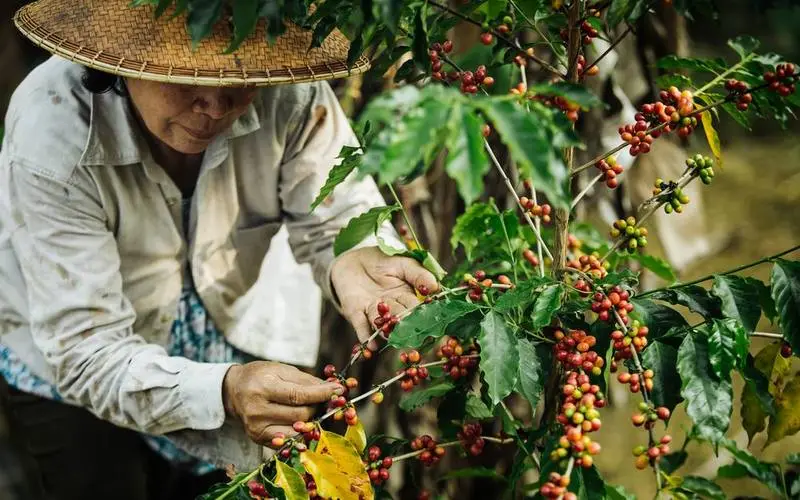
Brazil coffee production
The above content is compiled by CoffeeHunters, a coffee news website.


