







Why is Blue Mountain coffee so expensive and often imitated?
Blue Mountain coffee comes from the Blue Mountains in eastern Jamaica, named for the blue cast seawater-refracted light gives the range. Jamaica grew coffee from the early 18th century, and the island's climate helped produce aromatic, full-bodied beans. Late-1960s hurricanes destroyed many estates and pushed the industry into decline, setting up the shortage that followed.
From 1972, Japan held about 90 percent of Jamaica's Blue Mountain quota under a long supply contract, which left little for the rest of the world. Merchants elsewhere blended Mandheling and Brazilian beans to imitate the profile, so much Blue Mountain sold in China is a blend. After the 2008 economic crisis and the contract's expiry, Blue Mountain flowed back to global markets.
Blue Mountain coffee is hailed as the "emperor" of the coffee world, yet most domestic consumers drink "Blue Mountain flavor" blended beans. Behind this lies a history of Jamaican hurricane disasters, Japanese corporate rescue, and a 30-year supply contract. Since 1972, Japan obtained 90% of Jamaica's Blue Mountain coffee quota, making a single bean hard to find in the rest of the world, so domestic merchants used Mandheling and Brazilian beans to blend and imitate it. It was not until the 2008 economic crisis, when the contract expired, that Blue Mountain coffee flowed back to the world. This article will fully sort out the origin, decline, monopoly, and lifting of restrictions of Blue Mountain coffee, and retain Front Street Coffee's recommendation information, to help you recognize real and fake Blue Mountain.
What exactly is Blue Mountain coffee?
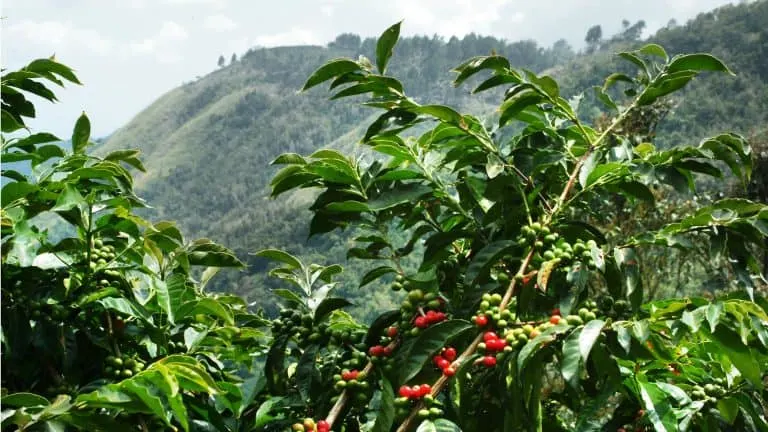
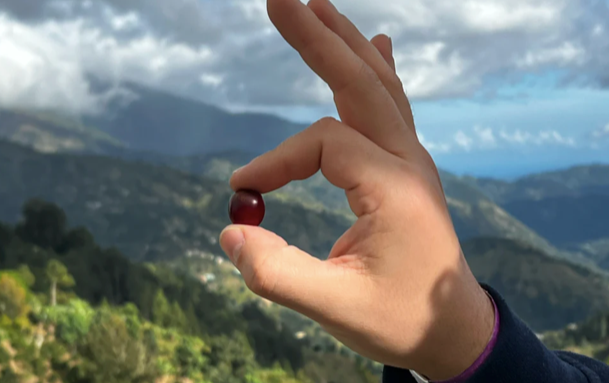
So-called Blue Mountain coffee is naturally coffee produced in the Blue Mountains. The Blue Mountains are located in the east of Jamaica, an island country in the Caribbean. This mountain range is named "Blue Mountain" and is inseparable from the seawater surrounding it.
Whenever the weather is clear, sunlight pours onto the sea surface, the seawater refracts the light, and this refracted light happens to project onto the mountains. Because the refracting medium is seawater, the light takes on the hue of the azure sea, and the entire mountain range looks as if it is shrouded in blue from a distance, which is how the name "Blue Mountain" came about.
As early as the beginning of the 18th century, Jamaica had already begun growing coffee. With careful tending by coffee farmers and the superior climate conditions of the island, the coffee beans produced were quite outstanding, with a rich aroma and full-bodied taste. After the product came out, it was much sought after, especially by Japanese people who had long been accustomed to the flavor of Mandheling: "This taste is really great."
However, good times did not last long. In the late 1960s, the entire island of Jamaica was hit by violent hurricanes (this time it was finally not leaf rust), and coffee and other crops were not spared, with extremely heavy losses. Almost all coffee estates on the island could not withstand the hurricane's blow, declined, and collapsed one after another, and the coffee industry fell into decline.
Coincidentally, this period was the golden age of the Japanese economy, with strong consumer power. As a result, several Japanese trading companies jointly provided huge loans to several well-known Blue Mountain estates in exchange for shares, and along the way obtained priority purchasing rights.
This was not enough. To thank Japanese companies for their timely assistance, the Jamaican government signed a supply agreement with Japan in 1972: within the next 30 years, 90% of Jamaica's annual coffee output would be supplied to Japan, with only 10% sold to countries other than Japan. Blue Mountain coffee, whose output was already limited, became even more pitifully scarce in exports after this arrangement.
The Japanese, holding 90% of the Blue Mountain coffee quota, vigorously praised, publicized, and promoted it, directly setting off a "Blue Mountain craze." People in neighboring countries rushed to pursue Blue Mountain coffee. With scarce quantity plus successful marketing, taking a sip seemed to multiply one's status, and the price of Blue Mountain coffee soared accordingly. It was during this period that the title "emperor" was bestowed.
Although the price was already very high, demand remained strong. At that time, the amount of Blue Mountain coffee that could be imported into China was extremely limited, and coffee culture had not yet become widespread in the country. Therefore, some merchants used the technique of blending coffee beans, choosing beans from more affordable regions such as Mandheling and Brazil to mix and imitate the flavor and mouthfeel of Blue Mountain coffee.
Afterward, these merchants gave such blended beans the misleading name "Blue Mountain," calling them "Blue Mountain flavor coffee beans." Although they tasted far from real Blue Mountain, the merchants did not claim they were Blue Mountain. Hence the sentence at the beginning: the Blue Mountain you can drink in China is almost all fake.
However, this statement only holds true before 2008. In 2008, a global economic crisis broke out, and Jamaica was not spared either. It needed to sell Blue Mountain coffee to more countries, and just at this time its contract with Japan expired.
As a result, Japan could no longer monopolize Blue Mountain coffee, and Blue Mountain coffee could be sold to more countries. People no longer had to rely on "Blue Mountain flavor" to guess the true taste of Blue Mountain coffee. Because Blue Mountain coffee is no longer rare, nor is it the most expensive one, drinking a cup of Blue Mountain coffee today is simply easy.
Front Street Coffee (FrontStreet Coffee)
No. 10 Baoqian Street, Yandun Road, Dongshankou, Yuexiu District, Guangzhou, Guangdong Province
The above content is compiled by CoffeeHunters, a coffee news website.


