







Which espresso characteristics reveal puck channeling?
Channeling happens when water finds a low-density spot in the coffee puck and rushes through it, because water always takes the path of least resistance. The grounds inside that channel get over-extracted while the rest stay under-extracted, and the result is a thin espresso with sharp acidity. Holes in the puck or a skewed, spitting extraction stream are the visible signs, especially under a bottomless portafilter.
Three causes drive most cases: clumping of coffee grounds, uneven distribution in the basket, and improper tamping. Each creates the density gap that coffee extraction exploits. Fixes focus on breaking up clumps, leveling the bed before tamping, and tamping flat with even pressure. Watching the flow through a bottomless portafilter makes these espresso characteristics easy to catch and correct in time.
When making espresso, you may sometimes see holes in the puck, or the extraction stream becoming skewed with multiple streams spurting out at once—this is very likely channeling at work. Channeling is closely related to the flow characteristics of water: water always takes the path of least resistance, so once a low-density spot appears in the puck, hot water will concentrate and rush toward it, causing localized over-extraction while the rest is under-extracted, ultimately yielding a thin, sharply acidic espresso. This article will start with the principles of channeling, describe its typical signs under a bottomless portafilter, and analyze the three major causes one by one—clumping of coffee grounds, uneven distribution, and improper tamping—while also offering practical solutions recommended by Front Street Coffee.
What is channeling?
Everyone probably knows that water is inherently "lazy"—it always flows in the direction of least resistance. The emergence of channeling stems precisely from this property of water.
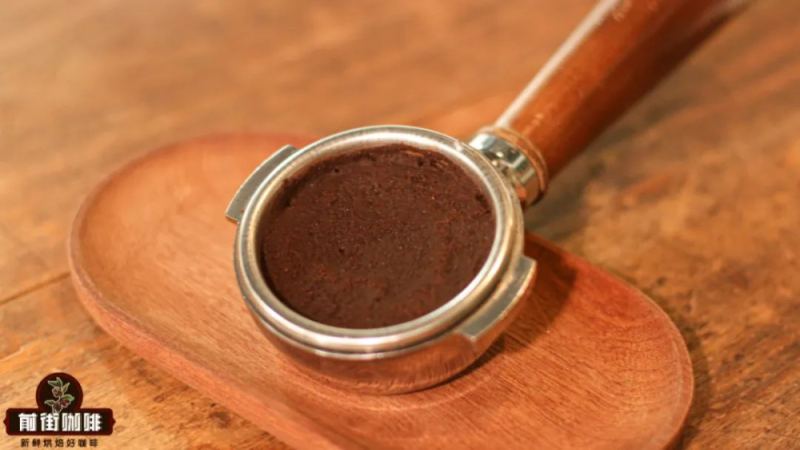
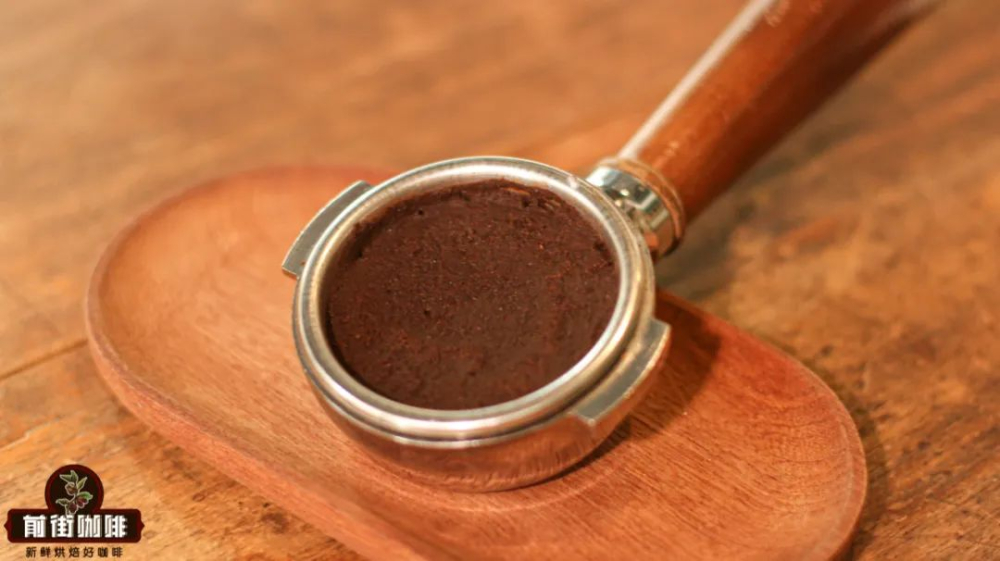
When extracting espresso, the coffee puck tamped in the portafilter basket acts like a fairly dense barrier, blocking the water's path to some extent. Since the density of the puck is largely consistent throughout, it is hard for water to find a weak point to break through, so it can only seep downward evenly and slowly under pressure.
But once a spot on this "barrier" has lower density, water will follow its lazy nature and concentrate toward that loose spot—this is channeling.
What are the consequences of channeling?
Normally, if there were no channeling, hot water would pass evenly through all the coffee grounds, giving every part proper extraction.
However, once a channel forms, all the hot water that should have flowed to other areas gathers along this path. As a result, the coffee grounds not reached by water are under-extracted, while the grounds within the channel are over-extracted due to too much hot water. What ends up in the cup is a thin-bodied espresso with sharp acidity.
Signs of channeling
As mentioned at the beginning, channeling can be observed with the naked eye once it occurs. Front Street prefers using a bottomless portafilter, largely because it lets us directly observe the coffee extraction process, making it easy to spot and address problems in time.
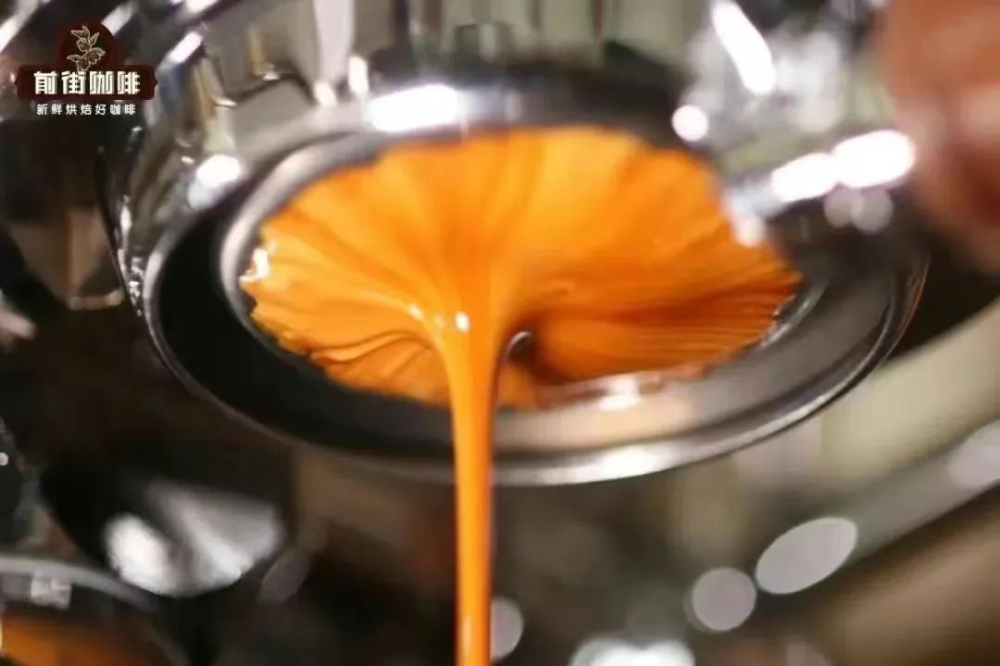
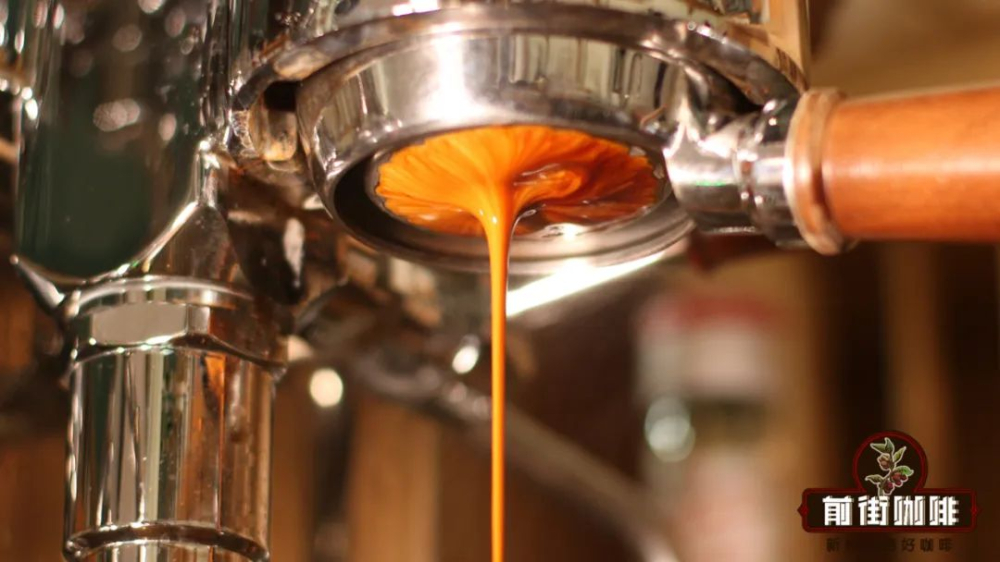
With a bottomless portafilter, under normal extraction, the coffee liquid converges from all around the bottom of the basket toward the center, forming a vertical stream with a very even flow rate.

But if channeling occurs during extraction, besides the spurting and skewed streams mentioned at the beginning, it is also accompanied by unstable flow rate and multiple streams appearing at once. After extraction ends, there is also a small chance of holes of varying sizes being left behind. These situations will cause the espresso's flavor to deviate, so we need to address them.
Causes of channeling
1. Clumping of coffee grounds
As mentioned yesterday, static electricity is the culprit behind clumping of coffee grounds. If a large amount of clumped coffee grounds is used directly for espresso extraction, it can easily trigger channeling. So using a distribution needle or other needle-like tool to break up the clumps is a very good practice.

2. Distribution
Distribution is also crucial. If you only use your finger to level the grounds, there will inevitably be differences in the amount of grounds across the basket. Different amounts of grounds lead to different densities, and uneven density is more likely to breed channels. Therefore, we need to use a distribution tool to make the coffee grounds more evenly distributed.
But note that the height of the distribution tool is best adjusted according to the basket's capacity. Never adjust it too long or too high so that it becomes a "tamper" that can tamp the grounds. That way, it will directly tamp the grounds during distribution, which is no different from distributing by hand.
3. Tamping
Tamping is the final step. We need to apply pressure to the evenly distributed but loose coffee grounds, pressing them into a denser puck so it can be put to use.
However, the force of tamping also matters a great deal. If the force is uneven, the puck will become a "valley" of highs and lows. Water flows to low places, naturally forming larger channels. So when tamping, it's best to concentrate the force at the center, which minimizes force application errors to the greatest extent.
Front Street Coffee (FrontStreet Coffee)
No. 10, Bao'an Qian Street, Yandun Road, Dongshankou, Yuexiu District, Guangzhou, Guangdong Province
The above content is compiled by CoffeeHunters, a coffee news website.


