







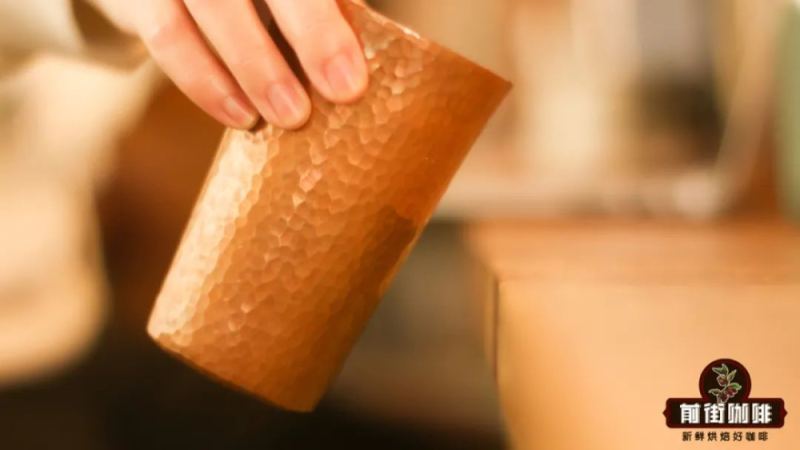
Why does coffee grinding cause clumping and flying powder?
Coffee grounds clump and scatter during grinding because of two main forces: static electricity and oil. Beans rub against each other inside the burrs, building up a charge that makes fine particles attract one another and cling to the grinder or dosing cup. Oils released from darker roasts add stickiness, so adhesion is worse when the grind is fine, the roast is dark, or humidity is high.
Adhesion is not constant because static buildup varies with grind setting, roast level, and weather. Practical fixes include anti-static sheets, air blowers, and distribution needles that break up clumps before tamping. The water addition method seen online does reduce static, but it carries risks worth weighing, since adding moisture to beans can affect the grinder and the shot.
When grinding coffee beans, have you ever encountered powder splattering everywhere or clinging firmly to the grinder or dosing cup? These seemingly trivial phenomena actually point to the same problem—coffee grounds have become sticky. Static electricity and oil secretion are the two main causes of this phenomenon, while grind size, roast level, and weather humidity also directly affect the severity of the adhesion. For different sticking situations, there are corresponding solutions ranging from anti-static sheets and air blowers to distribution needles. Although the water addition method for eliminating static that circulates online is effective, it carries hidden risks. This article will break down the causes and countermeasures one by one, making the grinding process cleaner and smoother.
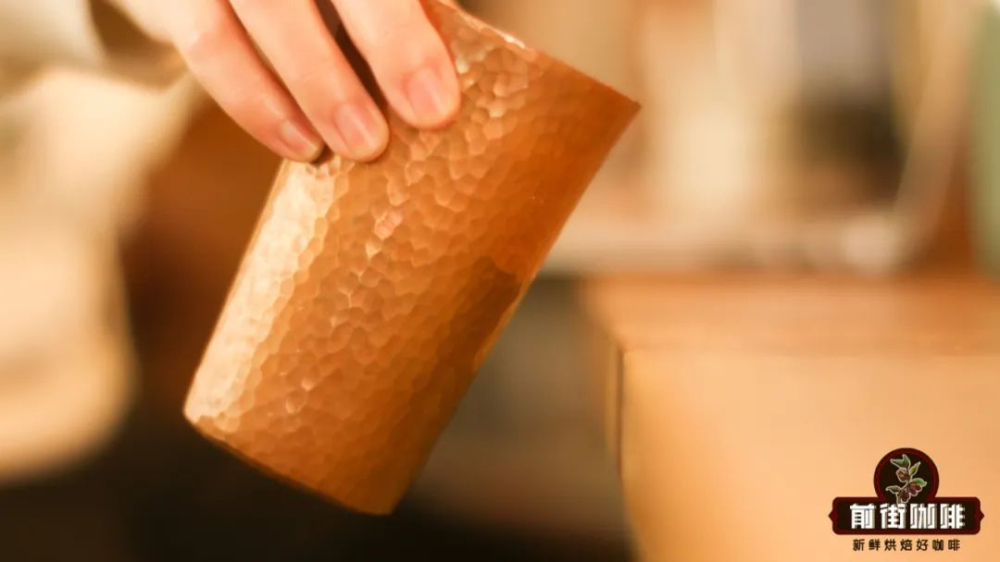
Recently, friends who visit Front Street Coffee's store often hear a familiar sound—the young man at Front Street Coffee is constantly tapping the table with the dosing cup filled with coffee grounds. There's no other reason: when pouring the grounds into the portafilter basket, he found that quite a few coffee grounds were stuck firmly to the wall of the basket.
Meanwhile, many people online have also reported similar troubles, with roughly the same description: "Lately when I grind beans, from time to time a whole bunch of grounds stick to the grinder, or else they fly everywhere."
These two seemingly unrelated matters actually point to the same phenomenon: coffee grounds have recently become "sticky." So the question arises—how did this happen?
Why Do Coffee Grounds Become "Sticky"?
1. Static Electricity
During the grinding process, coffee beans undergo continuous collisions and friction between particles, a process that generates static electricity. Static electricity gives coffee grounds the ability to attract or repel other objects; the particles can attract each other and can also cling to other surfaces.
Therefore, the occasional cases we see of coffee grounds sticking to objects can mostly be attributed to static electricity (the same goes for flying powder). However, the strength of static attraction is not constant, so noticeable adhesion does not occur every time you grind.

① Finer grind: The finer the coffee is ground, the more easily the attraction generated by static electricity causes the particles to draw close to one another. Clumping is often the result of grinding too fine—under the effect of static electricity, particles attract each other and eventually gather into clumps.
② Darker roast: If a bean is roasted to a darker level, under the same grinding conditions it will be lighter than a light-roasted bean and more prone to producing fines. Precisely for this reason, dark-roasted beans typically have the highest probability of adhesion after grinding.
③ Cold weather: In low-temperature environments, the air becomes drier. When humidity stays below 40%, coffee grounds are more likely to carry static electricity, and the adhesion force strengthens accordingly. This is the reason static adhesion occurs frequently in winter.
2. Oil Factors
Besides static electricity, dark-roasted coffee beans can also cause adhesion due to oils seeping onto the surface. At darker roast levels, oils emerge onto the bean surface, and these oily substances make coffee grounds more likely to "clump together."
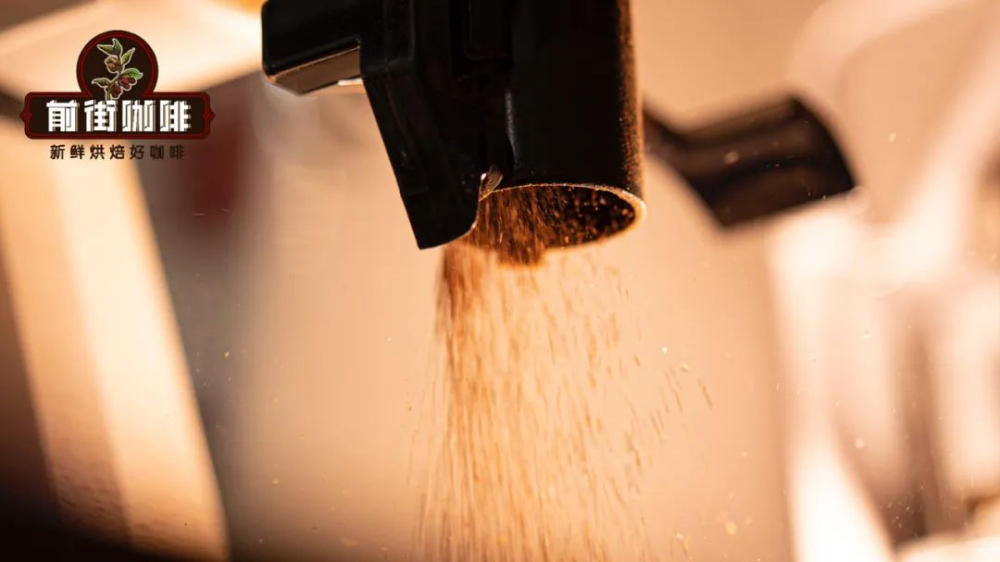
Different adhesion situations call for different solutions.
Coffee Grounds Sticking to the Grinder
To help users solve static troubles, many grinder manufacturers install anti-static devices at the discharge chute, which can greatly reduce flying powder.
But not all grinders come with such devices. So we can get ourselves a powder blower—for just over ten yuan you can buy a decent-quality air blower. It helps us blow off the residual grounds stuck to the grinder.
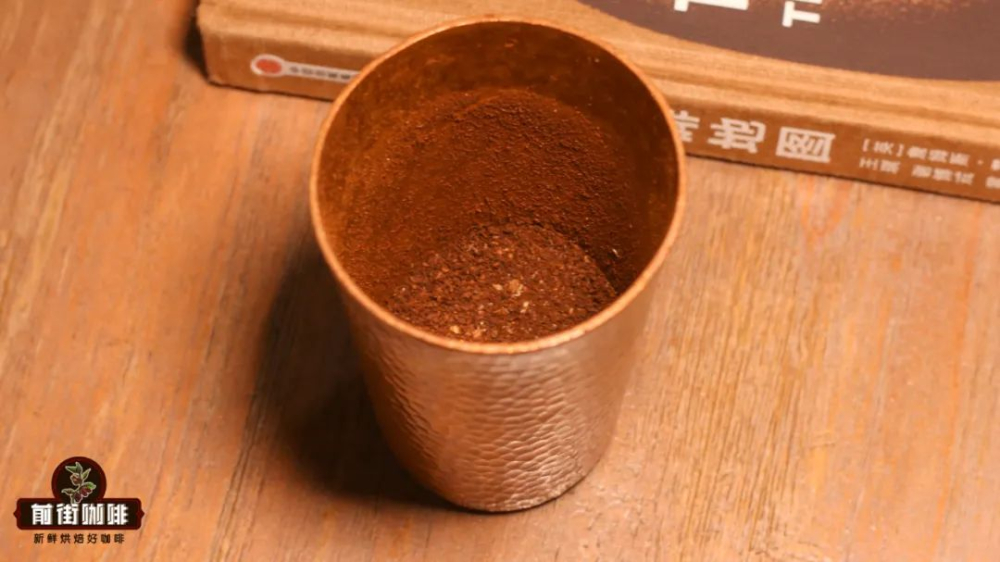
(The picture shows a simple version of an air blower; there are also bellows designed for electric grinders)
Coffee Grounds Sticking to the Portafilter Basket or Cup
Due to static electricity, even after the coffee grounds have been blown off the grinder's discharge chute, they still carry an attractive force and will cling tightly to the inner wall of the receiving basket or cup. At this point, you might as well learn from the young man at Front Street Coffee—tap gently and let vibration shake the grounds loose. If you want to be more refined, using a small scraper to scrape off the adhering grounds works too.
Coffee Grounds Clumping
The last situation is "clumps" formed by coffee grounds attracting each other. A small amount of clumping is not a big problem, but if there are too many clumps, channeling is likely to occur during extraction (most common in espresso extraction). At this point, you need to use a distribution needle to break up the clumps, thereby reducing unfavorable extraction factors such as channeling.

Heard That Adding Water Solves Static?
Almost every online tutorial on eliminating static says: add a little water before grinding, and the static problem will be solved.
Indeed, doing so can reduce the generation of static electricity, but this method carries certain risks. If you're not careful and add too much water, the coffee grounds easily become damp and clump; moreover, long-term use can cause the burrs to rust. It's fair to say that if not controlled properly, the negative effects are considerable.
Therefore, Front Street Coffee's advice is: if you use this method, be sure to strictly control the amount of water added and stir thoroughly and evenly, so as to avoid the coffee grounds becoming damp and clumping.
Front Street Coffee
No. 10, Baoqian Street, Yandun Road, Dongshankou, Yuexiu District, Guangzhou, Guangdong Province
The above content is compiled by CoffeeHunters, a coffee news website.


