








Which Coffee Roasting Tips Decide How Long Beans Should Rest?
Freshly roasted coffee needs to rest because the beans hold a large amount of carbon dioxide, which blocks hot water from extracting aromatic compounds and adds a dry, throat-catching harshness. Five to seven days off roast generally solves both problems, and that window works for pour-over and espresso alike.
If the wait is hard, pre-grinding the dose and extending the bloom time can help release some of the gas. The advice matters more now that small roasting studios keep opening and shelves of specialty coffee shops have made freshness a routine concern; coffee particles and oils simply extract more evenly once the initial carbon dioxide has escaped.
These days, specialty coffee is flourishing everywhere, and people's demands for coffee bean freshness keep growing—yet freshly roasted beans are often advised to "rest a while first." This is because newly roasted coffee beans contain a large amount of carbon dioxide, which hinders hot water from extracting aromatic compounds and can also bring a dry, throat-catching harshness. Resting the beans has become the best way to solve these two problems—generally just 5–7 days from the roast date, applicable to both pour-over and espresso. If you really can't wait and want to drink it right away, there are also emergency tricks like pre-grinding and extending the bloom time. This article will take you from principle to practice, helping you sort out the matter of resting beans so that every cup of coffee is fuller and more layered.
So, at that time, if you wanted to make a cup of coffee at home, people could only go to the supermarket to buy nitrogen-flushed or vacuum-packed coffee beans. The production dates of such beans were usually already more than two months past, and even if they were still within the shelf life, after being stored for so long, it wasn't hard to imagine how they tasted.
Now let's turn our gaze back to the present, when the coffee industry is developing at breakneck speed. In lively neighborhoods, specialty coffee shops practically fill storefronts along entire streets, and small independent roasting studios keep emerging one after another, giving people a real sense of how deeply coffee culture has permeated the public. As a result, everyone has started to care about the freshness of coffee beans and no longer buys products with production dates that are too far in the past.

The reasoning is simple: freshly roasted coffee beans have richer layers of flavor. But a contradiction arises along with it: people pursue freshly roasted beans on the one hand, while on the other hoping they aren't *that* fresh???
"What? These are freshly roasted beans? No! Let them rest for a few days—I'll drink them in a few days~" What negative effects does coffee that is too fresh bring? Unsatisfactory flavor: Freshly roasted beans have a large amount of carbon dioxide built up inside them, and this gas prevents hot water from extracting the aromatic compounds in the beans. With insufficient extraction of aromatic compounds, the cup of coffee naturally lacks layers of flavor. A dry, harsh sensation: The "dry, harsh sensation" mentioned here refers to how it feels when you drink it. After the coffee goes down, the mouth and throat retain a trace of discomfort, a negative experience like something catching in the throat or dryness. All of these are effects caused by the lingering roastiness in the beans dissolving into the coffee.
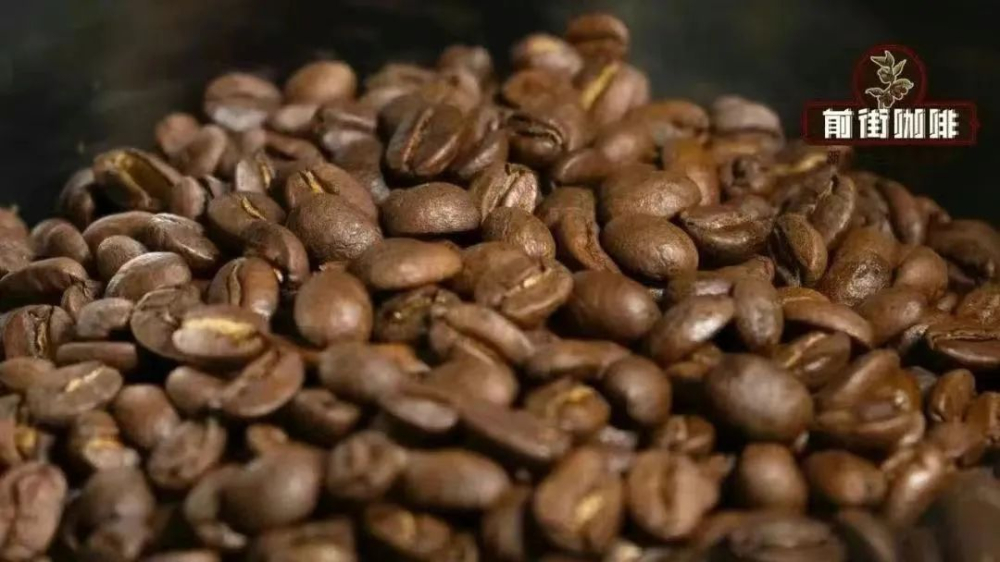
So how should it be handled? "Resting the beans" is the best way to deal with these two problems! After receiving the beans you bought, the first thing to do is check their roast date (that is, the production date). If they were roasted not long ago, it's best not to open the package first—let them sit for a few days to rest, just 5–7 days from the roast date (applicable to both pour-over and espresso).
This is because for a period after roasting, coffee beans release a large amount of internal gas. Once the gas has mostly escaped, brewing not only eliminates the dry, harsh sensation but also makes it easier to extract aromatic compounds, so the brewed coffee's flavor is fuller and richer! If you really can't wait and want to brew a pot of fresh coffee to drink immediately, what should you do? If you're a beginner, Front Street Coffee also highly recommends brewing a cup with a conventional method right when the beans are freshly roasted, to take a small sip of the "taste" of fresh beans. If you just want to satisfy your cravings, you might as well give this a try~ "Pre-"grinding: The reason drip-bag coffee's flavor isn't prominent enough is that after grinding, the coffee particles release a large amount of gas. By the time you finish your whole routine, most of the aroma has long since escaped! So when you want to make coffee with fresh coffee beans, you might as well let the grounds sit for 30–60 seconds after grinding—this can effectively reduce the dry, harsh sensation brought by fresh roasting!
Extend the bloom time: The core function of the bloom is to release the carbon dioxide in the beans and pave a better extraction path for the subsequent brewing. Therefore, as long as you extend the bloom time by a few more seconds to release more gas, you can reduce the gas's impact on extraction.
Front Street Coffee (FrontStreet Coffee)
No. 10, Bao'an Qian Street, Yandun Road, Dongshankou, Yuexiu District, Guangzhou City, Guangdong Province

The above content is compiled by CoffeeHunters, a coffee news website.


