








Why Re-Weigh Grounds With a Quantitative Coffee Grinder?
A quantitative grinder can be set to a target weight or a grind duration, which saves operating time, but it does not remove the need to check the dose on a scale. In practice the actual output often deviates by more than one gram from the setting, and that difference is enough to shift extraction and flavor in the cup.
The main causes are changing pressure in the hopper as beans empty, natural variation in coffee beans size and gaps between them, retained grounds left inside the burr chamber, and inconsistent output after the grind setting is adjusted. The grinder at Front Street uses a timer, grinding a 20 gram dose in about 4.5 seconds, and staff still weigh every dose so flavor deviations can be caught early.
Many coffee enthusiasts wonder: since a quantitative grinder can set the output weight or time, why weigh the grounds again after grinding? This article explains why quantitative grinders still produce errors from four aspects: hopper pressure changes, differences in the gaps between coffee beans, the influence of residual grounds, and output fluctuations after adjusting the grind. At the same time, drawing on Front Street Coffee's actual experience, it explains that re-weighing the grounds is not only to ensure the gram count is accurate and does not affect extraction, but also to make timely adjustments when the flavor deviates. What the quantitative function truly saves is operating time, not the weighing step itself.

A customer friend raised this doubt: "You clearly have a quantitative grinder, so why don't you, like some chain brands, just grind and use it directly, but instead weigh it again after grinding before taking it for extraction? That way, doesn't the quantitative grinder become meaningless?"
Before answering this question, we might as well first clarify what a "quantitative grinder" is. A so-called quantitative grinder is a device that can preset the weight of coffee grounds to be ground, or set the duration of one grinding session. Basically consistent with that customer friend's understanding, it can indeed save us the time of weighing the grounds. But it is worth noting that what it saves is time, not the step itself.
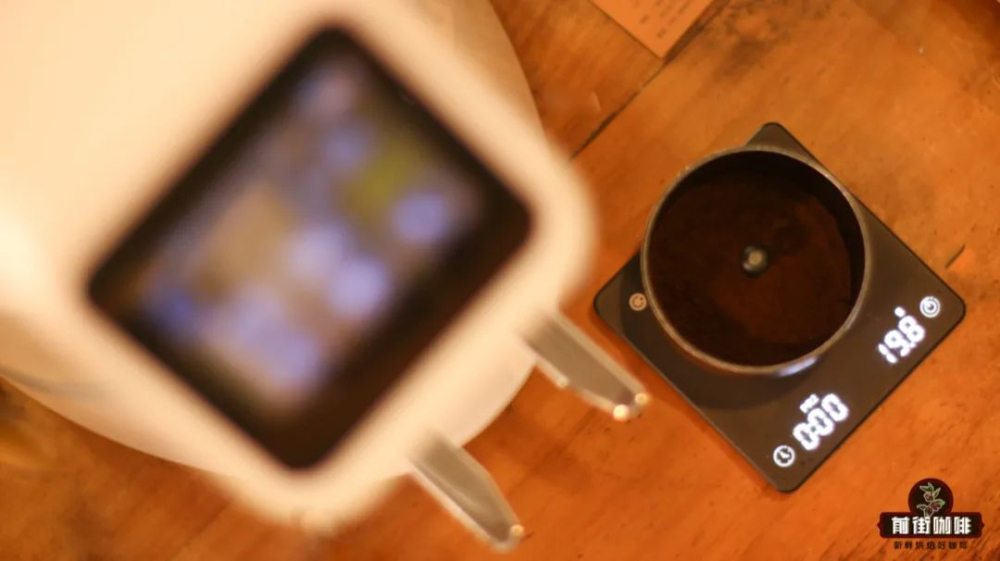
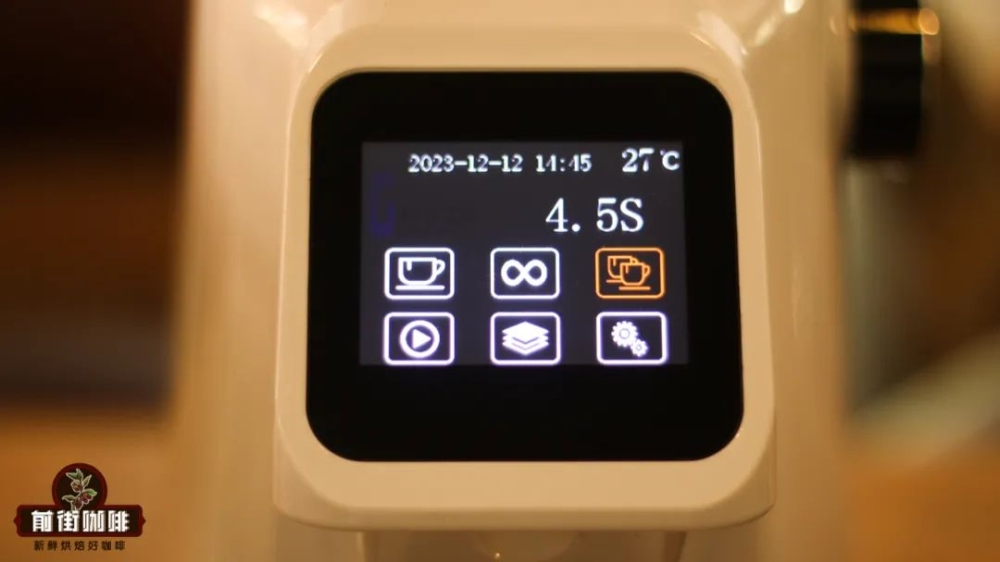
We can adjust the grinding parameters according to the actual amount of grounds needed. For example, if Front Street needs 20g of grounds, then depending on the grinder's function, we can set the corresponding gram weight or time. This grinder at Front Street uses the timer function, and grinding 20g of grounds takes about 4.5 seconds. So the time it is set to is 4.5 seconds. It is indeed very convenient! Then let's return to the customer friend's question: "Why still weigh the grounds?" Why still weigh the grounds? Although it can grind by time and quantity, in many cases the grinder will be affected by other factors, causing the actual amount of grounds produced to deviate. If it is only a small fluctuation like 0.1g, then naturally there is no major impact. But in reality, it often differs from the expected gram weight by more than 1g, which forces us to use an electronic scale to recheck the ground weight. There are three main reasons why the extraction weight changes.
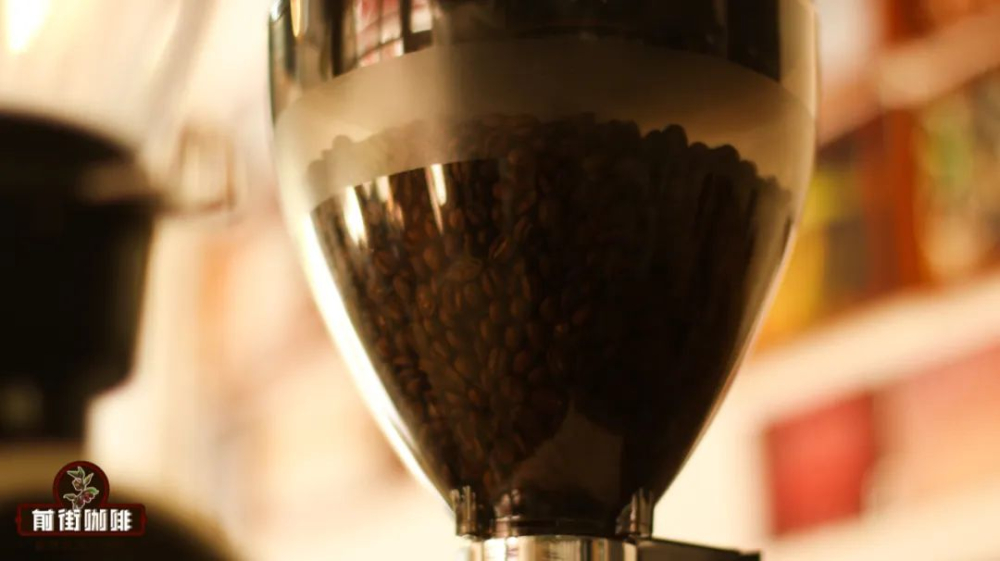
1. Hopper pressure Front Street has previously discussed the issue of hopper pressure separately. Without a "bean anti-pop device" (an umbrella-shaped device inside the grinder hopper), the amount of beans in the hopper creates different pressure, and this pressure acts on the coffee beans about to be ground. The more beans, the greater the pressure, and the more uniform the ground particles; conversely, the fewer beans, the lower the pressure, and the less uniform the ground particles. This also holds true for quantitative gram weight.
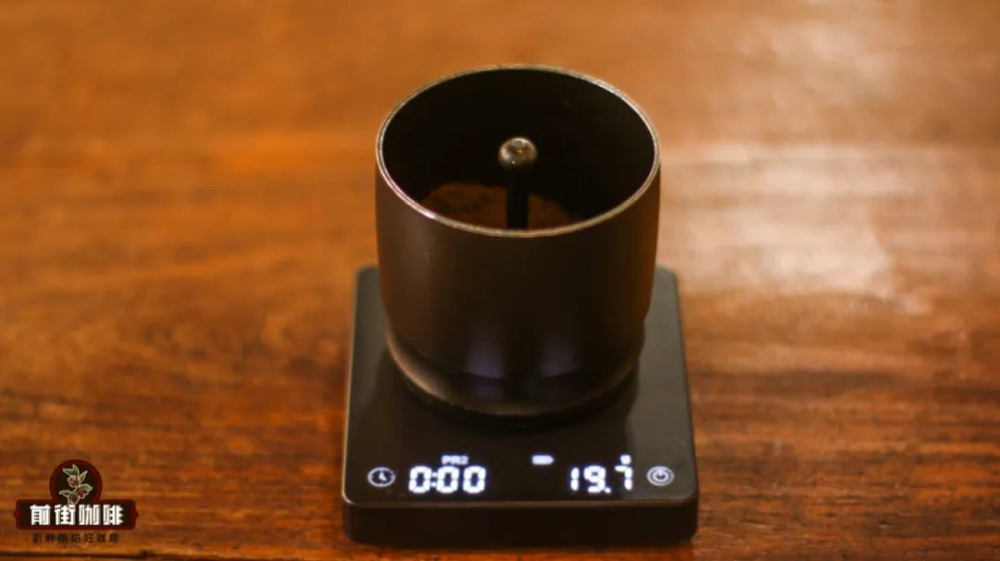
Front Street conducted an experiment: in a full hopper state, 4.5 seconds can grind 20g of coffee grounds. But when only 1/5 of the hopper remains, 4.5 seconds can only produce 18.7g of grounds, a difference of exactly 1.3g. 2. Gaps between coffee beans This involves the principle of stacking. Coffee beans are not equidistant, uniformly sized spheres, but irregular objects arranged chaotically, so the gaps between beans also vary. This slightly affects a timed grinder. Because the gaps differ, subtle errors (±0.3) are inevitably produced during timed grinding.
3. Residual grounds addition If the grinder has not been used for grinding for a long time, Front Street recommends first grinding out 1–2g of grounds, discarding this portion, and then grinding the coffee grounds for extraction.
Because coffee grounds from the previous grinding may remain in the grinder's channel, this portion of grounds will not only cause errors in the quantitative output, but also, because most of the flavor has already been lost, affect the espresso parameters about to be extracted! (For example, faster flow rate, uneven extraction, etc.) 4. Grind adjustment After adjusting the grind size, the quantitative output will also change accordingly. Originally 4.5 seconds could produce 20g of grounds, but after you adjust it finer, 4.5 seconds may only grind 18.8g of grounds; if you adjust it coarser, the output will increase. Moreover, at least 1–2 shots of coffee grounds will not be in a stable state.
So, I believe everyone now roughly understands the reason: the main reason for weighing and measuring again is to ensure the gram count is accurate and does not affect extraction; second, when the taste deviates, it is also more convenient to adjust. And the convenience that the quantitative function brings us is saving most of the operating time, so we no longer have to keep staring at the timer and pressing pause.
Front Street Coffee (FrontStreet Coffee)
No. 10, Bao'an Qian Street, Yandun Road, Dongshankou, Yuexiu District, Guangzhou City, Guangdong Province
The above content is compiled by CoffeeHunters, a coffee news website.


