







Why Do Luckin Coffee Baristas Get Chapped Hands?
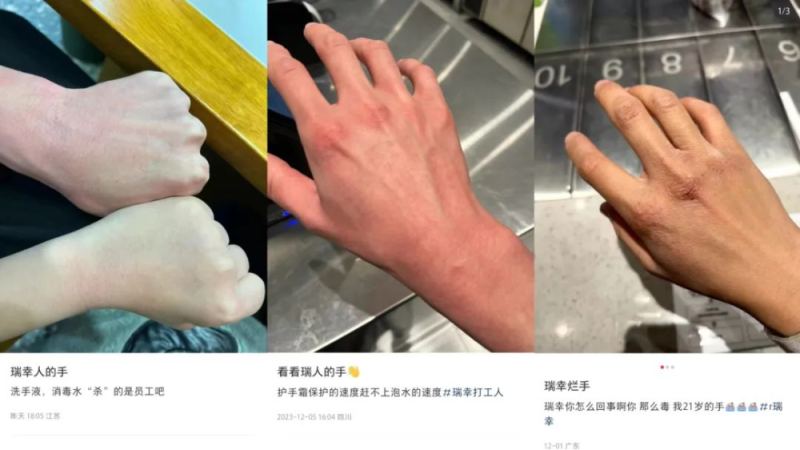
Luckin Coffee baristas report cracked, red, swollen, and bandaged hands every winter, and many post comparison photos of their hands before and after joining the industry. The cause is the company's strict hand hygiene routine: washing hands for more than 20 seconds every hour, changing sanitizing-water cloths every half hour, and cleaning again after touching anything. Frequent bare-handed contact with water and disinfectant damages the skin barrier.
Gloves are not banned, but most staff skip them to keep order speed up. The problem is not exclusive to Luckin; similar hand damage appears across the beverage and service industries wherever frequent washing is required. What makes it stand out at Luckin is the unusually tight handwashing standard, which turns recognizable rough, damaged hands into a marker of the job.
Every winter, the hand health problems of Luckin Coffee baristas erupt in concentrated fashion. On social platforms, a large number of employees show off their cracked, red, swollen, or even bandaged hands, drawing widespread attention. Behind this phenomenon is Luckin's extremely strict handwashing and sanitizing process: wash hands for more than 20 seconds every hour, change the sanitizing-water cloth every half hour, and clean again after touching anything. Frequent bare-handed contact with tap water and disinfectant causes severe damage to the skin barrier. Although the company does not prohibit wearing gloves, most partners choose to give up protection for the sake of order speed. This article deeply analyzes this industry phenomenon and presents the real situation of baristas and their ways of coping.
▲
Click to follow | Daily specialty coffee culture magazine Coffee Workshop
Winter has arrived. Are all you baristas' hands still holding up?
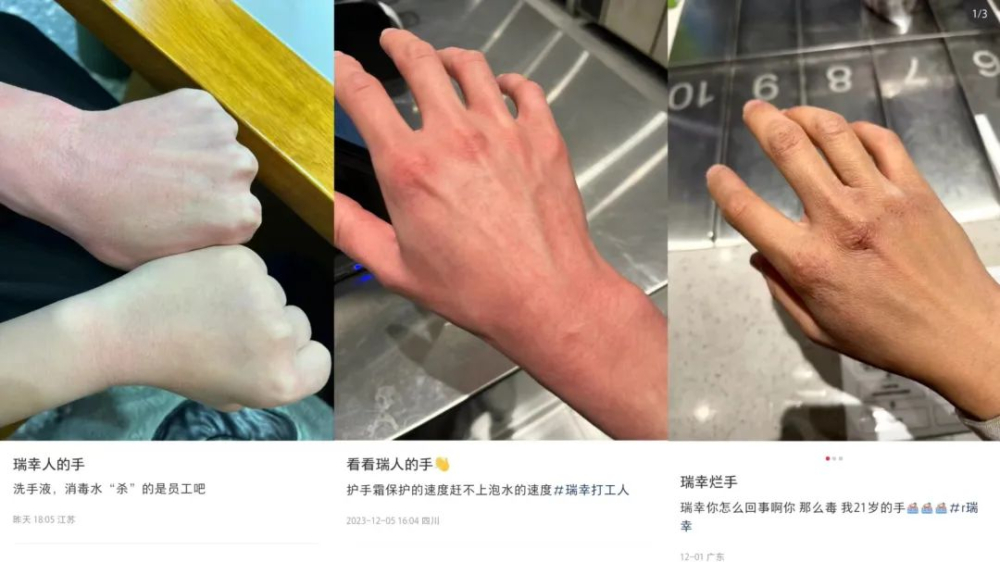
Recently, on social platforms, several Luckin employees have posted one after another showing their hands, saying that the skin on their hands has developed dryness and cracking to varying degrees, and some even have redness and swelling.
Many baristas also posted comparison photos of their hands before and after entering the industry. Hands that were originally delicate and fair are now wrapped in bandages, with the knuckles generally red and dry, and wounds scattered unevenly, making people ache just looking at them. However, this is not entirely a bad thing—at least it has become especially easy to recognize fellow workers: in a crowd, the pair of hands that is the roughest and most damaged must belong to a barista.
In fact, dry and damaged hands are not unique to Luckin. Similar situations exist across the entire beverage industry, the service industry, and even all walks of life. But Luckin's problem is particularly prominent because of its unusually strict standards for handwashing. Some netizens joked that the main theme of a Luckin barista's life is probably washing hands. They have already washed to a professional level and developed a unique style, making them worthy of being called the country's most handwashing-skilled group of handsome men and beautiful women. Pick any one of them out, and they could immediately shoot a teaching video, "Standard Handwashing Demonstration," and broadcast it directly on the public screens of every kindergarten.
According to an internal employee, Luckin requires washing hands for more than 20 seconds every hour, changing the sanitizing water and cloth every half hour, washing hands once on the hour, and washing hands again after touching anything. Operations such as scooping ice and loading whipped-cream chargers require disposable gloves, and hands must still be washed before putting on gloves. At closing time, a large number of utensils also have to be washed and soaked in sanitizing water. "Every day is either spent soaking in water or soaking in disinfectant." It is said that handwashing standards are also part of Luckin's barista certification assessment. If any step in the operation fails to meet the standard, it will be sent back to be redone.
Some confused netizens asked: Wouldn't bare hands touching disinfectant cause burns? Why not wear gloves? Is the company not allowing it? In fact, Luckin Coffee does not prohibit employees from wearing gloves, but because gloves easily let water in and also slow down drink production speed, partners often have no choice but to give up gloves and let their hands directly contact tap water and even disinfectant.
The damage caused to hands by frequent handwashing varies from person to person, and the degree of severity and tolerance also differ. Some people refuse to join Luckin because they worry about ruined hands, while others choose to resign for this reason. Previously, a netizen also posted with the title "About why I left Luckin..." mentioning that one key reason was that their hands really would crack from washing. It makes people sigh: What can save you, my hands? The only way to relieve the worry is to resign!
This problem did not appear only recently. Every winter, Luckin employees collectively complain that "making coffee is too hard on the hands." In response, many warm-hearted peers have also offered suggestions, such as mixing body lotion, hand cream, and olive oil evenly and applying it to both hands, then wearing disposable gloves, which is equivalent to doing several hand masks repeatedly and can reduce the damage and pain to a certain extent.
While feeling distressed, some netizens also said they had been reverse-sold on it. "Although it feels a bit unfair to say this, I feel very reassured drinking Luckin." "Thank you, Luckin employees, for exchanging your hands for delicious and clean coffee." Of course—the title of "industry hygiene ceiling" is not for nothing; workers exchanged their hands for it!!
Image source: Internet
Disclaimer: Some images in this article are from the Internet. For some content on the website, such as images, we will respect the original author's copyright and indicate the source. However, due to the large quantity, some images and texts may not have been credited in time. Please forgive us. If the original author has any dispute, they may contact the website for handling. Once verified, we will correct it immediately. Compiled and edited by "Coffee Workshop." Please indicate the source when reprinting. If there is infringement, please inform us for deletion. Thank you~!
The above content is compiled by CoffeeHunters, a coffee news website.


