








What is happening with Colombian coffee production?
The latest USDA forecast puts Colombia's coffee production for the 2023/24 year at 11.5 million bags, a 7.5 percent rise over the previous cycle. The rebound follows the 2022/23 year, when output fell 9.1 percent to 10.6 million bags. Even so, this remains well below the 14 million bags of 2019/20 and short of the earlier 12 million bag expectation.
La Niña brought rainfall beyond historical norms and heavy cloud cover, cutting yields and output. High global fertilizer prices also reduced fertilization. Meanwhile, Robusta Genetics has finished quarantine and may expand cultivation in non-traditional growing regions to replace imports, mainly for the soluble coffee market. North America and the EU stay the main export destinations for this arabica coffee origin country.
The latest USDA forecast shows that Colombia's coffee production for the 2023/24 year is expected to reach 11.5 million bags, a 7.5% increase from the previous year. Although El Niño typically brings drought and high temperatures, the damage caused by La Niña is more severe, so production expectations for this year have rebounded somewhat. However, this figure is still far below the 14 million bags of 2019/20, and Colombia's share of the global coffee market is being squeezed. Meanwhile, Robusta Genetics has completed its quarantine period and may in the future expand cultivation in non-traditional Arabica-producing regions to replace imports, especially for the soluble coffee market. On the export side, North America and the EU remain the main destinations. Front Street Coffee reminds enthusiasts to keep an eye on developments in this producing region.
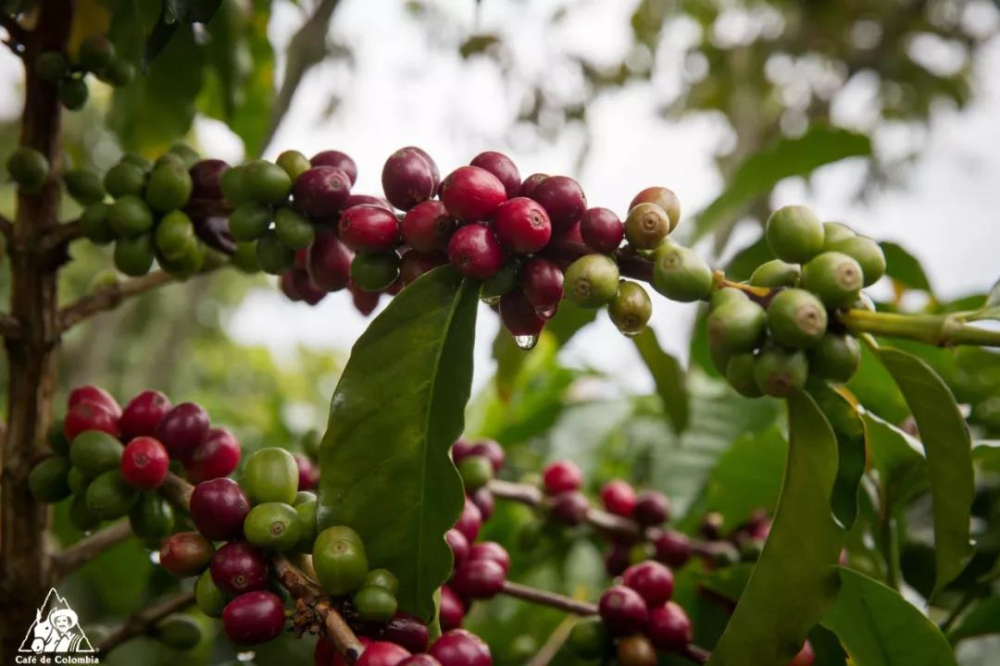
According to estimates from the United States Department of Agriculture (USDA), Colombia's production in the 2023/24 coffee year (October to September of the following year) will reach 11.5 million bags (60 kg each), a 7.5% increase over the previous cycle. Normally, El Niño brings drought and high temperatures, which are unfavorable for coffee crop growth and may drag down production performance. However, based on actual results in recent years, the losses caused by La Niña are often greater than those from El Niño, so production this year is expected to improve.
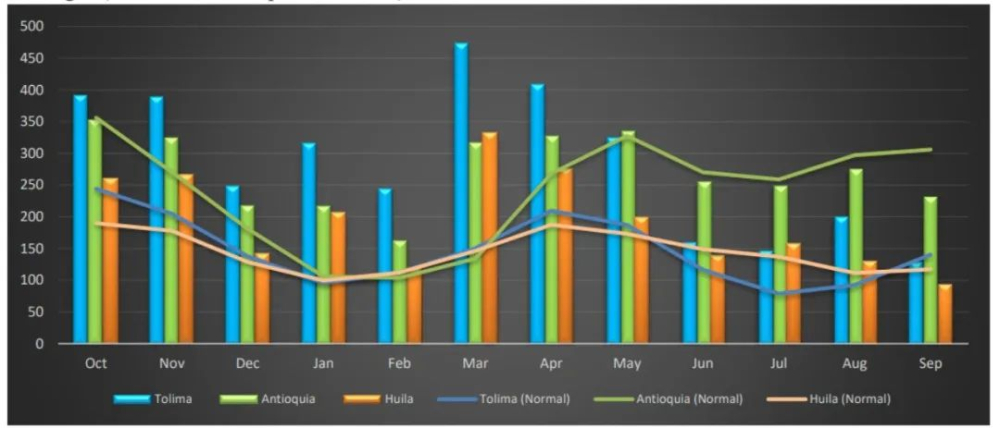
Data from the National Federation of Coffee Growers of Colombia (FNC) shows that the country's coffee production in the 2022/23 year was 10.6 million bags (60 kg each), a decrease of 9.1% from the 2021/22 year. This decline was mainly attributed to adverse climate conditions such as La Niña in the early part of the 2022/23 year. Rainfall far exceeded historical norms, and the excessive cloud cover brought by La Niña together lowered production. In addition, soaring global fertilizer prices led to reduced fertilization, which also hindered the industry's development.
Monthly precipitation (mm) in selected coffee-growing provinces from October 2022 to September 2023 compared with historical averages
Although production will rebound somewhat in the 2023/24 year, Colombia is still far below the 14 million bags of 2019/20 and will even struggle to return to the previously expected level of 12 million bags, which squeezes Colombia's room to operate in the global coffee market. Reduced government stimulus measures led to lower-than-expected production, ultimately causing coffee crops to age and negatively affecting production potential.
On the export side, Colombia's coffee exports in the 2023/24 year are expected to reach 12 million bags, an increase from the 2022/23 year. North America is the main export market for Colombian coffee, accounting for more than 44% of total shipments. The EU follows, accounting for more than 23% of the total.
Share of Colombia's coffee export markets
Export performance is related to the growth of Colombia's domestic consumption, and better export conditions may stimulate a new round of growth in imports. Colombia is expected to import 2.3 million bags of coffee from abroad, with Brazil as the main source of imports. Colombia purchases coffee externally mainly for domestic consumption, because the country's coffee is mainly supplied to foreign markets.
It is worth noting that Robusta Genetics, introduced in Colombia in 2018, has completed its sanitary quarantine period. Some micro-lots of Colombian Robusta coffee should already have been tested on a partial commercial basis. Colombia's potential Robusta planting area is 80,000 hectares, with estimated production of 3.2 million bags. Robusta crops may expand in non-traditional Arabica-growing areas, aiming to replace coffee imports, especially for soluble coffee. Future coffee production may increase further.
Disclaimer: Some images in this article are from the internet. For some content on the website, such as images, we will respect the original author's copyright and indicate the source. However, due to the large quantity, some images and texts may not have been credited in time. Please forgive us. If the original author has any dispute, they may contact the website for handling. Once verified, we will correct it immediately. Compiled and edited by "Coffee Review vdailycom." Please indicate the source when reprinting. This article is intended to spread coffee culture. If there is any infringement, please inform us for deletion. Thank you~!
The above content is compiled by CoffeeHunters, a coffee news website.


