








Why is cappuccino called cappuccino, and does it need latte art?
Cappuccino takes its name from "Kapuziner," a German word meaning monk, which also described an 18th-century Viennese coffee drink. That drink, made with filtered coffee, honey, spices, and cream, had a reddish-brown color resembling the robes of the Capuchin friars, so the Viennese named it after them. The term later moved to Italy and became Cappuccino.
When espresso machines spread through Italy, baristas swapped cream for dense milk foam and shaped it into a pointed hat, giving the drink its modern Italian name. The traditional cappuccino is a small cup filled slightly beyond the rim with thick foam, and as latte art pushed cafés toward thinner microfoam, the classic definition has kept shifting, which is why the name origin still matters today.
Cappuccino is one of the most common milk coffees on café menus, yet its definition has always been evolving. From the 18th-century Viennese "Kapuziner" to today's modern version topped with latte art, what changes has this classic drink undergone? Does an authentic cappuccino really need latte art? This article will trace the origins of cappuccino, sort out its evolution from coarse milk foam to dense microfoam, analyze the origins of the traditional 1:1:1 ratio and the "golden ring," and explore how latte art has made cappuccino's milk foam thinner and thinner. At the same time, we will also consider: once a cup of coffee departs from these core characteristics—"small cup size, filled to eleven-tenths, thick milk foam"—can it still be called a cappuccino?

Cappuccino, a milk coffee that countless cafés have placed on their regular menus, has always had a definition in flux as global coffee culture and consumer trends evolve, and its appearance has likewise undergone obvious changes.
How did early cappuccino come about?
In fact, it is now very difficult to verify who first created cappuccino. But looking through documentary sources, we can see that the word "Cappuccino" comes from "Kapuziner," which in German means "monk" and also refers to an old-style coffee drink.
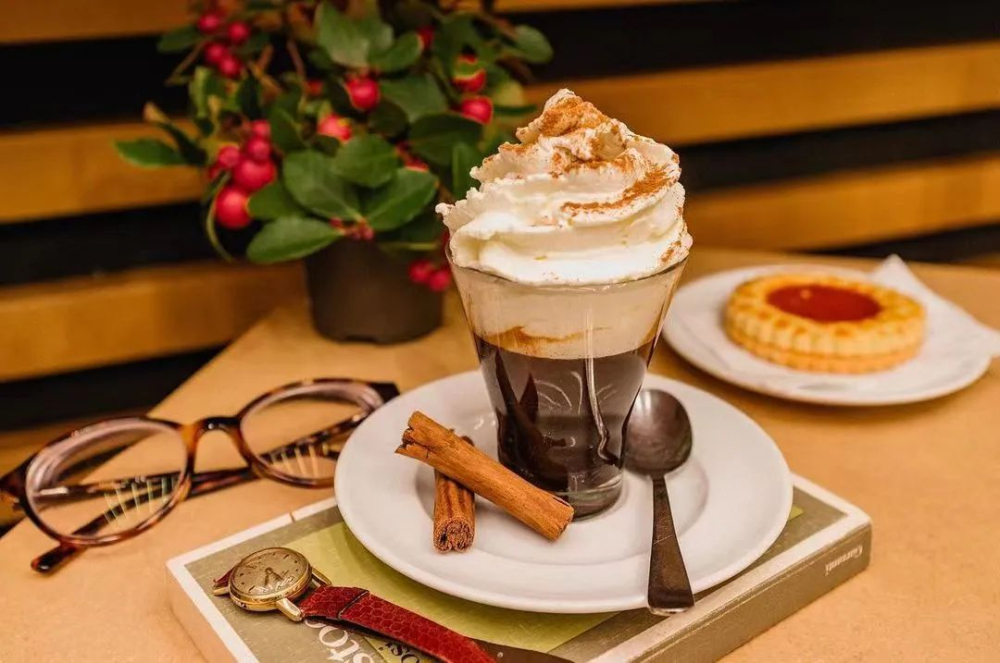
It is said that this drink was born in 18th-century Viennese coffeehouses. At that time, people drank coffee with the grounds and water together. To improve the taste, a Pole named Kulczycki filtered out the coffee grounds with a cloth bag, then poured the coffee into a glass and mixed in honey, spices, and cream. This not only made the coffee smoother but also gave it a distinctive reddish-brown color that visually resembled the robes worn by the friars of the Order of Capuchin Friars Minor, so the Viennese named it "Kapuziner."
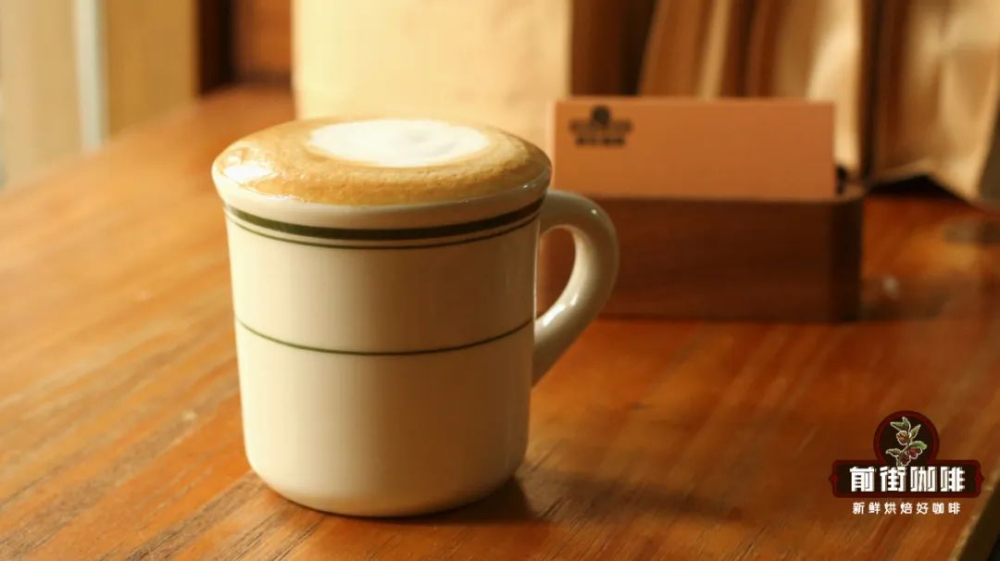
Later this drink spread to Italy, and with the invention and popularization of the pressure-driven espresso machine, Italians began using espresso as the base, replacing cream with milk foam whipped to a dense state, and using a spoon to shape the foam on the surface of the coffee into the form of a pointed hat. Over time, it acquired its own Italian name—Cappuccino, the very word we know today.
In addition, another view holds that it actually derives from the religious habit word "Capuchin."
As for its "predecessor," Kapuziner, people today more often call it Viennese Coffee.
What did traditional cappuccino look like?
When it comes to how cappuccino is made, the most widely circulated saying is that coffee, milk, and milk foam each account for one third. Taking a 6-ounce (about 177ml) coffee cup as an example, that means a double Espresso (60ml), one third hot milk (60ml), and the remaining one third foam. The milk foam made according to this ratio is about 2.5cm thick. When you drink the first two sips, it is almost all foam, while the coffee at the bottom tastes quite strong.
In the era before the steam wand existed, the only way to get milk foam was to whip it by hand, and the bubbles produced were relatively large. At that time, making cappuccino involved first scooping the whipped thick foam into the cup with a spoon, piling it all the way to the eleven-tenths-full level, and the layer of foam leaving the spoon would also form a small white pointed hat. At this point the milk foam had a texture like meringue and good stability, but it did not fully integrate with the coffee.
Cappuccino's "golden ring"
As espresso machines with stronger pressure came into widespread use, the method of using steam to whip milk foam also emerged. The steam wand could not only produce fine, abundant milk foam and greatly improve production efficiency, but also eliminate the step of scraping milk foam with a spoon. This also explains why later cappuccinos no longer had a "small pointed hat," but instead showed a smooth, rounded "dome."
From then on, a small cup size, raised milk foam, a rich coffee taste, and the substantial, dense mouthfeel brought by thick milk foam became the typical features of cappuccino in the public imagination. However, precisely because this thick layer of foam reduced the flowability of the steamed milk, it was difficult to create the complicated, gorgeous latte art patterns possible with a latte. Therefore, some baristas adopted a center-pour technique, letting the milk foam fall gently into the Espresso, thus forming the iconic "golden ring."
Latte art has made cappuccino's milk foam thinner
Today, latte art is all the rage, and baristas wish they could draw exquisite patterns on every cup of milk coffee, and cappuccino is naturally no exception. In order to present simple graphic decorations, baristas deliberately reduce the amount of air incorporated when steaming milk foam, making the foam thinner and thereby enhancing its flowability. In addition , considering that if the cup is too full it is easy to spill, some coffee shops that focus on takeaway will also intentionally weaken the effect of milk foam mounded above the rim, and in this way the form filled to eleven-tenths full is also gone.
Of course, Front Street Coffee believes that the so-called classic cappuccino does not mean unconditionally reproducing the old recipe. In fact, as factors such as coffee bean quality, roast level, extraction equipment, and public taste preferences continue to change, cappuccino has also always changed with the times. But if these changes deviate from the core characteristics of "small cup size, filled to eleven-tenths, rich coffee taste, and the full, dense mouthfeel brought by thick milk foam," then it probably can no longer be called a cup of "cappuccino."
- END - Front Street Coffee (FrontStreet Coffee)
No. 10, Bao'an Qian Street, Yandun Road, Dongshankou, Yuexiu District, Guangzhou, Guangdong Province
The above content is compiled by CoffeeHunters, a coffee news website.


